On Victoria Street, I watched people line up to photograph themselves in front of a location widely promoted as the inspiration for Diagon Alley in the Harry Potter novels. What fascinated me was that J.K. Rowling has publicly denied the connection. Nobody in the queue seemed particularly concerned. The goal wasn’t to verify the story. It was to participate in it.
That tension—between the Edinburgh that actually exists and the one people come to find—followed me through the entire city.
Edinburgh was more crowded than I expected. Our guide refuses to lead tours there in July and August because of the crowds. Walking the Royal Mile and through Edinburgh Castle, I understood why. Yet Edinburgh is large enough and layered enough that the crowds continually redistribute themselves, and with a little effort it is possible to step out of the stream entirely.
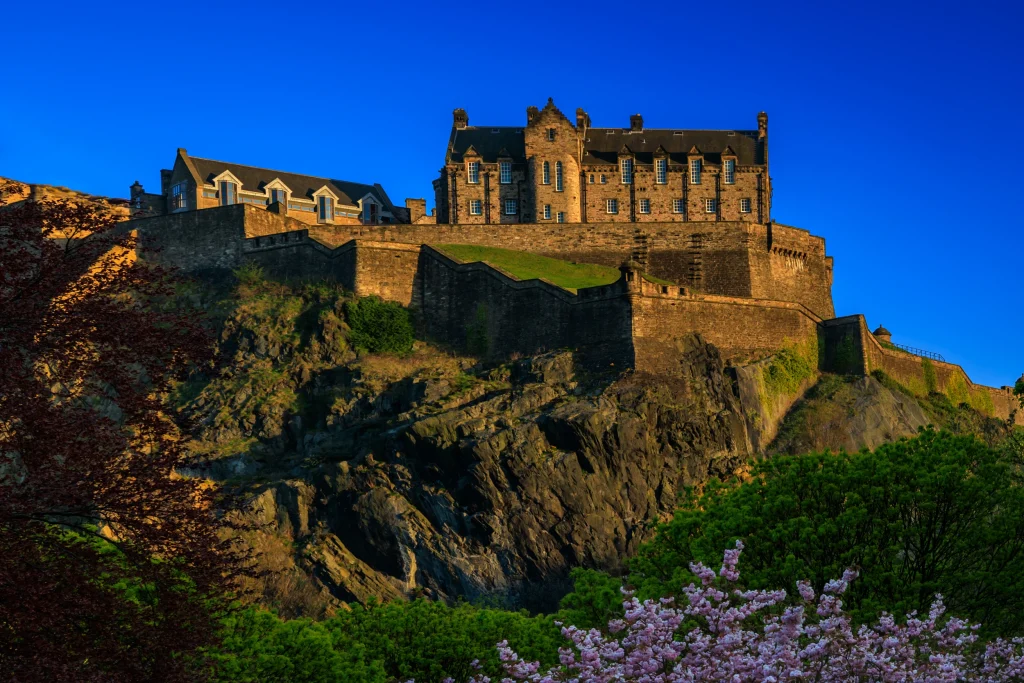
Princes Street Gardens offered the easiest escape—a long green refuge beneath the castle, open and generous in the heart of the city. Edinburgh Castle itself watches over everything from its volcanic perch, more symbol than surprise at this point, but still an imposing presence that earns its place on the skyline.
The Edinburgh I remember most was found slightly off the main current.
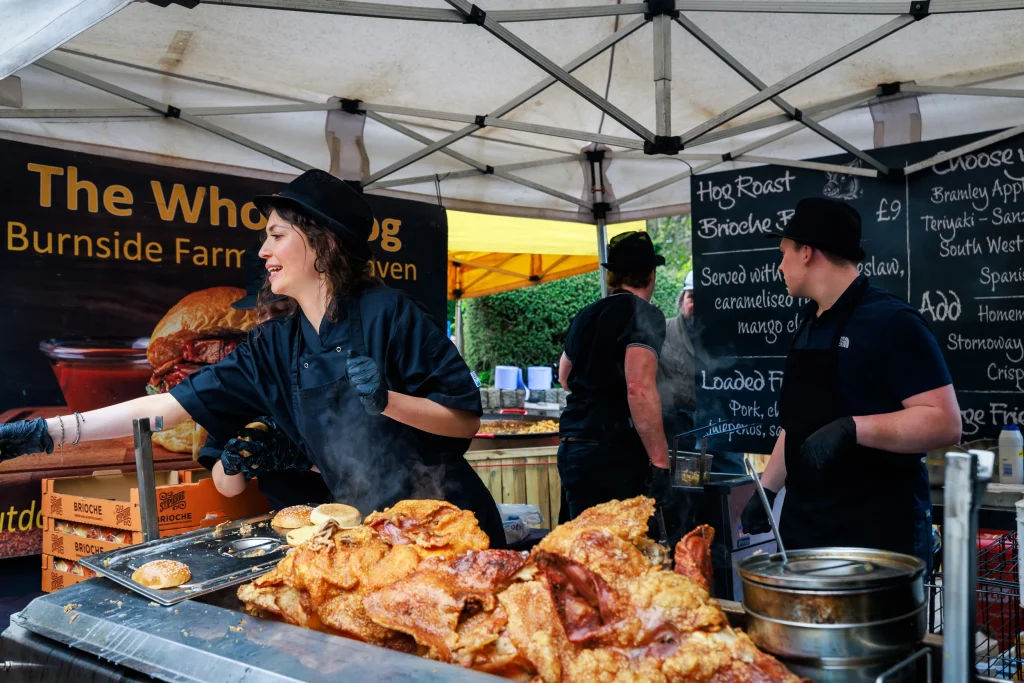
Stockbridge Market felt like a neighborhood going about its own business rather than performing for visitors. I bought a belt from a craftsman who clearly knew his trade. The transaction was straightforward and unhurried—two people doing business rather than a tourist buying a souvenir. It is nice to own a beautiful belt that was made by a person rather than a factory.
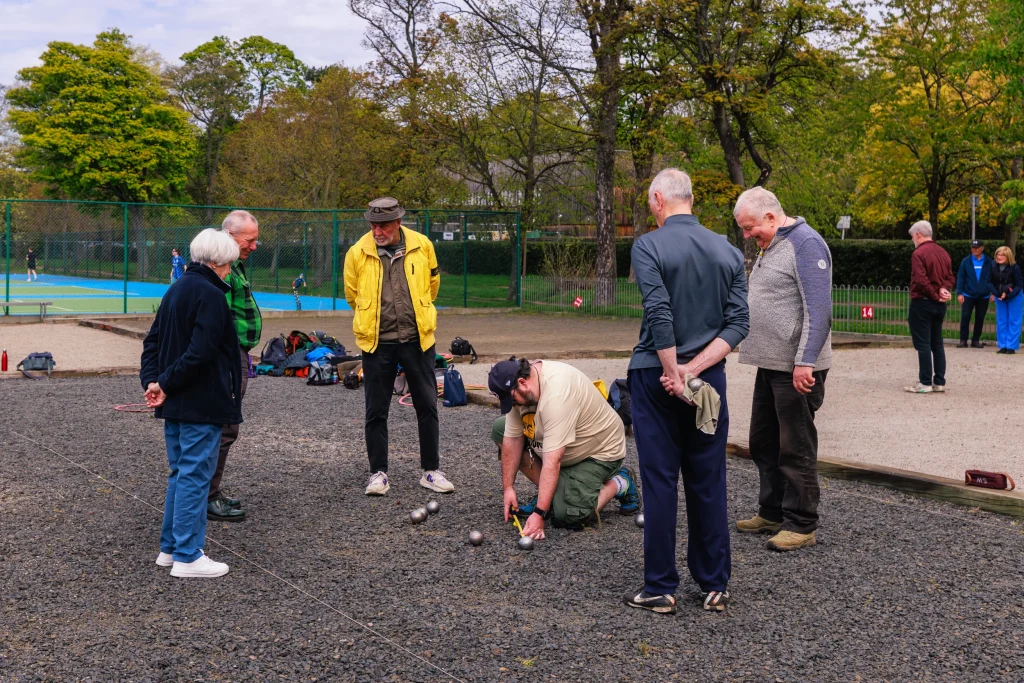
Nearby, I watched men playing boules at the Inverleith Pétanque Club. I had no idea people played boules in Scotland. The scene reminded me instantly of afternoons in the South of France.
From there I wandered through the Royal Botanic Garden Edinburgh. On a warm sunny afternoon, it was simply a pleasant place to walk.
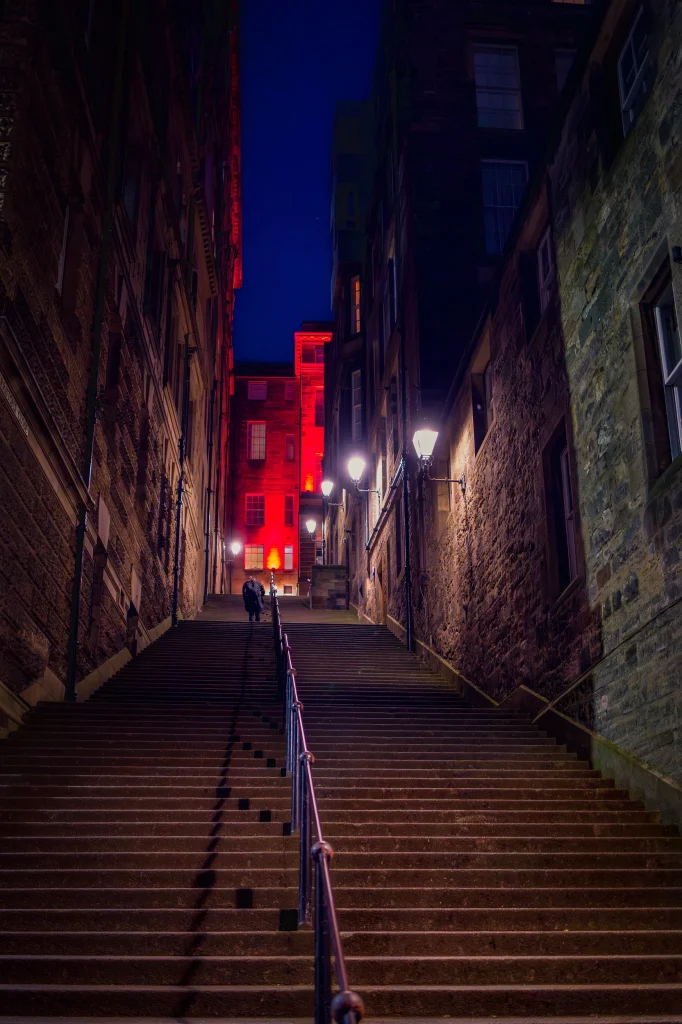
One evening, while returning to my hotel through the Old Town, I came across a long, steep staircase illuminated by red light. It looked like something out of The Exorcist—eerie, theatrical, and oddly magnificent. It was Warriston’s Close, named for the seventeenth-century lawyer and statesman Sir Archibald Johnston of Warriston. Of all the places I visited in Edinburgh, it remains one of the moments I remember most vividly.
The Scottish National Portrait Gallery was my favorite surprise of the trip. I enjoy seeing portraits of famous people. There is something satisfying about connecting a familiar name with an actual face.
I saw Franz Xaver Winterhalter’s portrait of Queen Victoria and a gripping portrait of Thomas Carlyle by the French painter Alphonse Legros, who reportedly offered to paint Carlyle for little or no fee if only the famously reluctant writer would agree to sit for him.
The building itself is worth the visit. Designed by Sir Robert Rowand Anderson and opened in 1889, the Great Hall was conceived as a shrine to Scottish national history. Gothic arches, stained glass, carved stone, and richly decorated surfaces combine to create an atmosphere that is both grand and intimate.
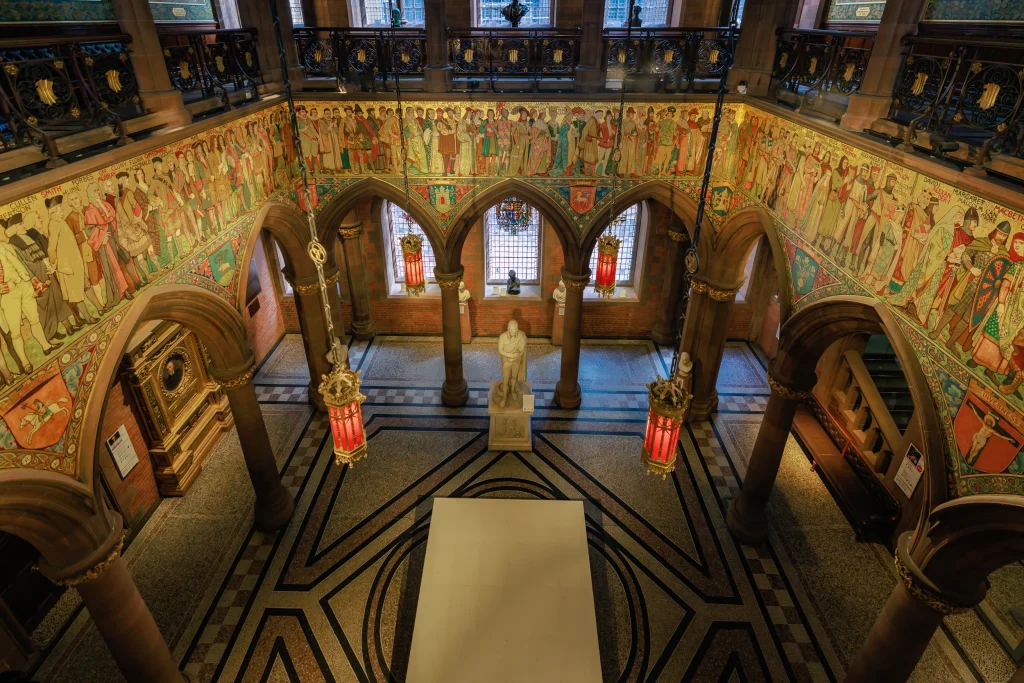
Because the ground floor was closed during my visit, I viewed the hall from the upper balcony. Below me stretched an intricate floor of geometric tiles. Above, a vast painted frieze by William Brassey Hole circles the walls, depicting 155 figures from Scottish history arranged in reverse chronological order. Every figure is identified and dressed according to his or her period. The effect is remarkable: an entire nation’s self-portrait assembled in one room.
I stood there for a long time, looking from one end of the hall to the other, trying to absorb the art, the history, and the unmistakable sense of national pride.
The adjoining library is quieter but equally memorable—the sort of room that encourages lingering.
For a different perspective, I climbed Calton Hill, where the castle, the Firth of Forth, and the contrasting geometries of the Old Town and New Town spread out below. The climb is short but genuinely steep, and the view at the top makes the effort feel like a fair trade. The rooftop terrace of the National Museum of Scotland offers another excellent vantage point. At sunset, the Melville Monument in St Andrew Square caught the light in the particular way Edinburgh light sometimes does—briefly, brilliantly, as if the city were briefly showing off.
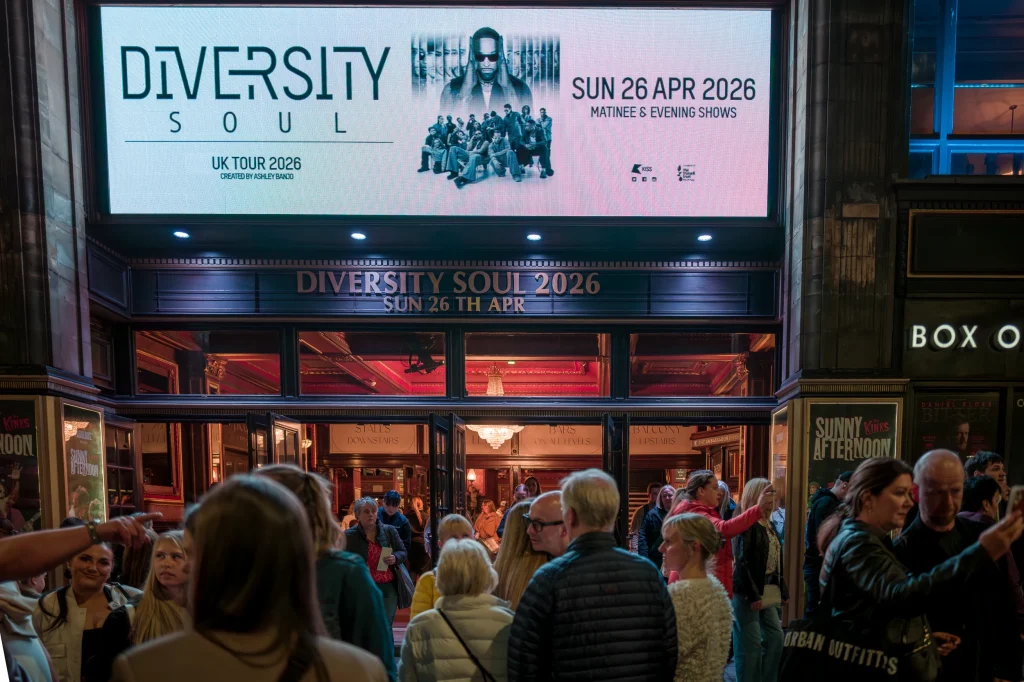
One evening I attended Soul, performed by the celebrated dance troupe Diversity at the Edinburgh Playhouse. The production explores humanity’s relationship with artificial intelligence through athletic choreography, cinematic visuals, and elaborate staging. But what I found myself watching as much as the performance was the audience—a packed theater full of young Scots completely absorbed in a live show they had previously encountered only through television clips, social media, and YouTube. It was a reminder that Edinburgh is not merely a city of castles, closes, and historical memory. It possesses a vibrant contemporary culture that requires no historical justification.
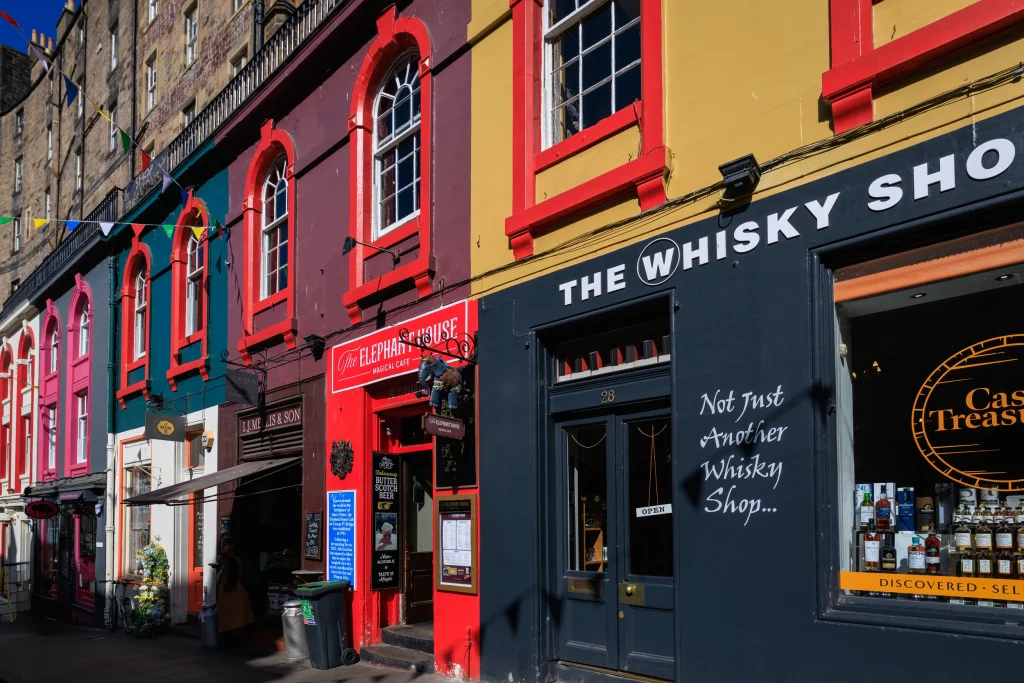
Which brings me back to Victoria Street, and the queue, and the story that may or may not be true.
Edinburgh has always understood something about narrative—how a place becomes meaningful not only through what happened there but through what people choose to believe about it. The city has been accumulating stories for centuries. The Harry Potter queue is simply the latest addition, and perhaps not so different in spirit from the Victorian ambition to paint 155 Scots on a gallery wall and call it a nation.