This towering sculpture of Japanese contemporary artist Yayoi Kusama stands on rue du Pont Neuf, between the Louis Vuitton headquarters and the Samaritaine. Bold, whimsical, and impossible to overlook, it stopped me in my tracks and turned an ordinary walk into a moment I’ll remember.
That stretch of the Pont Neuf was alive with the hum of Paris—buses rumbling past, the scent of fresh pastries drifting from a nearby café, and above it all, Kusama’s unmistakable polka dots adding a splash of surreal joy to the scene.
Yayoi Kusama—often called the princess of polka dots—is one of the world’s most distinctive living artists, known for her playful patterns and immersive installations.
“Paris 1874: The Impressionist Moment,” is an important presentation of 130 works including a rare reunion of many of the paintings first featured in that now-legendary Société Anonyme exhibition 150 years ago, which is recognized as the event that gave birth to French Impressionism. On April 15, 1874, the first impressionist exhibition opened in Paris. Hungry for independence, Monet, Renoir, Degas, Morisot, Pissarro, Sisley and Cézanne decided to free themselves from the rules by holding their own exhibition, outside official channels: impressionism was born.
You can see paintings by Paul Cézanne, Claude Monet, Berthe Morisot, and Camille Pissarro and meet their lesser-known contemporaries. See the art norms they were rebelling against and learn what political and social shifts sparked their new approach to art.
The show is on view until January 19, 2025 at the National Gallery of Art. This exhibition is not ticketed. You may need to join a line on busier days. Weekends tend to be most crowded.
The Bourse de Commerce in Paris began as a circular wheat exchange built between 1763 and 1767. Its open-air court was capped with a wooden dome, later replaced in 1811 by a copper dome supported by an iron framework—an early example of modern engineering. A major reconstruction in 1888–89 preserved the layout but added glass and a mounted canvas to the dome, giving the building much of its present form.
The $170 million redevelopment was led by Pritzker Prize–winning Japanese architect Tadao Ando, who had previously collaborated with Pinault in Venice at the Palazzo Grassi. Ando inserted a striking 108-foot-diameter concrete cylinder into the rotunda, creating a central exhibition space while preserving the original dome and framework.
Since 2021, the Bourse de Commerce has been the Paris home of the Pinault Collection, offering exhibitions and events that reflect Pinault’s fifty years as a collector and patron of the arts. The immense dome—listed as a historic monument—is breathtaking in itself, and the contemporary art on display is modern, challenging, and original.
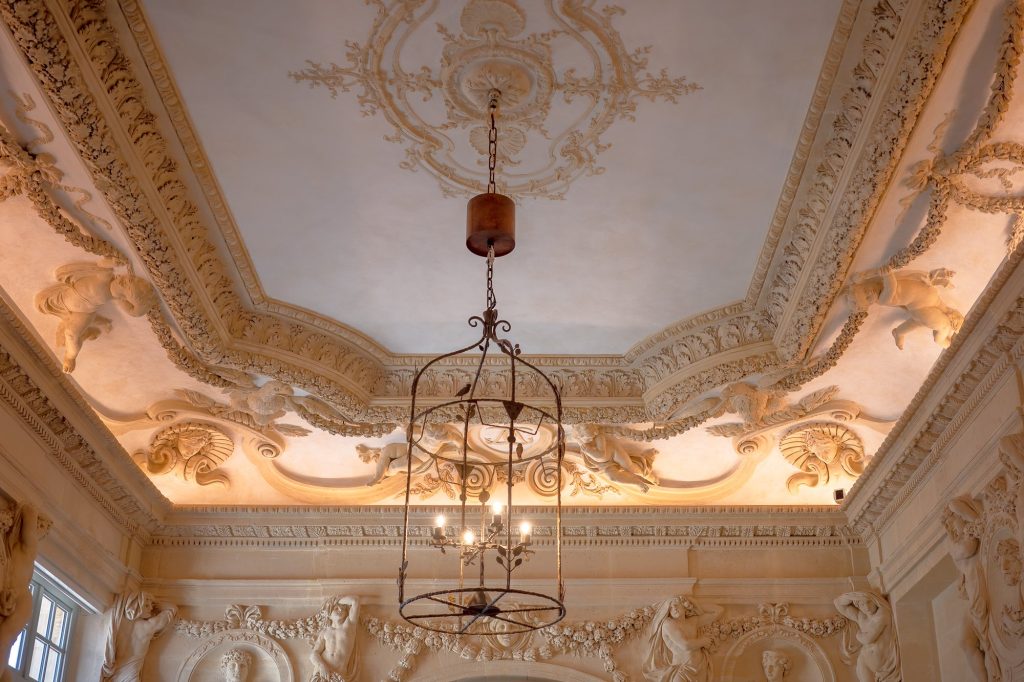
The Musée Picasso is an art gallery located in the Hôtel Salé in rue de Thorigny, in the Marais district of Paris, dedicated to the work of the Spanish artist Pablo Picasso (1881–1973). The hôtel Salé is probably, as Bruno Foucart wrote in 1985, “the grandest, most extraordinary, if not the most extravagant, of the grand Parisian houses of the 17th century”.
The museum collection includes more than 5,000 works of art (paintings, sculptures, drawings, ceramics, prints, engravings and notebooks) and tens of thousands of archived pieces from Picasso’s personal repository, including the artist’s photographic archive, personal papers, correspondence, and author manuscripts. A large portion of items were donated by Picasso’s family after his death, in accord with the wishes of the artist, who lived in France from 1905 to 1973.
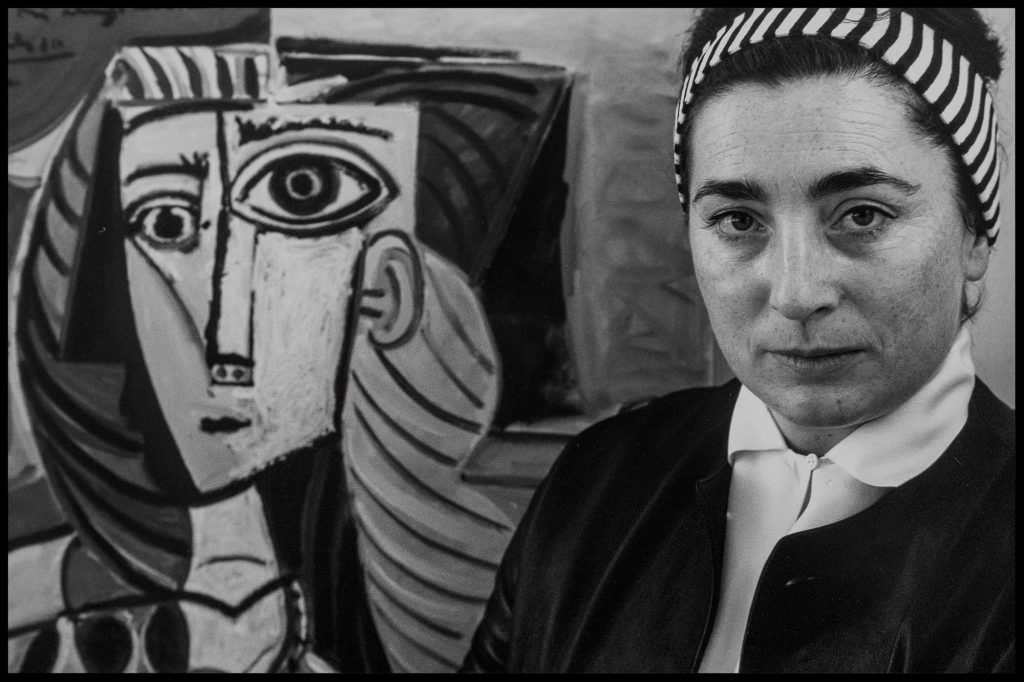
Photograph of Jaqueline Roque by David Douglas Duncan at the Musée Picasso
Jacqueline Roque (1927–1986) (shown above) was best known as the muse and second wife of Pablo Picasso. Their marriage lasted 11 years until his death, during which time he created over 400 portraits of her, more than any of Picasso’s other loves. Here, she poses with her striking portrait created in California. The photograph was made by David Douglas Duncan (1916-2018), an American photojournalist, known for his combat photographs and for his extensive domestic photography of Pablo Picasso and his wife Jacqueline.
From 2000 until 2009, Cultural Tourism DC led “Art on Call”, a city-wide effort to restore Washington’s abandoned police and fire call boxes as neighborhood artistic icons. Cultural Tourism DC partnered with the DC Commission on the Arts and Humanities and the District Department of Transportation on this initiative. The project is now managed by the DC Commission on the Arts and Humanities.