Théâtre du Châtelet, Paris

The Théâtre du Châtelet is a theater and opera house, located in the place du Châtelet in the 1st arrondissement of Paris.

One of two theaters (the other being the Théâtre de la Ville) built on the site of a châtelet, a small castle or fortress, it was designed by Gabriel Davioud (1824-1881) at the request of Baron Haussmann between 1860 and 1862. Originally named the Théâtre Impérial du Châtelet, it has undergone remodeling and name changes over the years. Currently it seats 2,500 people. The theater was registered as a historic monument on November 14, 1979.

Since 1979, the theatre has been operated by the City of Paris, and, after undergoing a major restoration, re-opened in 1980 under the name Théâtre Musical de Paris. It was acoustically re-modeled again in 1989 and reverted to the Théâtre du Châtelet name.

From 2017 to 2019, the theatre was closed for a $34.7 million renovation. While the main purpose of the renovation was to renew electrical circuits, fire safety and security, the Grand Salle was returned to its appearance of 1862 and the Grand Foyer to its Napoleon III style. Outside of the theatre, allegorical statues symbolizing dance, music, comedy and drama which were removed at the end of the 19th century were restored.


Sources: Wikipedia | Official Site | Paris Tourism | The New York Times | Le Monde | Juliette Gréco, Grande Dame of Chanson Française, Dies at 93 – The New York Times | A Look At Juliette Greco (1966) – YouTube

CDG Terminal 1: ‘The Camembert’

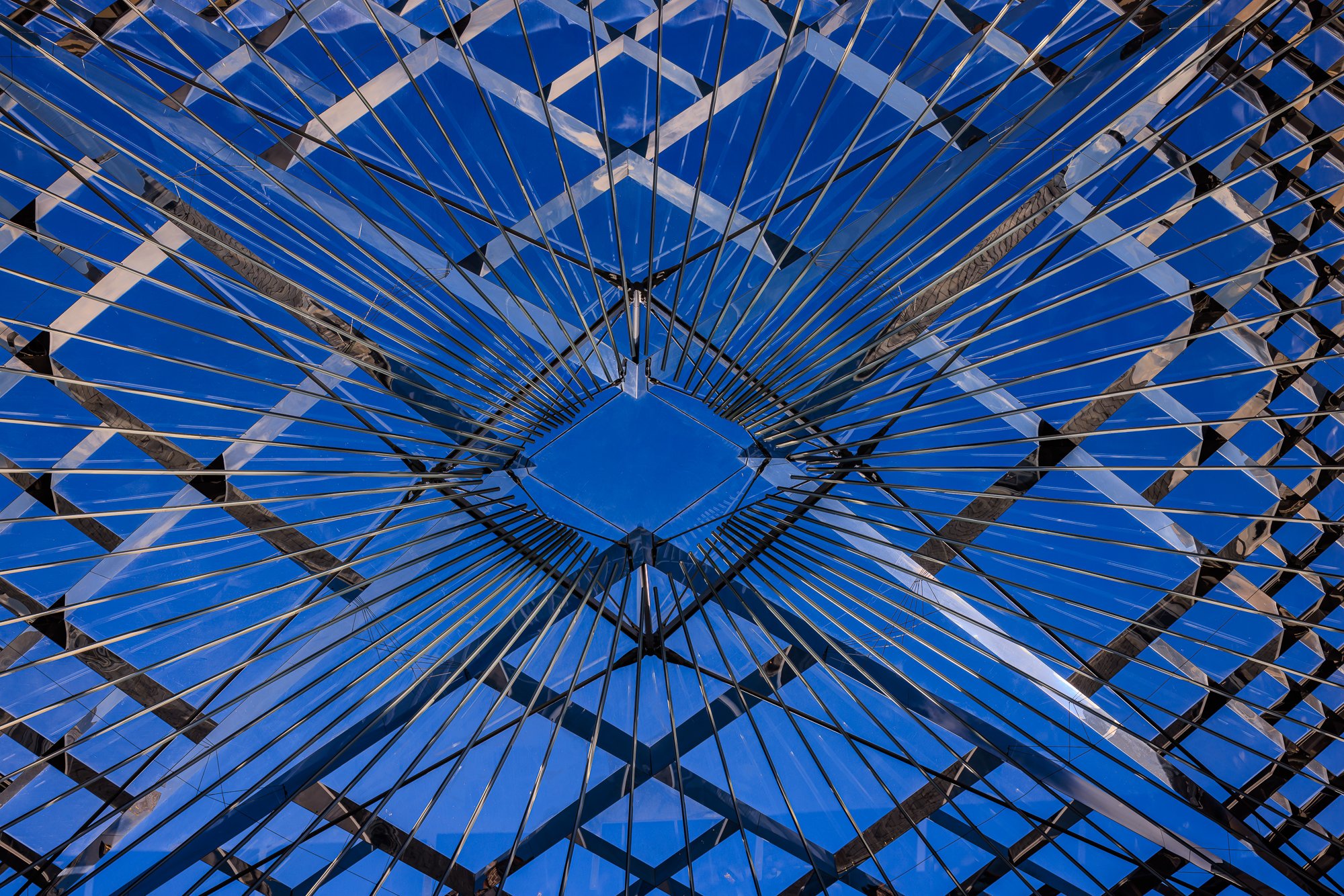
Paris-Charles de Gaulle airport (CDG) opened on March 13, 1974. It has three terminals. Terminal 1 (shown above) is the oldest terminal. It was inaugurated on March 8, 1974 by French Prime Minister Pierre Messmer (1916-2007), after eight years of construction.

Designed by the young architect Paul Andreu (1938-2018), this first terminal featured an innovative design of brutalist architecture. It has a central circular building linked to seven satellites. Designed to facilitate the distribution of passenger flows, this singular structure earned the terminal its nickname, which is still used today, the Camembert.

The first Air France flight from Paris-Charles de Gaulle took off on April 30, 1974. The Caravelle F-BHRA, the first aircraft of its type delivered to Air France, took off for Belgrade and Sofia, with a crew led by flight captain Henri Cibert.

Paris-Charles de Gaulle is the busiest airport within the European Union. In 2022, it handled 57,474,033 passengers and 34,657 aircraft movements, thus making it the world’s ninth busiest airport and Europe’s third busiest airport (after Istanbul and Heathrow) in terms of passenger numbers.


Sources: Air France | Wikipedia


Paris: Musée Picasso

The Musée Picasso is an art gallery located in the Hôtel Salé in rue de Thorigny, in the Marais district of Paris, dedicated to the work of the Spanish artist Pablo Picasso (1881–1973). The hôtel Salé is probably, as Bruno Foucart wrote in 1985, “the grandest, most extraordinary, if not the most extravagant, of the grand Parisian houses of the 17th century”.

The museum collection includes more than 5,000 works of art (paintings, sculptures, drawings, ceramics, prints, engravings and notebooks) and tens of thousands of archived pieces from Picasso’s personal repository, including the artist’s photographic archive, personal papers, correspondence, and author manuscripts. A large portion of items were donated by Picasso’s family after his death, in accord with the wishes of the artist, who lived in France from 1905 to 1973.

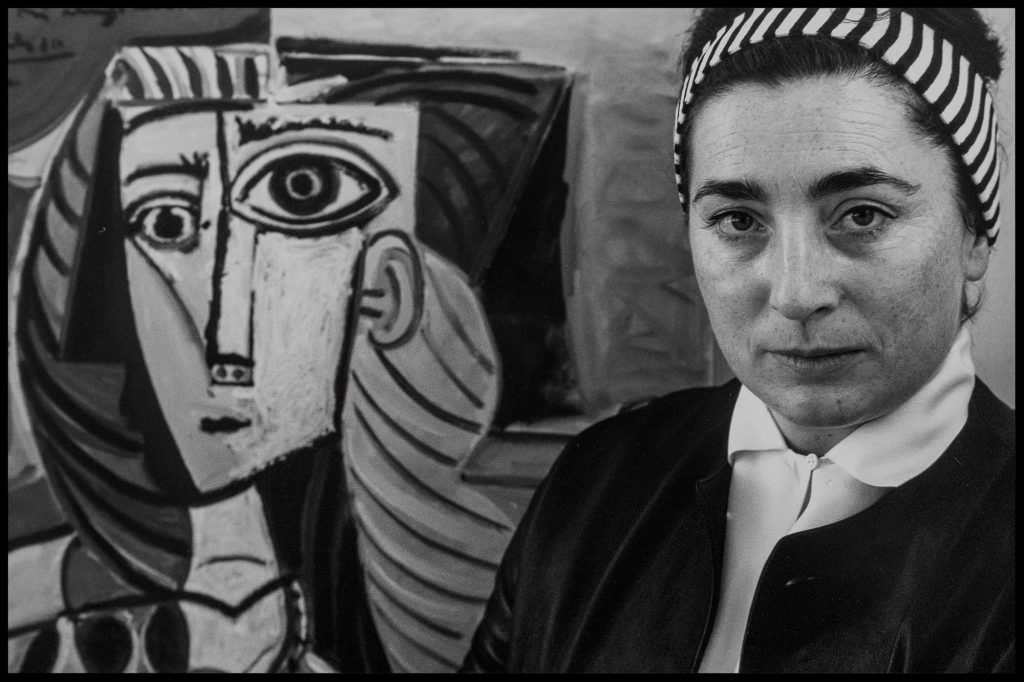
Jacqueline Roque (1927–1986) (shown above) was best known as the muse and second wife of Pablo Picasso. Their marriage lasted 11 years until his death, during which time he created over 400 portraits of her, more than any of Picasso’s other loves. Here, she poses with her striking portrait created in California. The photograph was made by David Douglas Duncan (1916-2018), an American photojournalist, known for his combat photographs and for his extensive domestic photography of Pablo Picasso and his wife Jacqueline.

Musée Jacquemart-André

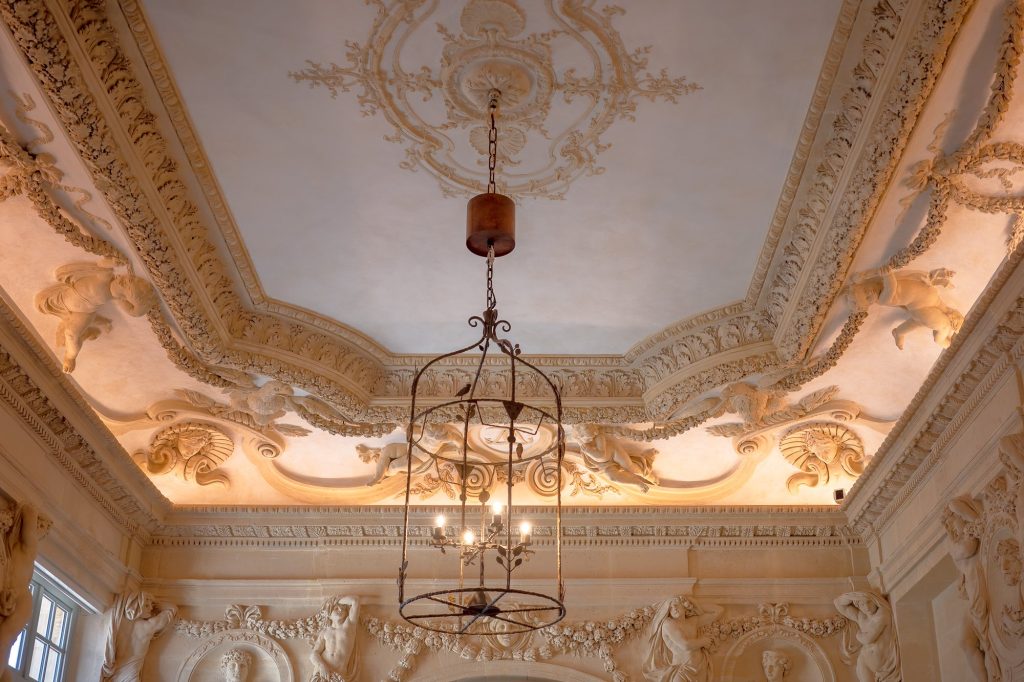
The Musée Jacquemart-André is a private museum located at 158 Boulevard Haussmann in the 8th arrondissement of Paris. The museum was created from the private home of Édouard André (1833–1894) and Nélie Jacquemart (1841–1912) to display the art they collected during their lives.

Édouard André, the scion of a Protestant banking family, devoted his considerable fortune to buying works of art. He then exhibited them in his new mansion built in 1869 by the architect Henri Parent, and completed in 1875.

André married a well-known society painter, Nélie Jacquemart, who had painted his portrait ten years earlier. The couple travelled in Italy, amassing one of the finest collections of Italian art in France. When Edouard André died, Nélie Jacquemart completed the decoration of the Italian Museum and travelled in the Orient to add more precious works to the collection. Faithful to the plan agreed with her husband, she bequeathed the mansion and its collections to the Institut de France as a museum, and it opened to the public in 1913.


Source: Wikipedia

Église Saint-Sulpice

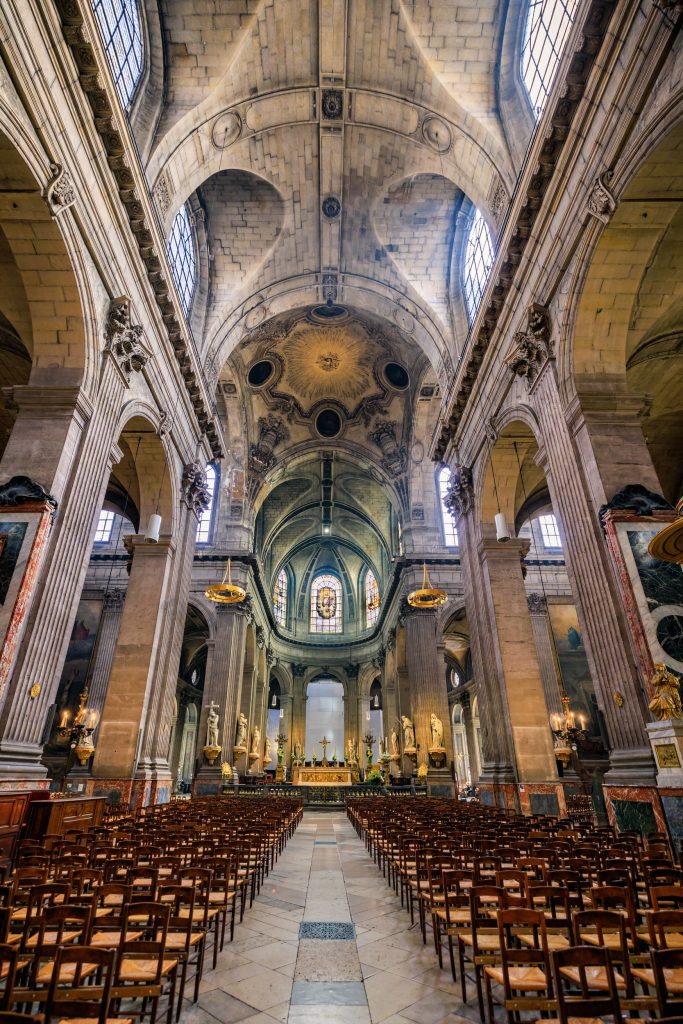
The Church of Saint-Sulpice is a Roman Catholic church in Paris, on the east side of Place Saint-Sulpice, in the Latin Quarter of the 6th arrondissement. It is only slightly smaller than Notre-Dame and thus the second-largest church in the city. It is dedicated to Sulpitius the Pious, a seventh century bishop and saint.

The present church is the second building on the site, erected over a Romanesque church originally constructed during the 13th century. Additions were made over the centuries, up to 1631. The current building was founded in 1646 by parish priest Jean-Jacques Olier (1608–1657) who had established the Society of Saint-Sulpice, a clerical congregation, and a seminary attached to the church.

The church is mentioned in Dan Brown’s 2003 novel The Da Vinci Code, an international bestseller that brought crowds of tourists to Saint-Sulpice.

The Marquis de Sade and Charles Baudelaire were baptized in Saint-Sulpice in 1740 and 1821, respectively. The church also saw the marriage of Victor Hugo to Adèle Foucher in 1822.

Source: Wikipedia


Hôtel de la Marine, Paris

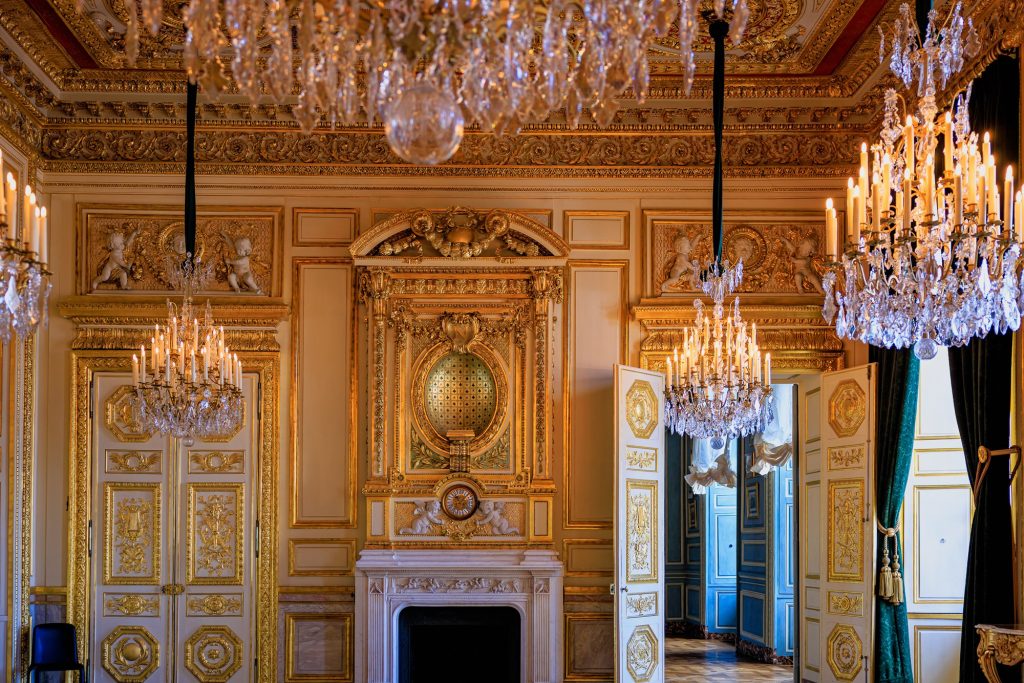
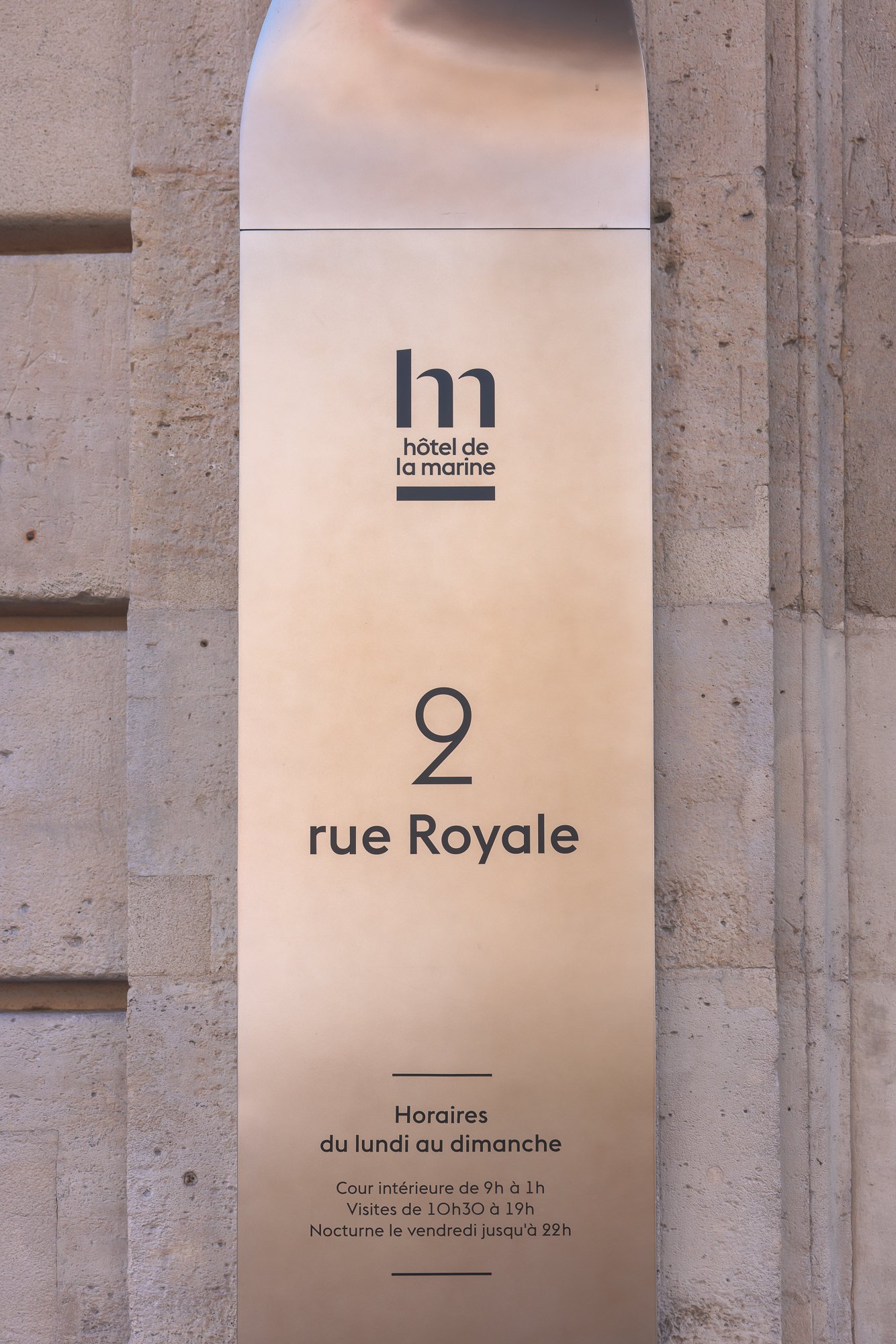
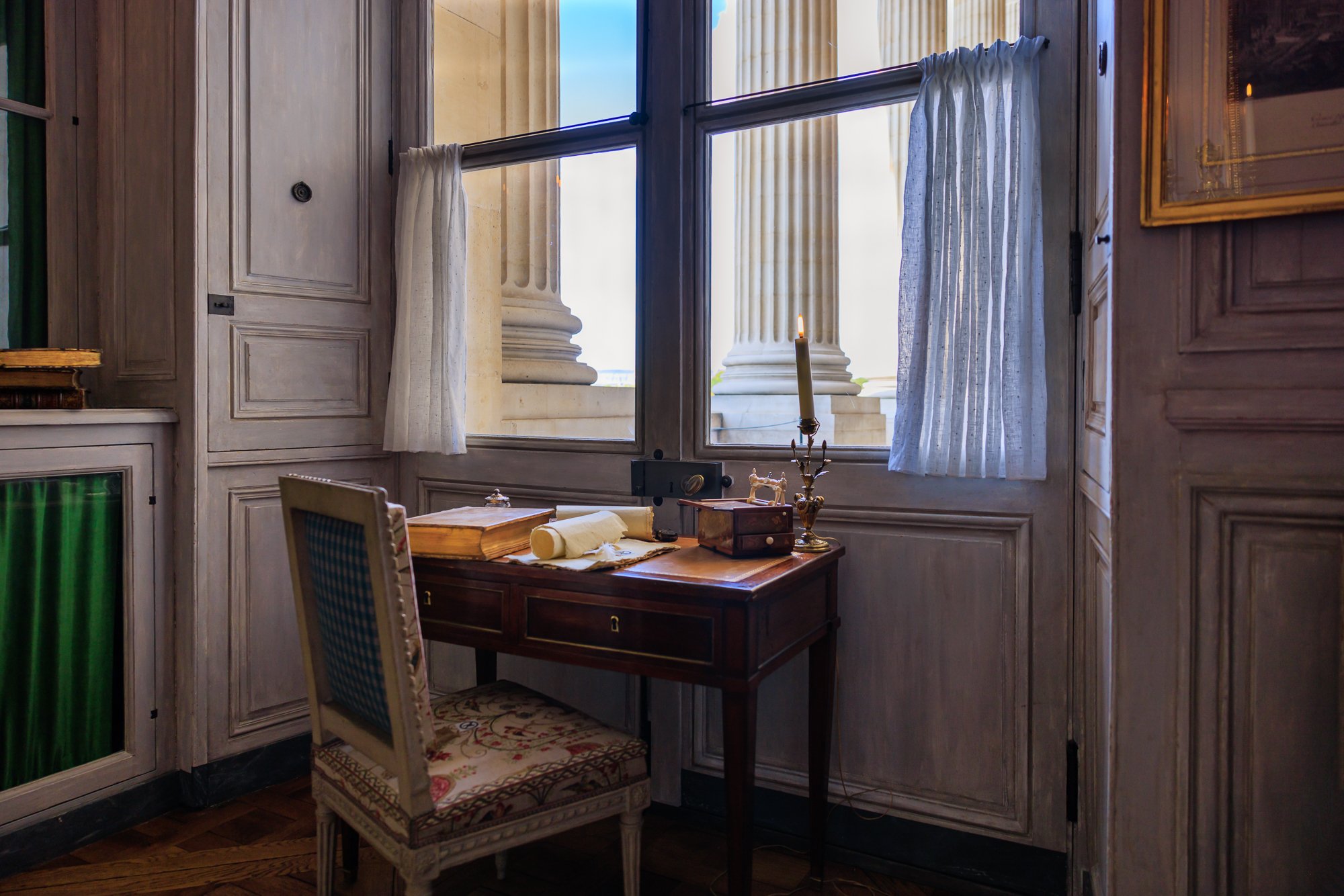
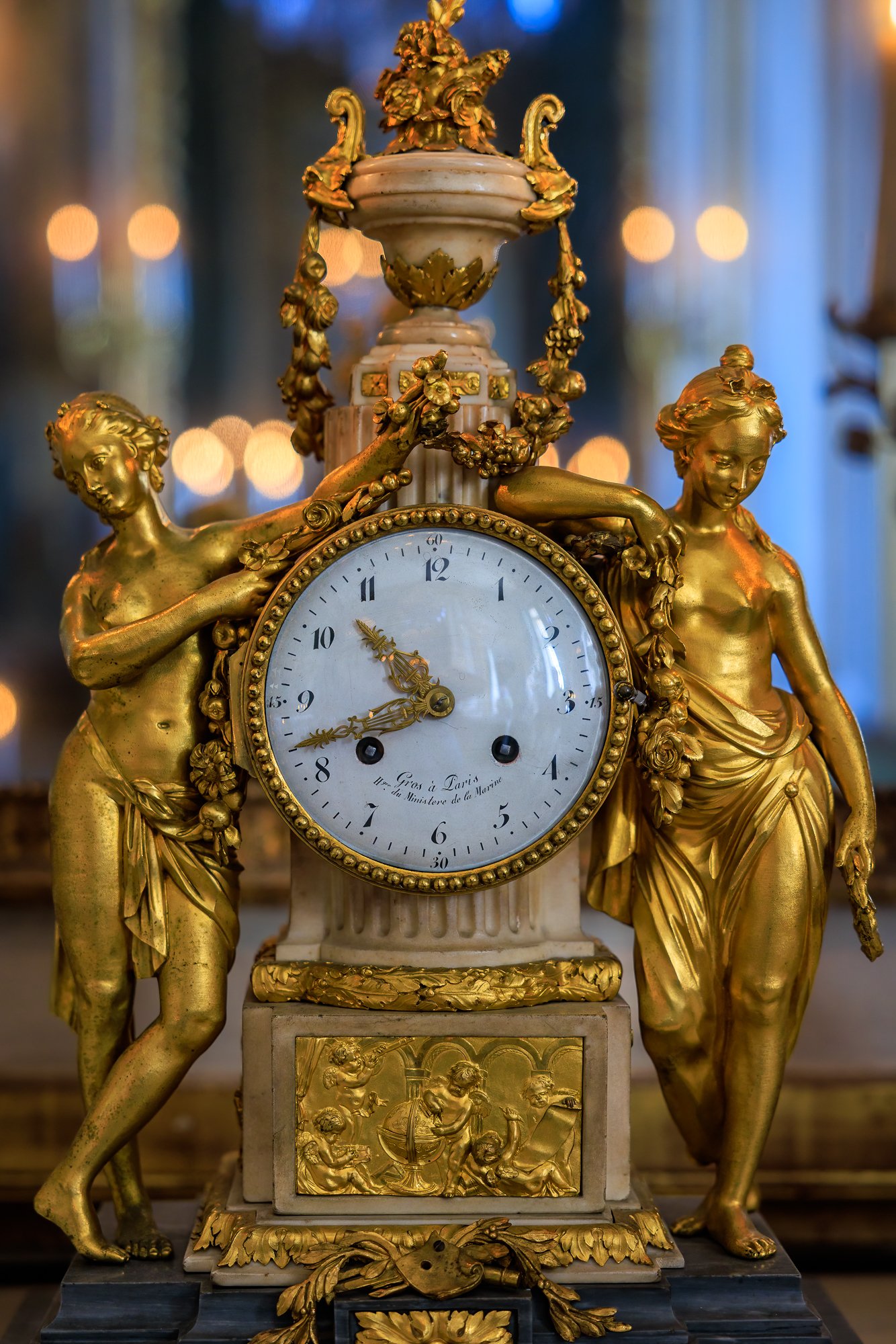
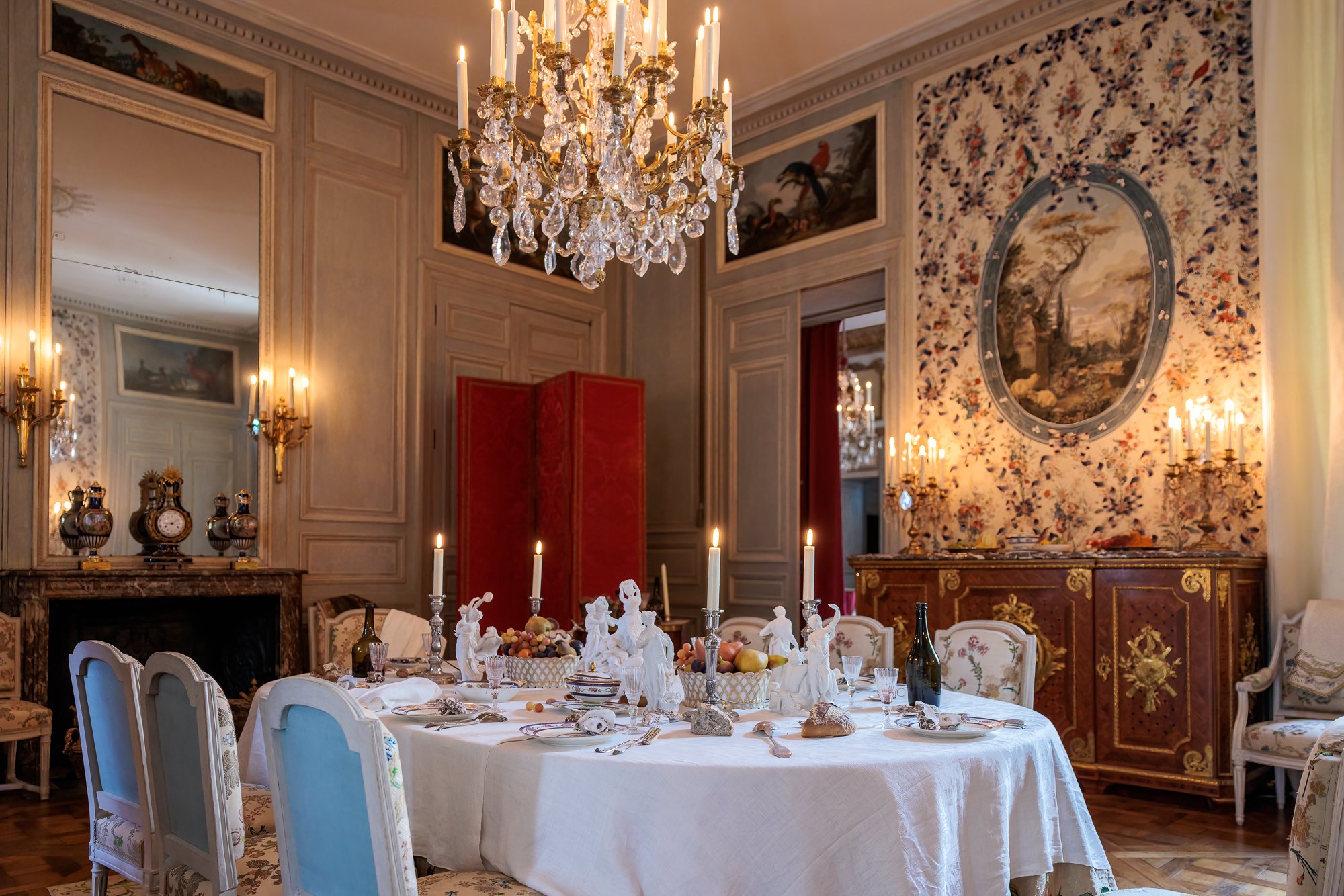
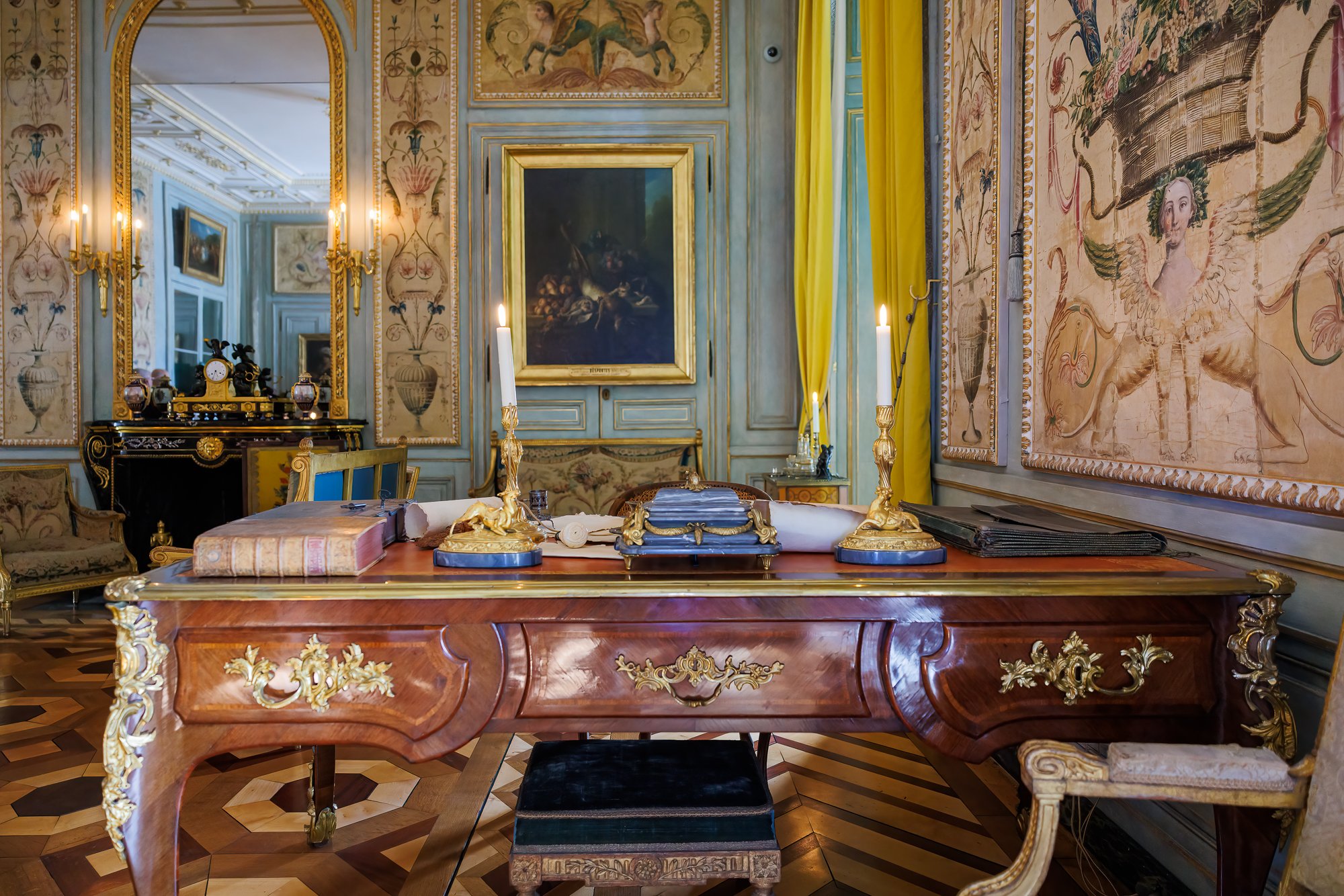
The hôtel de la Marine (also known as the hôtel du Garde-Meuble) is an historic building located on Place de la Concorde in Paris, to the east of rue Royale. It was designed and built between 1757 and 1774 by the architect Ange-Jacques Gabriel, on the newly created square first called Place Louis XV. The identical building to its west, constructed at the same time, now houses the hôtel de Crillon and the Automobile Club of France.

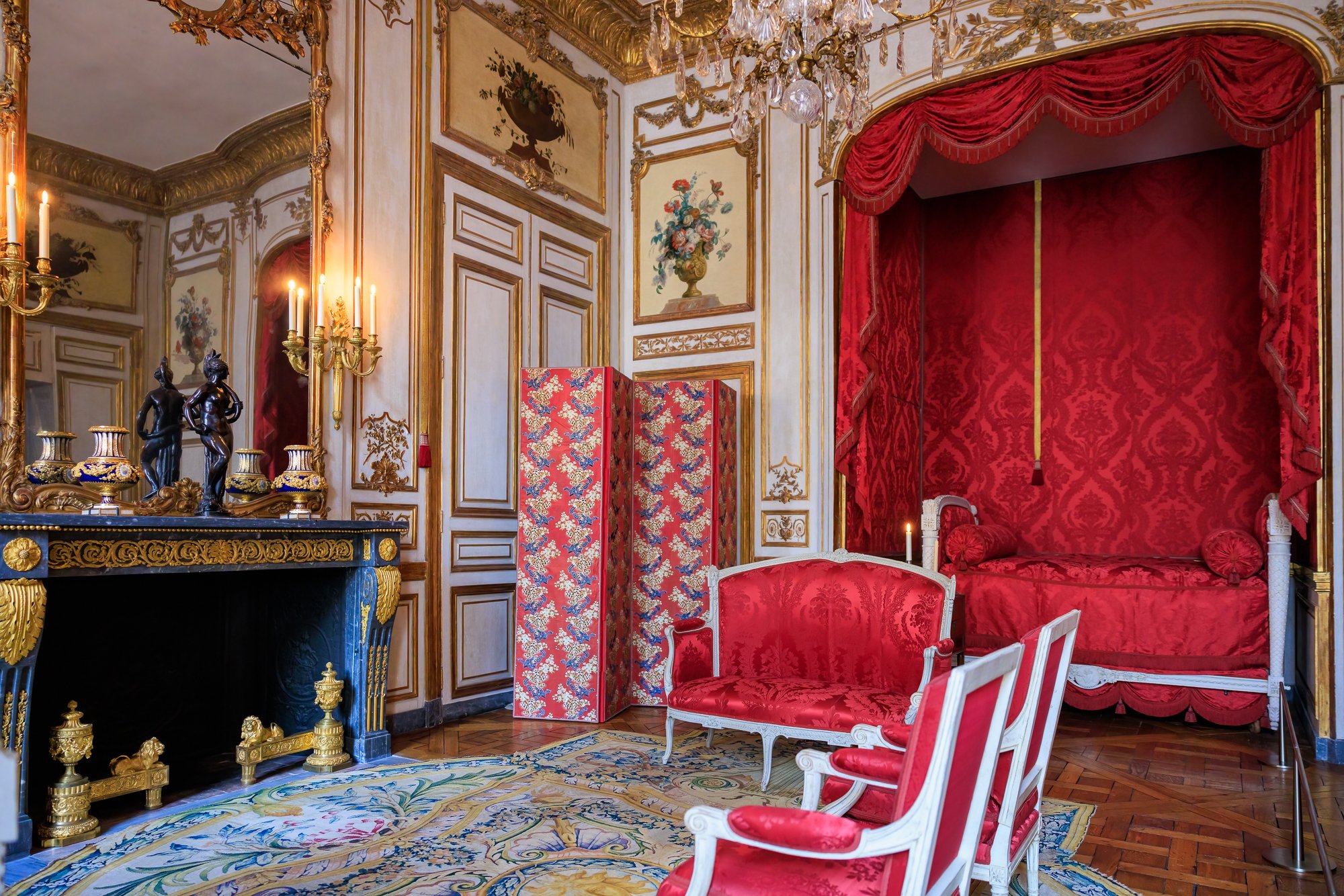
The hôtel de la Marine was originally the home of the royal Garde-Mobile, the office managing the furnishing of all royal properties. Following the French Revolution it became the Ministry of the French Navy, which occupied it until 2015. It was entirely renovated between 2015 and 2021. It now displays the restored 18th century apartments of Marc-Antoine Thierry de Ville-d’Avray, the King’s Intendant of the Garde-Meuble, as well the salons and chambers later used by the French Navy.

Major historical events have taken place in the hôtel de la Marine:

  • On 16 September 1792, the Crown Jewels were stolen at the Hôtel de la Marine. At night, around forty people got inside the reception room where the jewels were displayed and stole goods worth around 30 million French francs. Most of the jewels were found again two years later. However, The French Blue (Le bleu de France) was not recovered. It reappeared 20 years later in England, completely recut with the largest section of the diamond appearing under the Hope name in an 1839 gem catalog from the Hope banking family. The Hope Diamond is now in the National Museum of Natural History in Washington, D.C.
  • In a room overlooking Place de la Concorde Marie Antoinette’s death warrant was signed. She was guillotined on 16 October 1793 on Place de la Concorde. She was 37 years old.
  • On 27 April 1848, in the office of minister François Arago in the Hôtel de la Marine, the decree to abolish slavery in the French colonies was signed in Paris. Victor Schœlcher, an ardent defender of human rights, was the man behind this historic decision.

The renovation is beautiful. The views of Paris monuments are exceptional.

Sainte-Chapelle, Paris

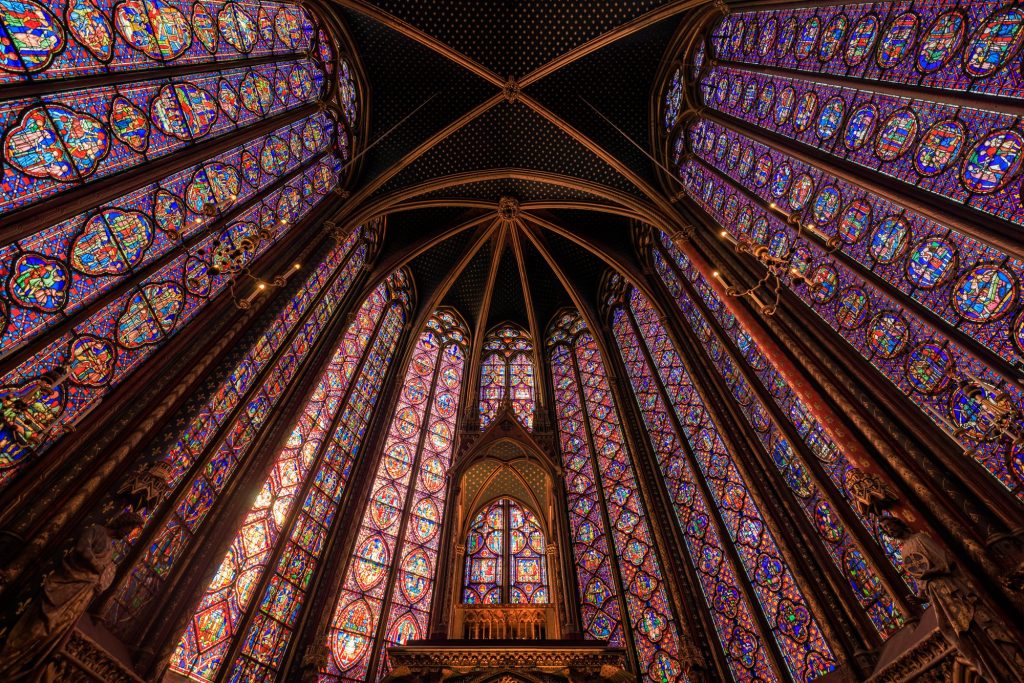
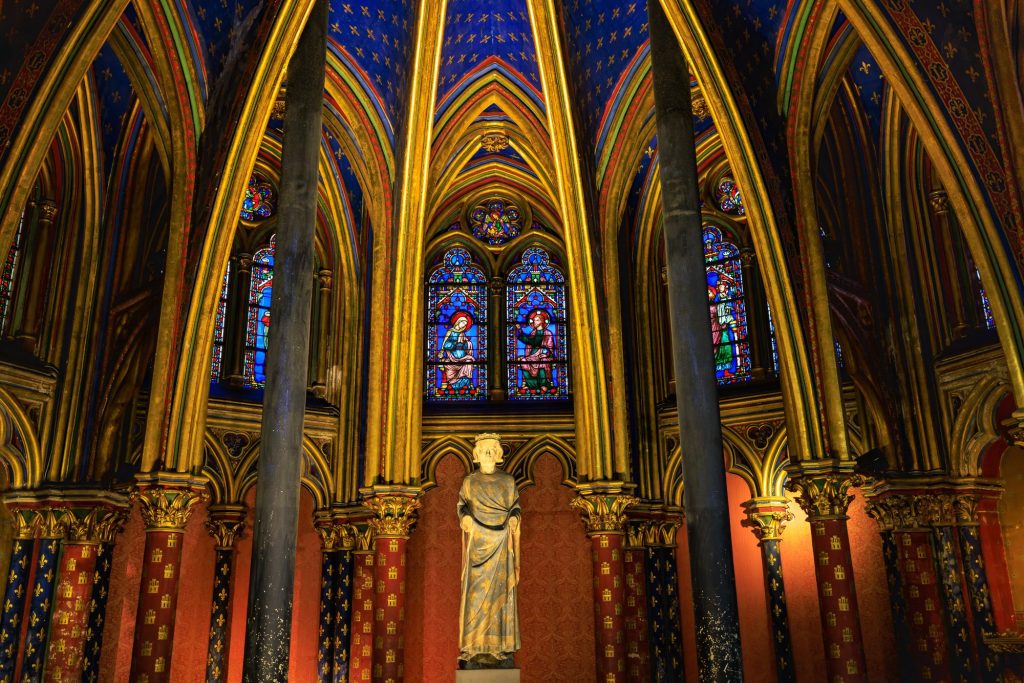
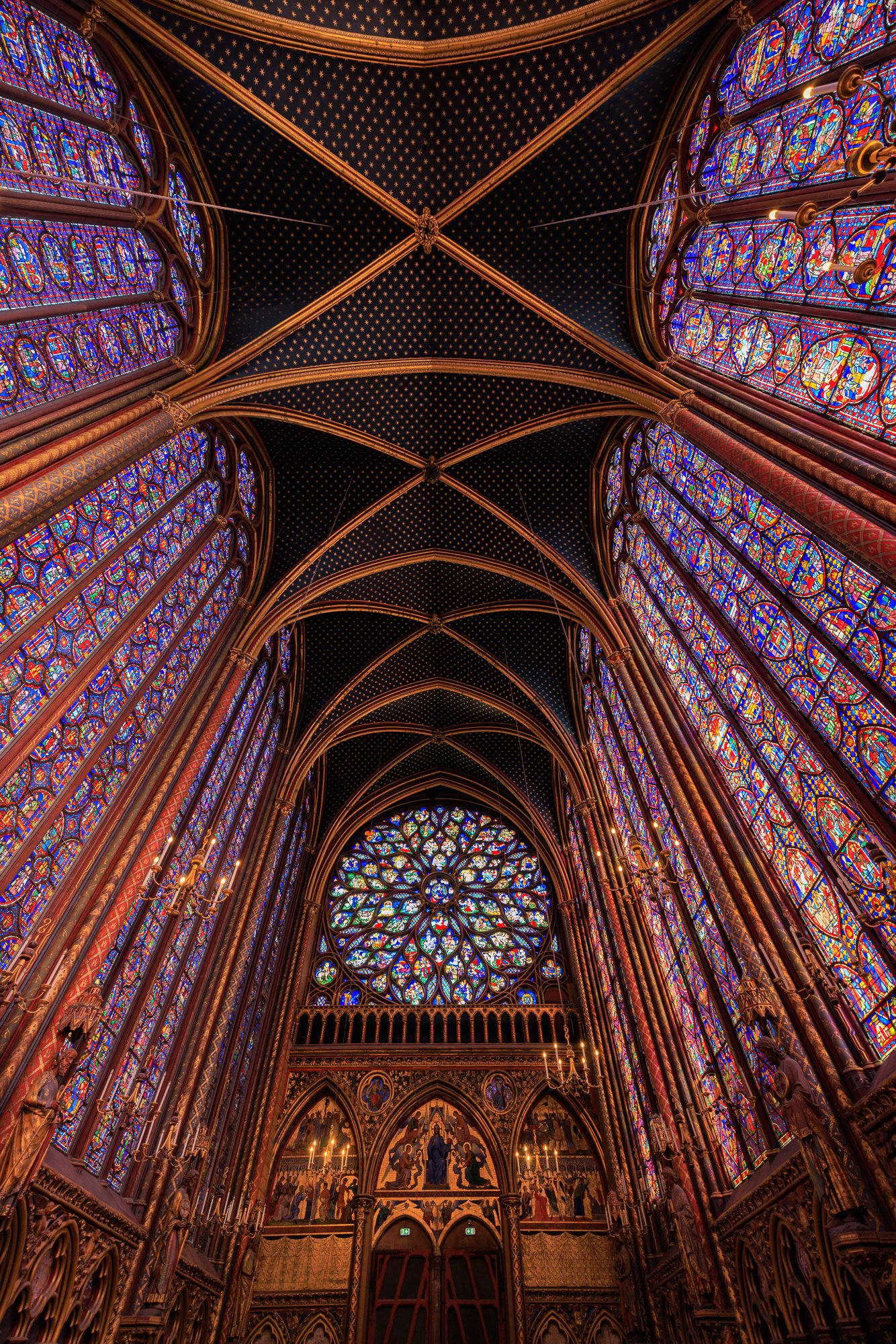
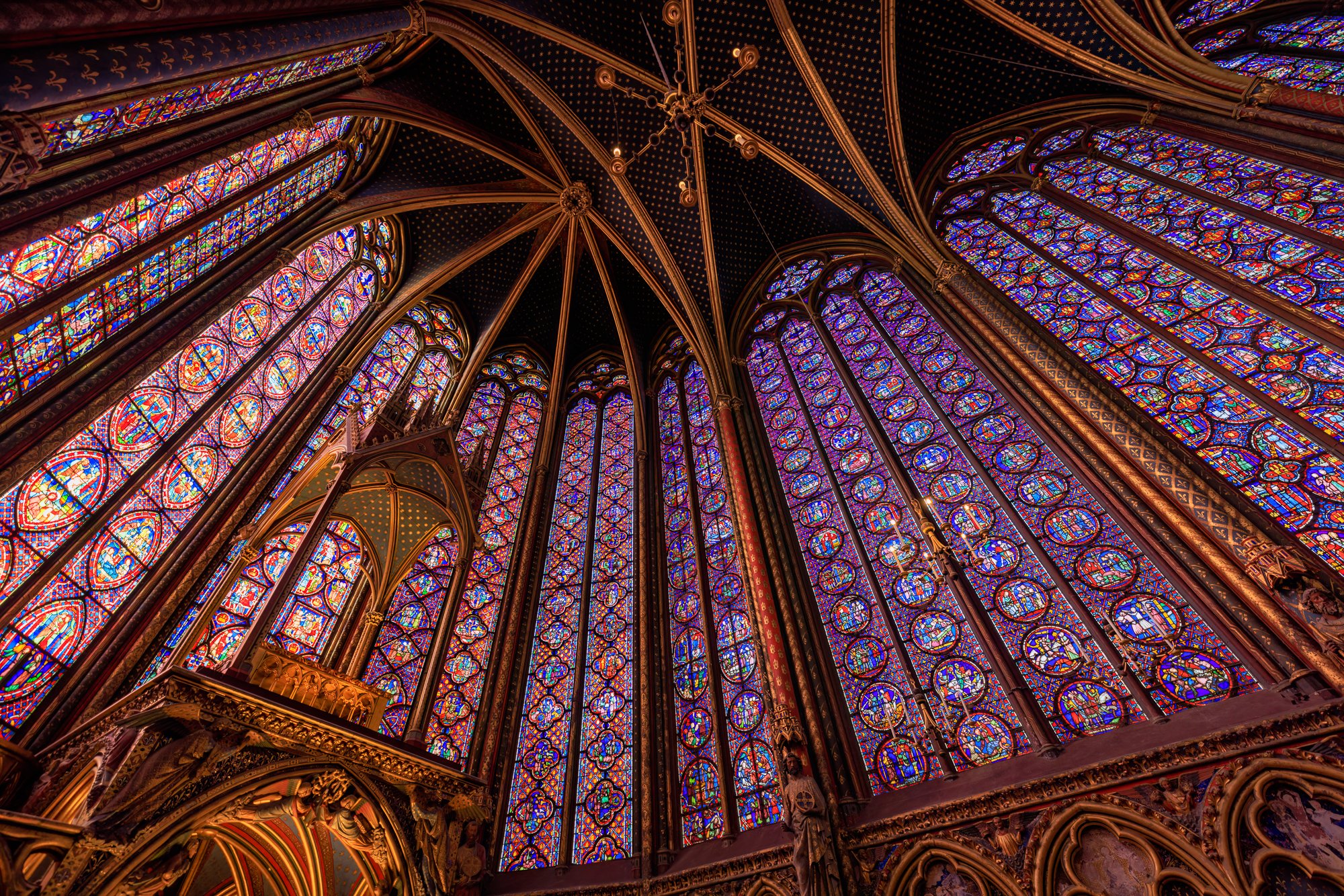
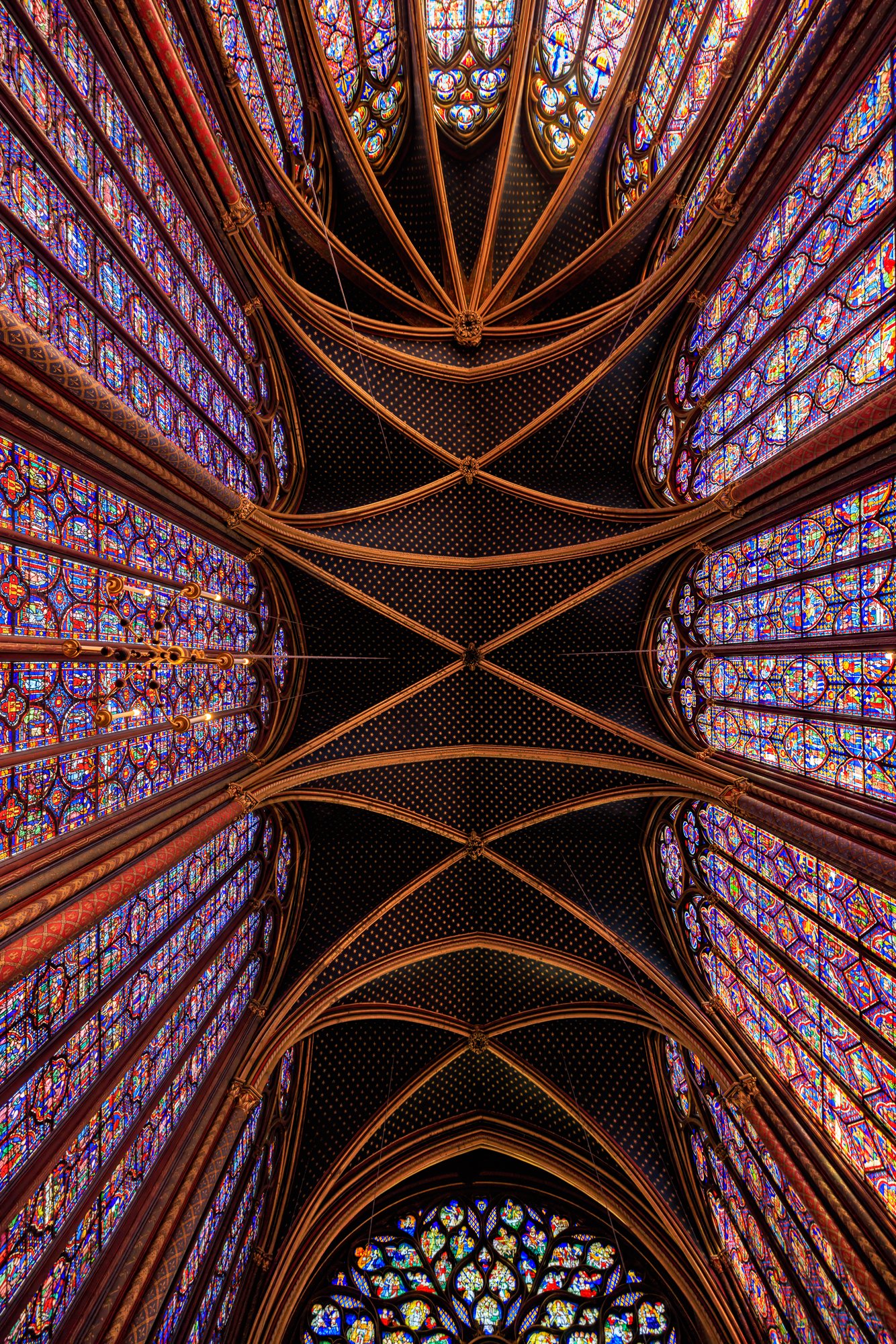
The Sainte-Chapelle is the finest royal chapel to be built in France. The chapel is filled with 1,113 stained glass windows illustrating the Bible. Construction of the chapel began sometime after 1238 and it was consecrated on April 26, 1248. King Louis IX of France commissioned the chapel to house his collection of Passion relics, including Christ’s Crown of Thorns – one of the most important relics in medieval Christendom. This was later held in the nearby Notre-Dame Cathedral until the 2019 fire, which it survived.

Along with the Conciergerie, Sainte-Chapelle is one of the earliest surviving buildings of the Capetian royal palace on the Île de la Cité. The Capetian dynasty was the ruling house of France from 987 to 1328. Although damaged during the French Revolution and restored in the 19th century, Sainte-Chapelle has one of the most extensive 13th-century stained glass collections anywhere in the world.

Sainte-Chapelle, created so long ago, inspires awe in the modern world. You can buy timed tickets here.


Sources:

Assemblée Nationale – Palais Bourbon

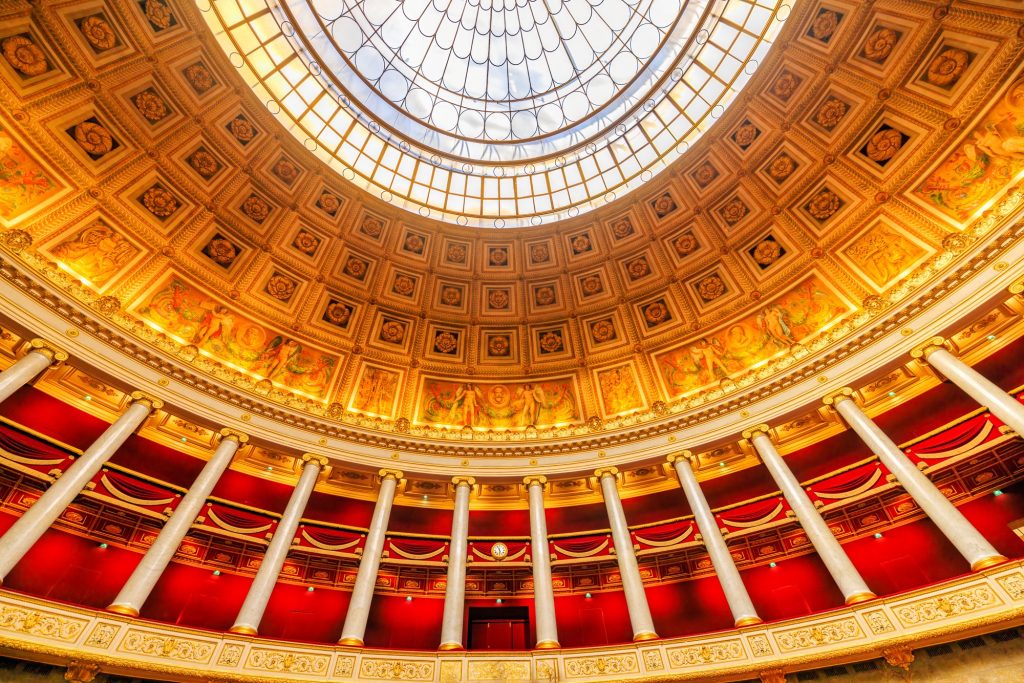
The National Assembly (French: Assemblée nationale) is the lower house of the bicameral French Parliament under the Fifth Republic, the upper house being the Senate (Sénat). The National Assembly’s legislators are known as députés.

There are 577 députés, each elected by a single-member constituency (at least one per department) through a two-round system; thus, 289 seats are required for a majority. The president of the National Assembly presides over the body. The officeholder is usually a member of the largest party represented, assisted by vice presidents from across the represented political spectrum. The National Assembly’s term is five years; however, the President of France may dissolve the Assembly, thereby calling for new elections, unless it has been dissolved in the preceding twelve months. Following a tradition started by the first National Assembly during the French Revolution, the left-wing parties sit to the left as seen from the president’s seat and the right-wing parties to the right; the seating arrangement thus directly indicates the left–right political spectrum as represented in the Assembly.

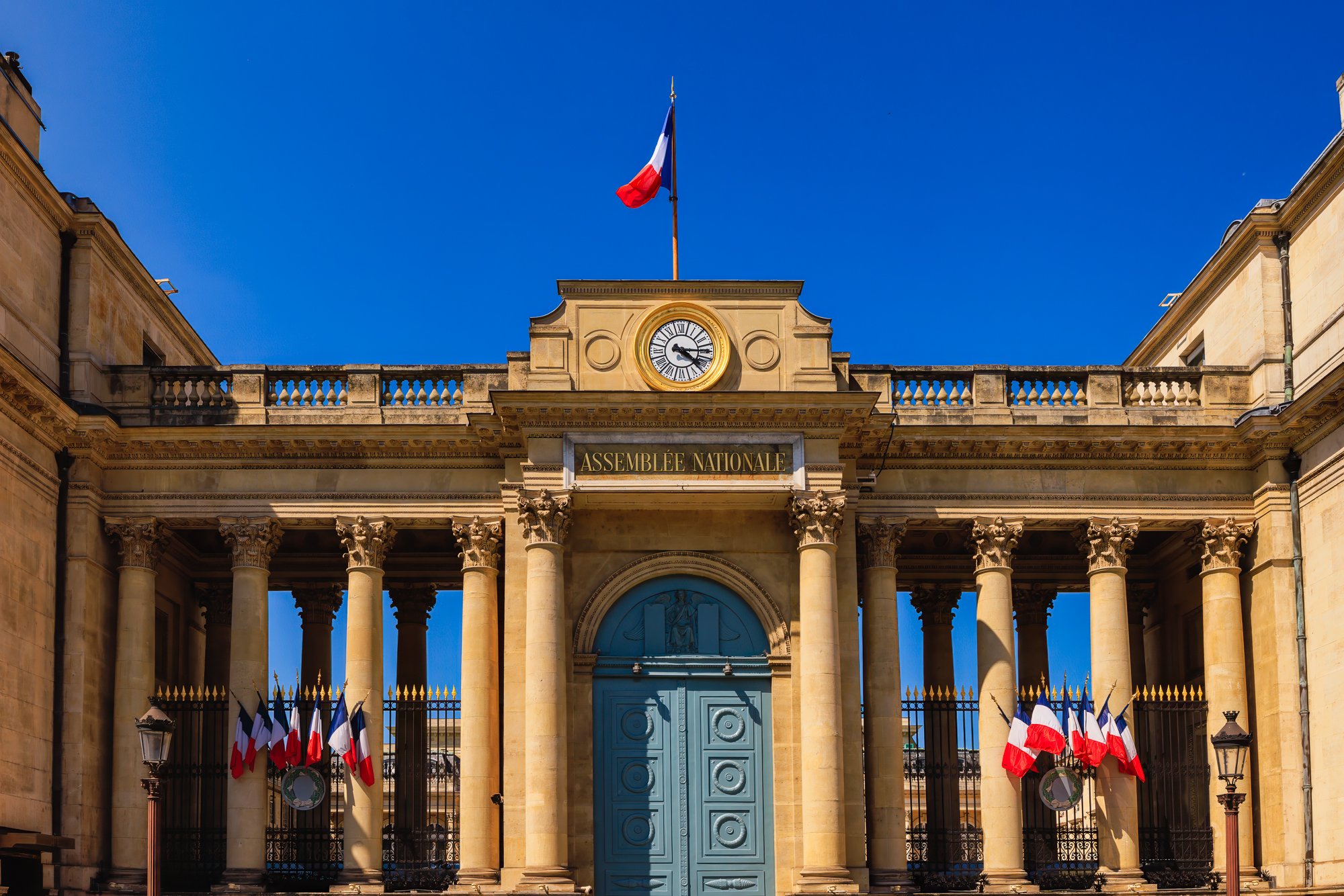
The Palais Bourbon (shown here) is the official seat of the Assemblée Nationale. It is prominently located in the 7th arrondissement of Paris, on the Rive Gauche of the Seine, across from the Place de la Concorde. Since 1799, the Palais Bourbon has served as the home of all the lower houses of the French parliament. The Assembly also uses other neighboring buildings, including the Immeuble Chaban-Delmas on the Rue de l’Université, Paris. Like most institutions of importance in Paris, it is guarded by Republican Guards.

The original palace was built beginning in 1722 for Louise Françoise de Bourbon, Duchess of Bourbon, the legitimized daughter of Louis XIV and the Marquise de Montespan. Four successive architects – Lorenzo Giardini, Pierre Cailleteau, Jean Aubert and Jacques Gabriel – completed the palace in 1728. It was then nationalized during the French Revolution. From 1795 to 1799, during the period known as the Directory, it was the meeting place of the Council of Five Hundred, which served as the lower house of the legislature of France and chose the five Directors, who jointly held executive power. 

Beginning in 1806, during Napoleon’s French Empire, Bernard Poyet’s Neoclassical facade was added to mirror that of the Church of the Madeleine, facing it across the Seine beyond the Place de la Concorde.

The palace complex today has a floor area of 124,000 m2 (1,330,000 sq ft), with over 9,500 rooms, in which 3,000 people work. The complex includes the Hôtel de Lassay, on the west side of the Palais Bourbon; it is the official residence of the President of the National Assembly.

Read more

Arc de Triomphe, Paris

The Arc de Triomphe de l’Étoile stands at the western end of the Champs-Élysées at the center of Place Charles de Gaulle, formerly named Place de l’Étoile—the étoile or “star” of the juncture formed by its twelve radiating avenues. The location of the arc and the plaza is shared between three arrondissements, 16th (south and west), 17th (north), and 8th (east). The Arc de Triomphe honors those who fought and died for France in the French Revolutionary and Napoleonic Wars, with the names of all French victories and generals inscribed on its inner and outer surfaces. Beneath its vault lies the Tomb of the Unknown Soldier from World War I.

The central cohesive element of the Axe historique (historic axis, a sequence of monuments and grand thoroughfares on a route running from the courtyard of the Louvre to the Grande Arche de la Défense), the Arc de Triomphe was designed by Jean Chalgrin in 1806; its iconographic programme pits heroically nude French youths against bearded Germanic warriors in chain mail (a type of armor). It set the tone for public monuments with triumphant patriotic messages. Inspired by the Arch of Titus in Rome, the Arc de Triomphe has an overall height of 50 m (164 ft), width of 45 m (148 ft) and depth of 22 m (72 ft), while its large vault is 29.19 m (95.8 ft) high and 14.62 m (48.0 ft) wide. The smaller transverse vaults are 18.68 m (61.3 ft) high and 8.44 m (27.7 ft) wide. Three weeks after the Paris victory parade in 1919 (marking the end of hostilities in World War I), Charles Godefroy flew his Nieuport biplane under the arch’s primary vault, with the event captured on newsreel, shown below.

Charles Godefroy flying a Nieuport 27 through the Arc de Triomphe (1919)

Paris’s Arc de Triomphe was the tallest triumphal arch until the completion of the Monumento a la Revolución in Mexico City in 1938, which is 67 m (220 ft) high. The Arch of Triumph in Pyongyang, completed in 1982, is modeled on the Arc de Triomphe and is slightly taller at 60 m (197 ft). The Grande Arche in La Défense near Paris is 110 meters high. Although it is not named an Arc de Triomphe, it has been designed on the same model and from the perspective of the Arc de Triomphe. It qualifies as the world’s tallest arch.

Beneath the Arc de Triomphe is the Tomb of the Unknown Soldier from World War I. Interred on Armistice Day 1920, an eternal flame burns in memory of the dead who were never identified (now in both world wars).

A ceremony is held at the Tomb of the Unknown Soldier every November 11 on the anniversary of the Armistice of November 11, 1918 signed by the Entente Powers and Germany in 1918. It was originally decided on 12 November 1919 to bury the unknown soldier’s remains in the Panthéon, but a public letter-writing campaign led to the decision to bury him beneath the Arc de Triomphe. The coffin was put in the chapel on the first floor of the Arc on November 10, 1920, and put in its final resting place on January 28, 1921. The slab on top bears the inscription: Ici repose un soldat français mort pour la Patrie, 1914–1918 (“Here rests a French soldier who died for the Fatherland, 1914–1918”).

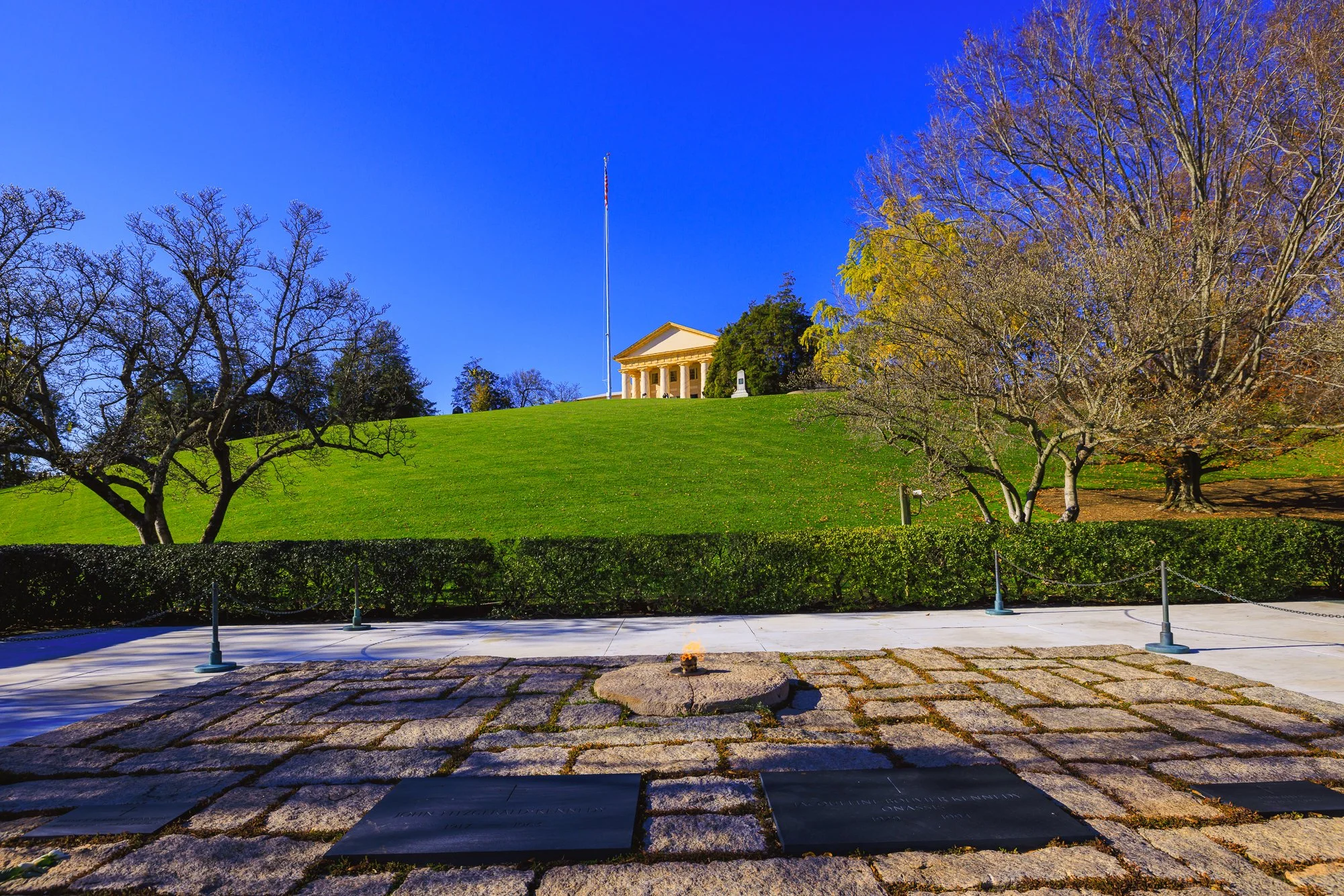
In 1961, U.S. President John F. Kennedy and First Lady Jacqueline Kennedy paid their respects at the Tomb of the Unknown Soldier, accompanied by President Charles de Gaulle. After the 1963 assassination of President Kennedy, Mrs. Kennedy remembered the eternal flame at the Arc de Triomphe and requested that an eternal flame be placed next to her husband’s grave at Arlington National Cemetery in Virginia.

Bibliothèque nationale de France, Richelieu Site

The Bibliothèque nationale de France (‘National Library of France’; BnF) is the national library of France, located in Paris on two main sites known respectively as Richelieu and François-Mitterrand. It is the national repository of all that is published in France. Some of its extensive collections, including books and manuscripts but also precious objects and artworks, are on display at the BnF Museum (formerly known as the Cabinet des Médailles) on the Richelieu site.

The National Library of France is a public establishment under the supervision of the Ministry of Culture. Its mission is to constitute collections, especially the copies of works published in France that must, by law, be deposited there, conserve them, and make them available to the public. It produces a reference catalog, cooperates with other national and international establishments, and participates in research programs.

The Richelieu site, shown here, occupies a full city block in Paris. This site was the main location of the library for 275 years, from 1721 to 1996. It now hosts the BnF Museum as well as facilities of the BnF, the library of the Institut National d’Histoire de l’Art and the library of the École Nationale des Chartes. It was comprehensively renovated in the 2010s and early 2020s on a design by architects Bruno Gaudin and Virginie Brégal.

The Mazarin Gallery (shown below, click to expand) is one of the very rare examples of a Baroque gallery that has been preserved in France. It is classified as a historical monument. A remnant of Mazarin’s palace and initially dedicated to the presentation of the jewels of his collection, the gallery has now regained its original function and is an integral part of the Library Museum. Its painted ceiling, with an area of 280 m² (3,014 square feet), is one of the jewels of the site. The entire gallery underwent a restoration in 2018-2019.


Sources: BnF | Wikipedia | Le Monde