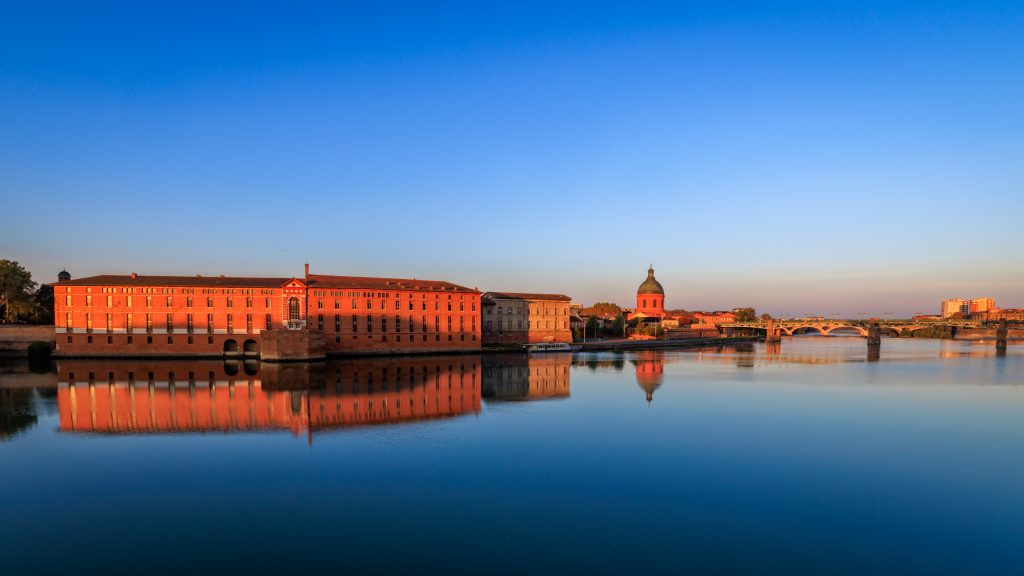
Toulouse doesn’t shout. It doesn’t need to. France’s fourth-largest city has a way of revealing itself slowly—through the glow of its pink brick at sunset, the hum of its cafés, the youthfulness of its streets, and the golden light that pours across the Garonne River as if the whole city has turned its face toward the sun.
I had the privilege of visiting Toulouse as part of a group organized and led by Sarah Diligenti, Executive Director of the Alliance Française of Washington. She is a native of Toulouse, and her affection for the city is contagious. As a long-time member of the Alliance, it was a joy to see her hometown through her eyes. The experience felt less like tourism and more like being welcomed into someone’s place in the world.
The Beautiful Light Along the Garonne
If Paris has the Seine and Lyon the Rhône, Toulouse has the Garonne—and its light is different. Warmer. Wider. More relaxed.
Stand along the Quai de la Daurade in the late afternoon and you’ll see why photographers adore this river. The sun drops low, raking the facades of old brick warehouses and convents, and the water turns a deep metallic blue. The dome of La Grave seems to float. Couples sit on the steps. Friends carry bottles of wine. Life takes on a certain softness.
The Garonne begins high in the Spanish Pyrenees at the Pla de Beret and flows 529 kilometers northward through southwestern France before merging with the Dordogne to form the Gironde estuary, eventually emptying into the Atlantic near Bordeaux. Toulouse grew because of this river—because of its trade, its silt, its life—and the city still orients itself toward it.
Place du Capitole: A Stage Set of Grandeur
Every visitor eventually drifts toward the Place du Capitole, the city’s true living room.

The square is enormous—regal without being pompous. Its pale stone surface reflects the sky, and the façade of the Capitole, Toulouse’s town hall and theatre, stretches across an entire block like a Renaissance stage set painted in rose and cream.
Sit with a coffee and watch the square turn from morning bustle to afternoon languor. At night it becomes cinematic: couples posing under the arcades, groups of students weaving past, street musicians tuning their guitars. Sarah brought us here first, as if to say: this is where the pulse of the city can be felt.
If you want to understand Toulouse’s confidence, start here.
Couvent des Jacobins: Light You Don’t Expect
From the outside, the Couvent des Jacobins is easy to miss—just another brick wall on a quiet street in a city full of brick walls. But step inside and everything changes.
The light is astonishing.
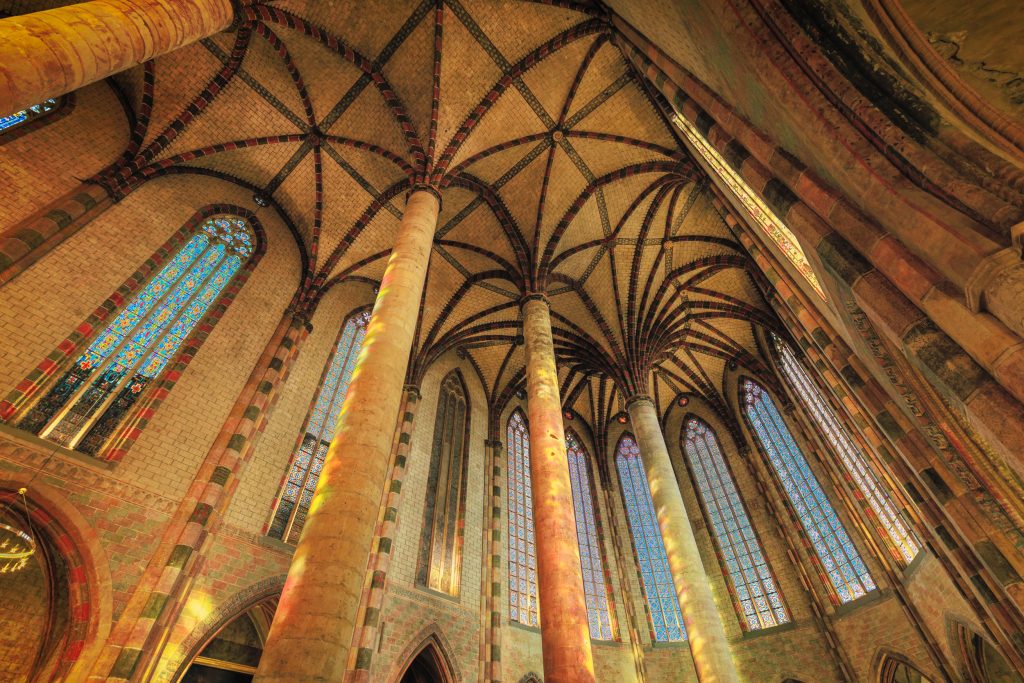
Columns rise like palm trees, splitting the vault in a pattern unlike any other Gothic space in Europe. Sunlight filters through tall windows and dances across the floor, illuminating the famously delicate “palm tree” column that seems to hold the heavens together. The effect is both austere and uplifting—one of those places where the air feels different, as though centuries of contemplation have seeped into the stone.
It is a place you stumble into once and remember forever.
A City of Students—and Their Energy
Toulouse is often called La Ville Rose for its pink brick, but it could just as easily be called La Ville Jeune. It is one of the largest student cities in France—home to over 100,000 university students across institutions like the University of Toulouse, Toulouse 1 Capitole, Toulouse II Jean Jaurès, and the renowned engineering school, INSA.
This youthful energy is everywhere: in the packed terraces, in the narrow streets around Place Saint-Pierre, in the late-night laughter that spills out of wine bars. The city feels alive because its average age is young—and because young people shape its rhythm.
Toulouse at Night: A Mood All Its Own
After dark, Toulouse becomes reflective.
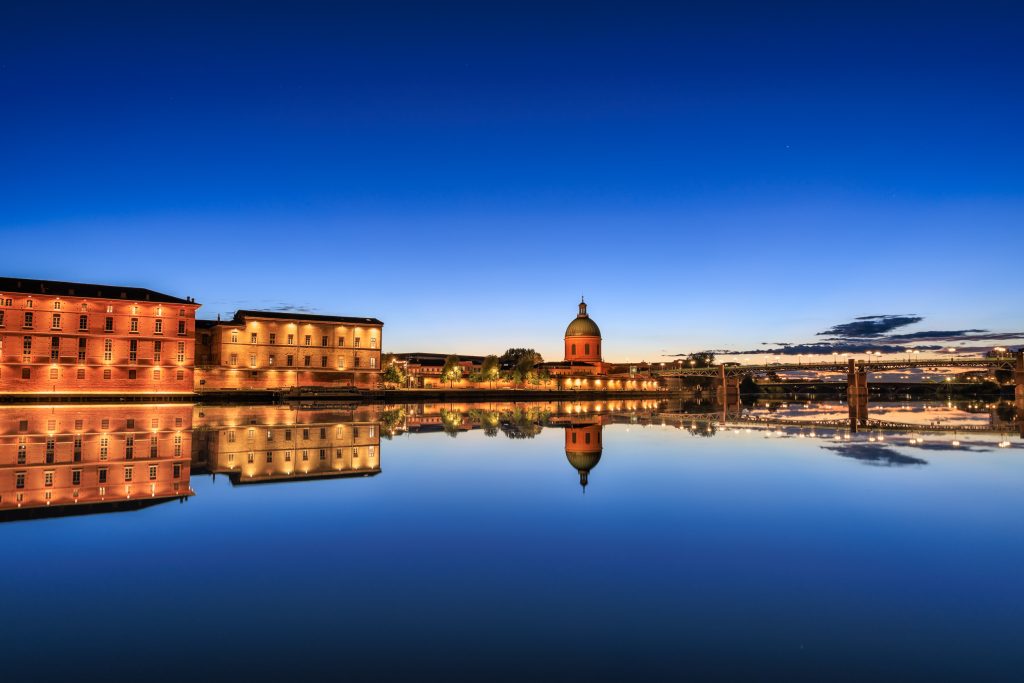
Lanterns glow under the arcades. The river absorbs the city’s lights and sends them shimmering back. The soundscape softens—just footsteps, distant music, the hum of a bicycle. Something about the combination of brick, shadow, and sky makes your mind wander. It is a place that invites thought, memory, and stories.
The night feels gentle yet filled with possibility—like a city that understands both its past and its future.

Notre-Dame de la Dalbade: A Quiet Gem
Visitors often overlook Notre-Dame de la Dalbade, but it deserves a moment.
Named for its once-white facade (la dalbade meaning “whitewashed”), the church stands in the Carmes district and is crowned with one of the most striking ceramic tympanums in France—a vividly colored Last Supper that seems impossibly bright against the brick surrounding it.
Inside, the church has a deep stillness. Sunlight falls in thin beams across the nave, revealing a space filled with the scent of wood and incense. It’s the kind of place that makes you slow down without realizing it.
Marché Victor Hugo: The Beating Heart of the City
If you want to understand how well Toulouse eats, go to Marché Victor Hugo.
It is crowded—in the best way. Fishmongers calling out the day’s catch. Butchers slicing lamb and duck confit with practiced precision. Cheese counters overflowing with pyramids of chèvre, sheep’s milk tommes, and wheels of Roquefort. Produce stacked in brilliant color.
This is not a tourist market. It is where Toulousains shop, gossip, argue, flirt, and order a glass of wine upstairs before lunch. Even if you buy nothing, the atmosphere is irresistible.
The Majesty of Saint-Sernin
And then there is Basilique Saint-Sernin, one of the greatest Romanesque churches in Europe.
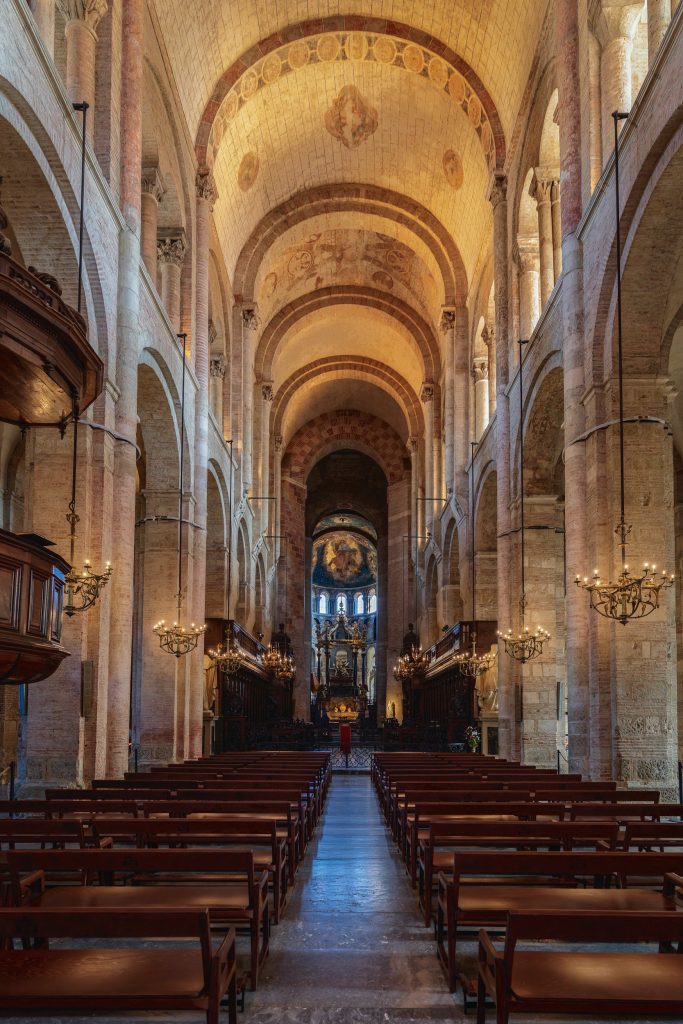
Its octagonal bell tower rises above the low roofline of the city like a compass point. The church was once a major stop on the pilgrimage route to Santiago de Compostela, and its size reflects that history—immense, solid, welcoming.
Inside, the columns and arches draw your eyes forward, as if the whole building wants you to move toward the light at the apse. It feels ancient in the deepest, most dignified way.
Toulouse Stays With You
Toulouse isn’t the first French city many travelers think of—but perhaps that’s why it feels so rewarding. It has beauty without pretense, history woven into daily life, and a warmth—of people, of light, of brick—that stays with you long after you leave.
It’s a city that doesn’t need to impress you. It simply does.
I left with photographs, yes—but also with the quiet glow of having been there, and the pleasure of seeing a city through the pride and affection of someone who calls it home.
Wow! Breathtaking views, each and every one of them.
A terrific narrative that brings you into the city. A fantastic adventure.
Thanks for bringing us along!
Thank you for your gracious comment, Paul.
David, Merci for this wonderful story of your falling in love with my hometown. You captured its essence, the changing of its light and of its energy throughout the day. It is a hymn to its beauty and art de vivre! I will share it with my family and friends in Toulouse.
Just beautiful!