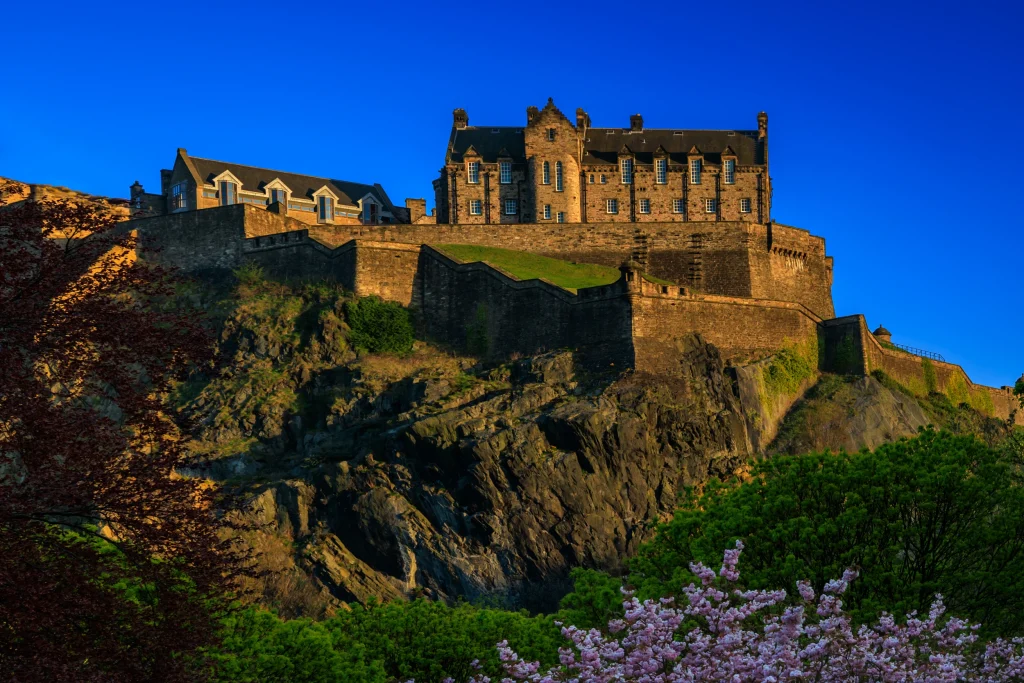
Edinburgh Castle, watching over the city from its perch above Princes Street Gardens. While thousands walk the crowded ramparts above, a quiet, generous refuge sits directly below—a reminder of the layered currents that define the city.
On Victoria Street, I watched people line up to photograph themselves in front of a location widely promoted as the inspiration for Diagon Alley in the Harry Potter novels. What fascinated me was that J.K. Rowling has publicly denied the connection. Nobody in the queue seemed particularly concerned. The goal wasn’t to verify the story. It was to participate in it.
That tension—between the Edinburgh that actually exists and the one people come to find—followed me through the entire city.
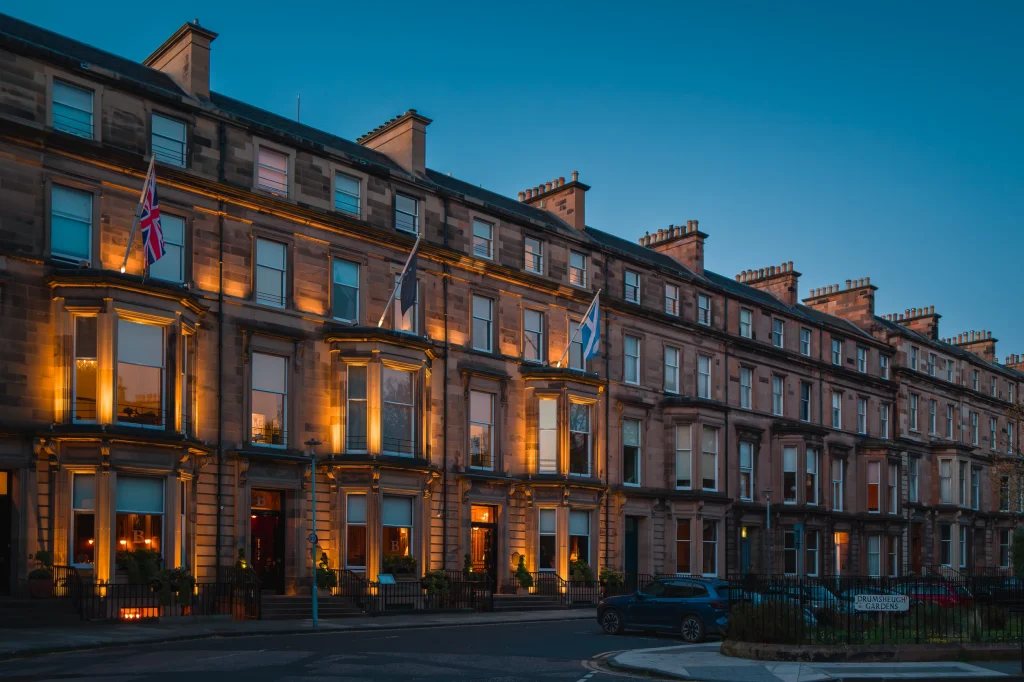
Evening light illuminated the Victorian townhouses of Edinburgh’s West End, where rows of sandstone buildings continue to define the character of the city more than a century after they were built.
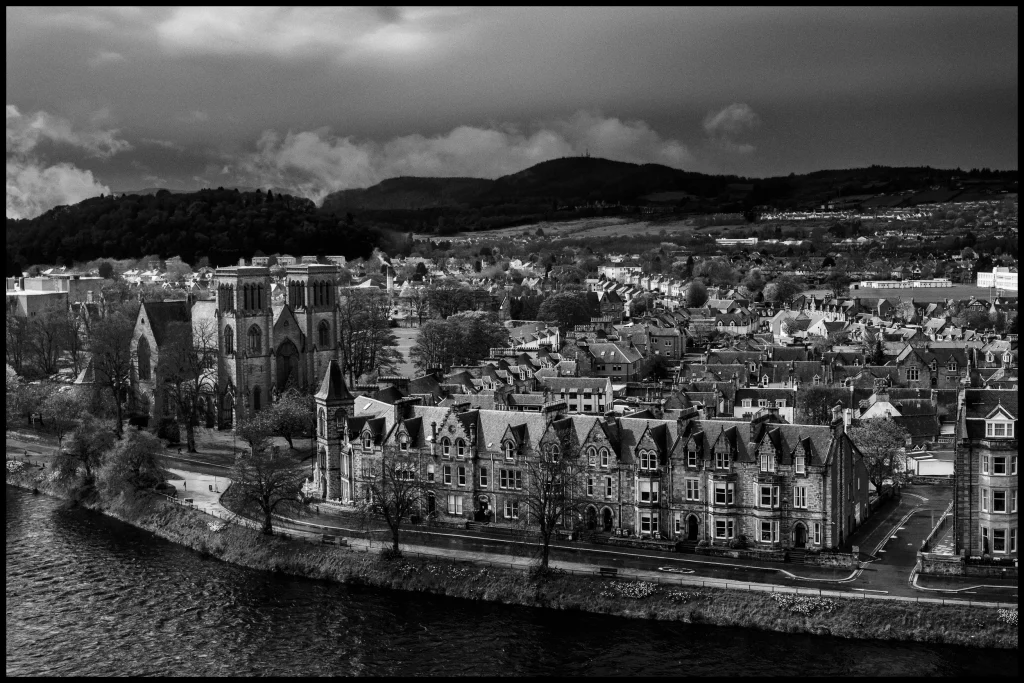
When I arrived in Inverness, I didn’t fully appreciate how far north I had come. The city sits at roughly the same latitude as Sitka, Alaska. Up here, the weather doesn’t simply change—it can shift with astonishing speed. One local told me that four seasons often pass in the span of ten minutes.
I learned that firsthand on a gray, sodden day. Wanting to visit Inverness Castle, I finished my lunch and hoped the downpour would ease. It didn’t. Eventually I pulled up my collar and headed out into the rain anyway.
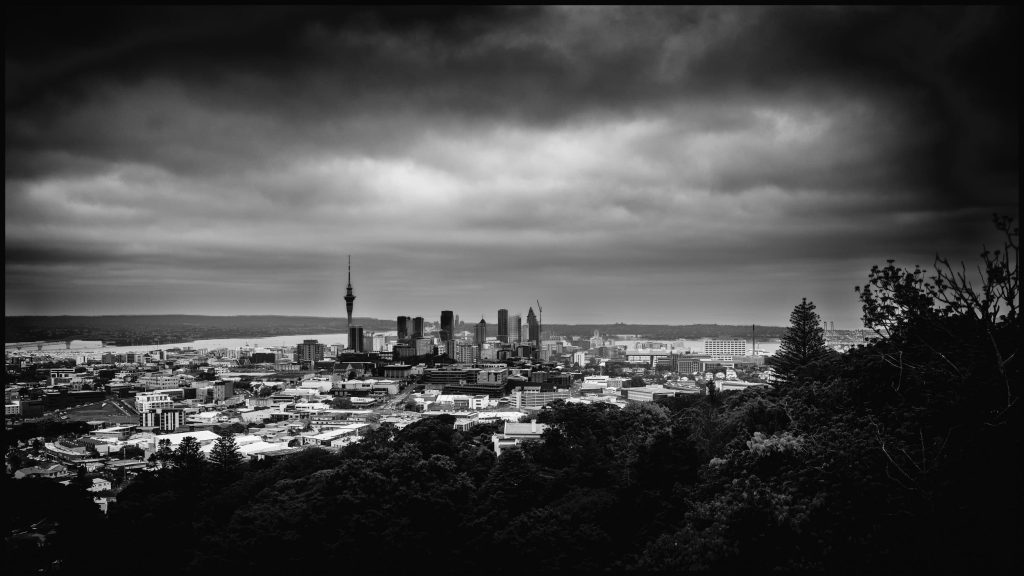
Auckland sits on a narrow isthmus, caught between two bodies of water.
To the north, the Waitematā Harbour opens to the Pacific Ocean. To the south, the Manukau Harbour connects to the Tasman Sea. This geography defines the city. It is New Zealand’s economic center and its primary gateway to the world, home to roughly a third of the country’s population.
I had been told that Auckland was a city to pass through quickly. That proved to be wrong. It simply requires a bit of patience. It is a place that reveals itself gradually, rather than all at once.
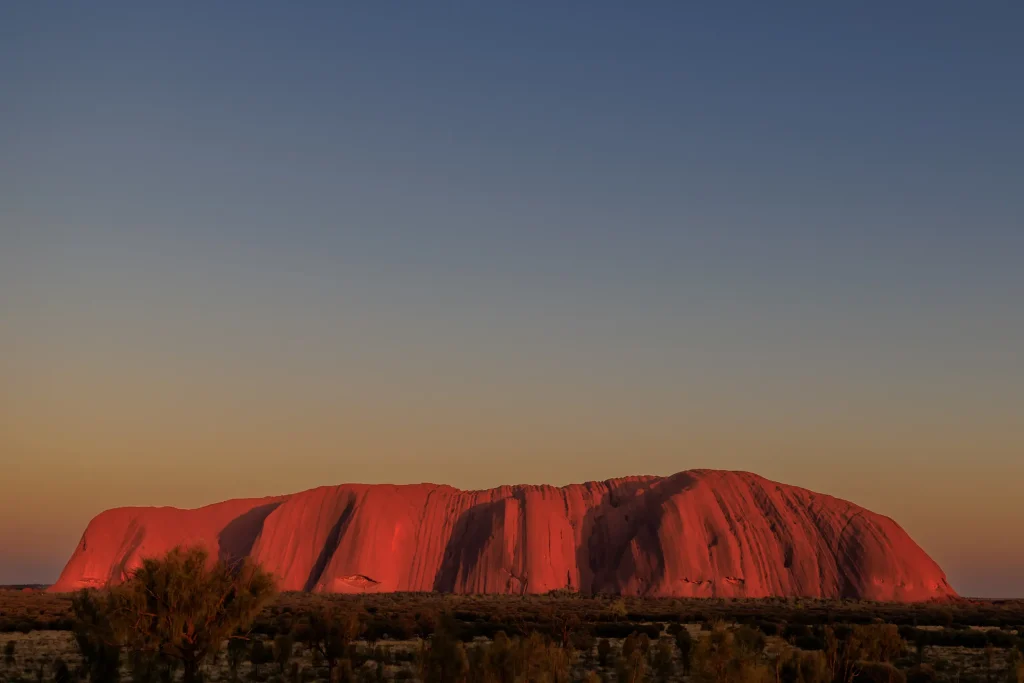
Uluru, also known as Ayers Rock, sits in the center of Australia’s Northern Territory, far from the country’s major cities. It is roughly 1,800 miles from Sydney—a reminder of how vast Australia is, and how remote this landscape remains. The flight from Sydney is about three and a half hours nonstop.
Rotorua is different from other places in New Zealand. The difference is not subtle.
It has one of the largest and most visible Māori populations in the country. Over 40% of Rotorua’s residents are Māori—well above the national average—and the region sits within the traditional rohe of Te Arawa iwi. That presence is not confined to cultural sites or performances. It is part of everyday life.
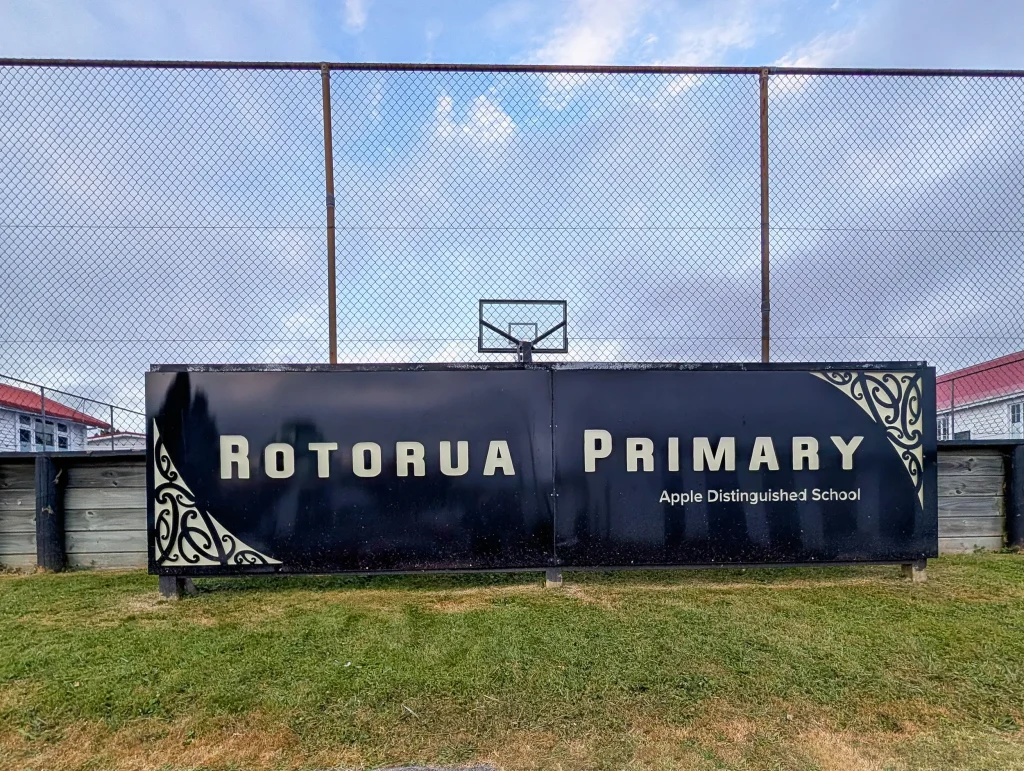
Rotorua Primary School, where Māori culture and modern education come together in everyday life.
You hear te reo Māori—the Māori language—spoken in schools and in public spaces. Marae are part of the landscape. Cultural expression is visible, but more importantly, it is continuous. It does not feel preserved for visitors. It feels lived.
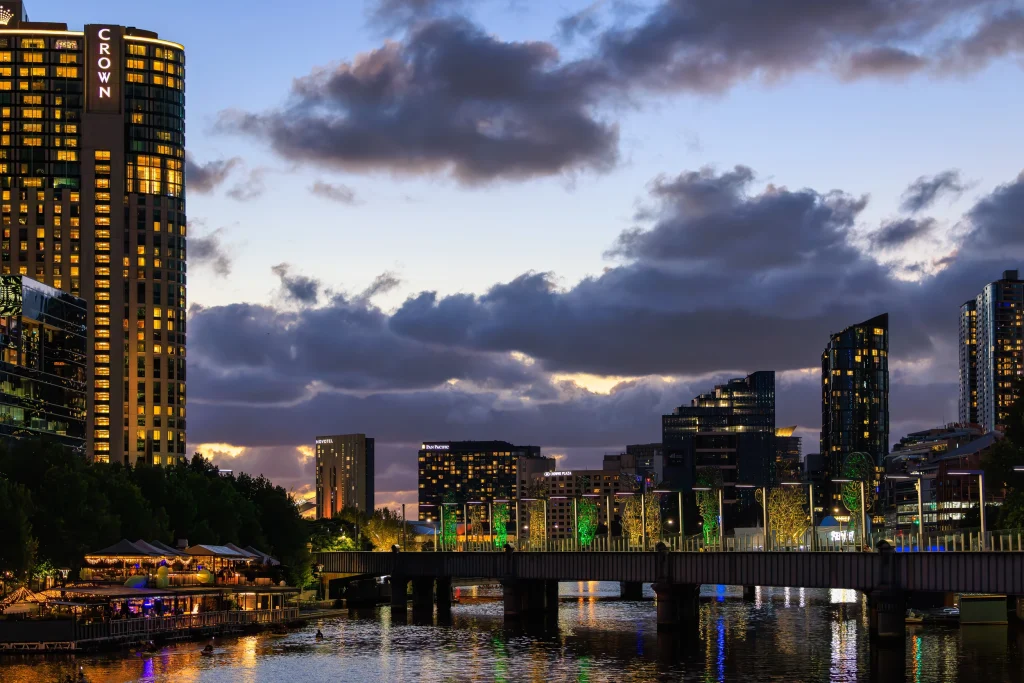
Melbourne is often described as Australia’s cultural capital, and after a few days there, I began to understand why. It’s a city that doesn’t demand that you look up at skyscrapers; it asks you to look in—into narrow alleys, quiet library nooks, and hidden basement cafés.
The city has a lively energy—cafés everywhere, crowds along the river, and during the early rounds of the Australian Open, the whole place feels like a celebration of sport. I stayed at The Langham Melbourne, just a short walk from the entrance to Melbourne Park, which made getting to the matches especially easy. At one point, I asked the hotel staff whether the Australian Open was their busiest time of year. The answer was telling: Australians love sports, and Melbourne hosts major sporting events throughout the year. That enthusiasm is hard to miss—it’s part of the city’s identity. And, at least from what I saw, Australians also have a healthy appreciation for beer.
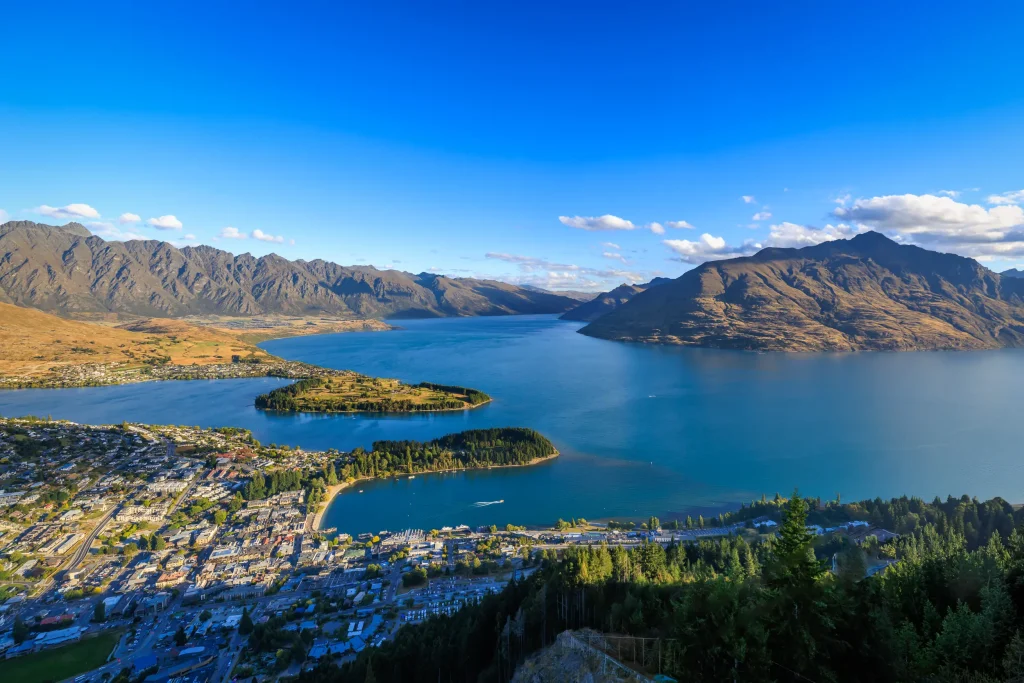
Queenstown sits lightly on the edge of Lake Wakatipu — small in population, immense in presence.
Before this trip, I had never heard of Queenstown.
That almost feels embarrassing to admit now.
The first time I saw it — the mountains rising sharply from Lake Wakatipu, the impossible green of the landscape, the clarity of the air — my jaw literally dropped. Not metaphorically. I stood still.
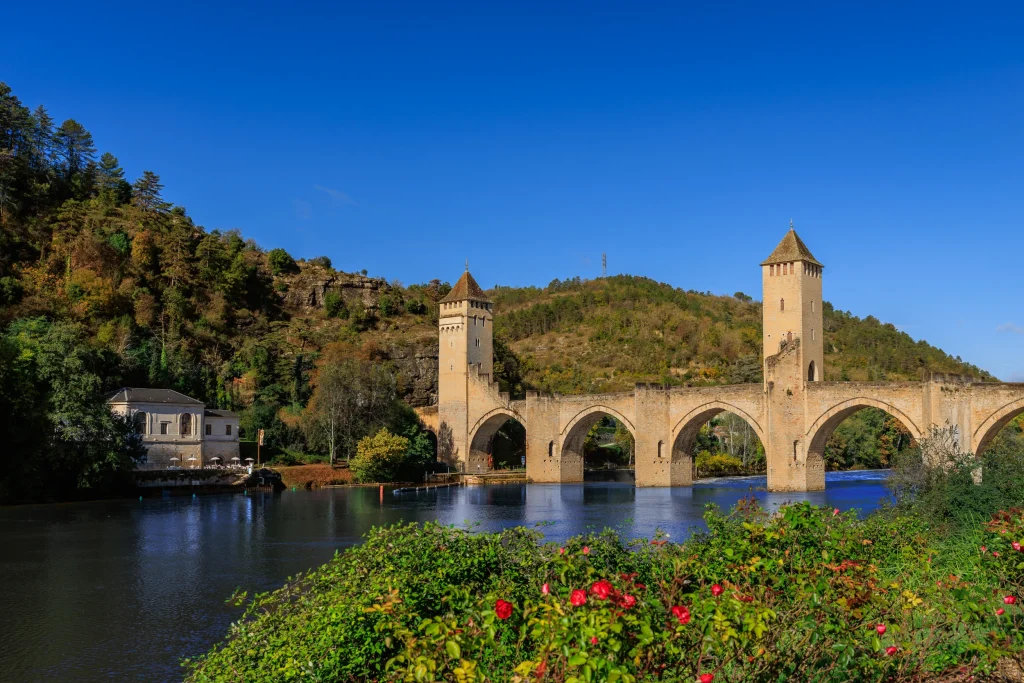
The Pont Valentré, Cahors remains one of the most complete and uncompromising examples of medieval military bridge design in France.
Cahors lies roughly 110 kilometers north of Toulouse, tucked into southwest France along a dramatic bend in the Lot River. The Lot itself is a long, winding waterway—about 480 kilometers in length—that rises in the Cévennes Mountains near Mont Lozère and flows westward through limestone valleys and vineyards before eventually joining the Garonne River near Aiguillon. In Cahors, the river curves almost completely around the old town, shaping both its geography and its history.
Cahors feels both geographically and psychologically distant from the great urban centers of France. I was there with the Alliance Française of Washington, and traveling with a group that shares such a deep appreciation for French history and culture made every discovery more meaningful. Yet one structure, above all others, has stayed with me: the Pont Valentré.
The Pont Valentré: A Masterpiece of Stone
I have seen many of the world’s great bridges. Some are elegant, some monumental, others purely functional. But for me, the quiet power and restrained beauty of the Pont Valentré stands apart. To call it merely “old” is an understatement. It is majestic—a staggering feat of 14th-century engineering that commands the Lot River with calm authority.
Construction of the bridge began in 1308, commissioned by the consuls of Cahors to strengthen the city’s defenses and secure control of this vital river crossing during a period of frequent conflict. Built entirely of local stone, the bridge took nearly 70 years to complete, a testament to both medieval ambition and the sheer difficulty of such a project.
With its three fortified towers, thick arches, and narrow passageway, the bridge was conceived not merely as a crossing, but as a defensive structure—a fortified bulwark designed to protect the city as much as to connect it. What struck me immediately was its absolute integrity. The Pont Valentré does not rely on ornament to impress. Its beauty comes from its perfect proportions, its clarity of purpose, and its sheer defiance of time. Stone laid more than seven hundred years ago still carries weight, meaning, and history—without apology.
Recognized as a UNESCO World Heritage Site, the Pont Valentré is preserved not only for its architectural excellence but as an exceptionally intact example of medieval military engineering integrated into an urban landscape.
Cahors and the Lot River: The Lot curves around the old town, making the Pont Valentré not just a crossing, but a strategic gateway—binding geography, defense, and daily life into a single structure.
There is, of course, the famous legend associated with the bridge. According to local lore, the builder, frustrated by delays, made a pact with the devil to ensure its completion. When the work was finished, the builder outwitted him by assigning an impossible task—fetching water in a sieve—thus saving his soul. Whether one believes the story or not, the bridge feels almost mythic, as though it belongs as much to folklore as to history. When human ingenuity and endurance reach this level, legend feels almost inevitable.
I found myself comparing it to the Pont Alexandre III in Paris, because both are undeniably beautiful. The Parisian bridge is ornate, celebratory, and dazzling—a triumph of decoration and modern confidence. The Pont Valentré, by contrast, is elemental. It does not decorate the landscape; it belongs to it. It is not merely a monument—it is a survivor.
Beyond the Bridge: Château de Haute-Serre
The day continued with a visit to Château de Haute-Serre, a vineyard renowned for producing some of the region’s most distinguished Malbecs. Though it lies only about 10 kilometers—roughly a 15-minute drive—from Cahors, the estate feels far removed from the town. The road gradually leaves the river behind, rising into open countryside until you arrive at a place that feels notably quieter and more self-contained.
The contrast between the rugged medieval stone of the morning and the meticulously cultivated land of the afternoon was striking. At Haute-Serre, I felt an immediate sense of calm—a peaceful stillness born of space, order, and the slow rhythm of agricultural life rather than urban movement.
The estate unfolds across gently rolling terrain, with vines carefully tended and precisely aligned. Yet what impressed me most was the discipline of the operation itself. The winery was immaculate—spotless in a way that spoke to seriousness, precision, and deep respect for the craft. It was, quite literally, so clean that you felt you could eat off the floor.
We enjoyed an elegant three-course luncheon created especially for the Alliance Française of Washington. We began with a cream of pumpkin soup accented by Lardo di Colonnata, garlic croutons, and walnut oil. This was followed by duck breast served with carrot mousseline, kaffir lime, multicolored carrots, and an orange gastrique. Dessert was a refined praline mille-feuille.
Aging Malbec at Château de Haute-Serre: Bottles resting in the cellars of Château de Haute-Serre, near Cahors—wines shaped by patience, discipline, and a deep respect for place.
The food was exceptional, the wine a revelation—structured, expressive, and unmistakably rooted in its terroir. Nothing about the experience felt rushed or performative. There was only a quiet confidence, born of tradition, patience, and care.
Final Reflections
Cahors and its surroundings reward those willing to slow down, learn a bit of history, and truly look. The region feels light-years away from Paris—calmer, quieter, and deeply grounded.
From the enduring stone of the Pont Valentré to the hushed order of Château de Haute-Serre, I was struck by a shared sensibility: places built with seriousness, maintained with care, and allowed to exist without spectacle. Whether medieval or modern, these are places that do not ask for attention—they earn it.
The Pont Valentré is remarkable not because it is decorative, but because it has endured—doing exactly what it was engineered to do for centuries. Paired with the excellence of Château de Haute-Serre and the shared pleasure of traveling with such thoughtful companions, Cahors reminded me that when tradition is taken seriously, it remains very much alive.
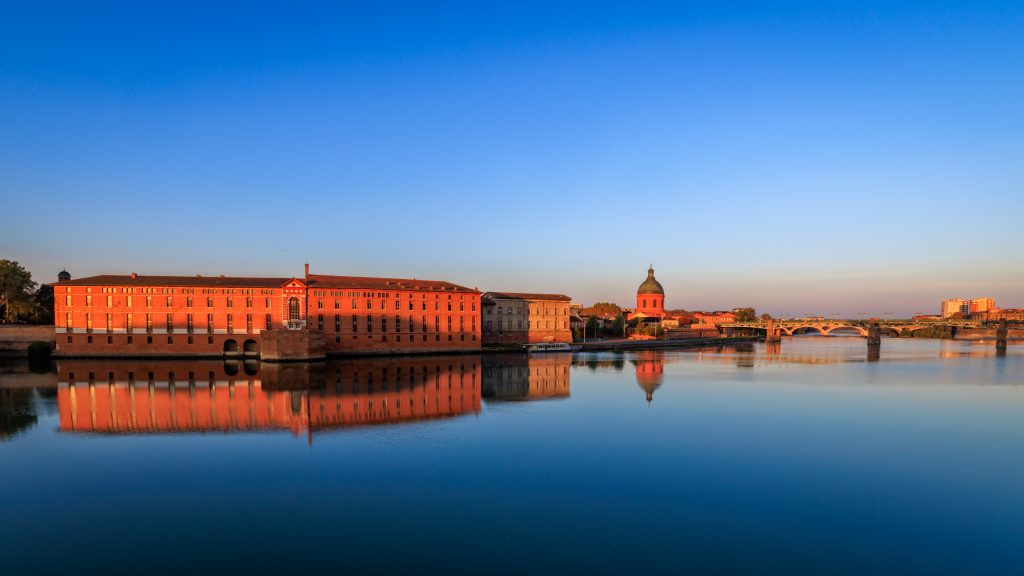
Late afternoon light along the Garonne. The brick turns almost pink, and the reflections on the river are part of what makes Toulouse feel so open and relaxed.
Toulouse doesn’t shout. It doesn’t need to. France’s fourth-largest city has a way of revealing itself slowly—through the glow of its pink brick at sunset, the hum of its cafés, the youthfulness of its streets, and the golden light that pours across the Garonne River as if the whole city has turned its face toward the sun.
I had the privilege of visiting Toulouse as part of a group organized and led by Sarah Diligenti, Executive Director of the Alliance Française of Washington. She is a native of Toulouse, and her affection for the city is contagious. As a long-time member of the Alliance, it was a joy to see her hometown through her eyes. The experience felt less like tourism and more like being welcomed into someone’s place in the world.
The Beautiful Light Along the Garonne
If Paris has the Seine and Lyon the Rhône, Toulouse has the Garonne—and its light is different. Warmer. Wider. More relaxed.
Stand along the Quai de la Daurade in the late afternoon and you’ll see why photographers adore this river. The sun drops low, raking the facades of old brick warehouses and convents, and the water turns a deep metallic blue. The dome of La Grave seems to float. Couples sit on the steps. Friends carry bottles of wine. Life takes on a certain softness.
The Garonne begins high in the Spanish Pyrenees at the Pla de Beret and flows 529 kilometers northward through southwestern France before merging with the Dordogne to form the Gironde estuary, eventually emptying into the Atlantic near Bordeaux. Toulouse grew because of this river—because of its trade, its silt, its life—and the city still orients itself toward it.
There once was a man who believed that a certain emblem on the front of his car said something important about who he was.
He admired its engineering, its heritage, its quiet prestige. When he was younger, it made him feel that he had arrived — that he was honoring the world his father came from and the one he had built for himself.
Over time, though, something began to change. The emblem no longer shone quite as brightly. Repairs became frequent. Technology passed it by. Yet he held on, believing loyalty meant endurance.
One day, he realized he was no longer driving a car — he was carrying a memory.
He had mistaken sentiment for identity.
So he set the emblem down.
He chose something new, not because it was better or flashier, but because it fit the life he was actually living — simpler, steadier, still beautiful in its way.
And to his surprise, letting go didn’t feel like loss.
It felt like release.
He could remember his father with love, and still move freely in the world of today.