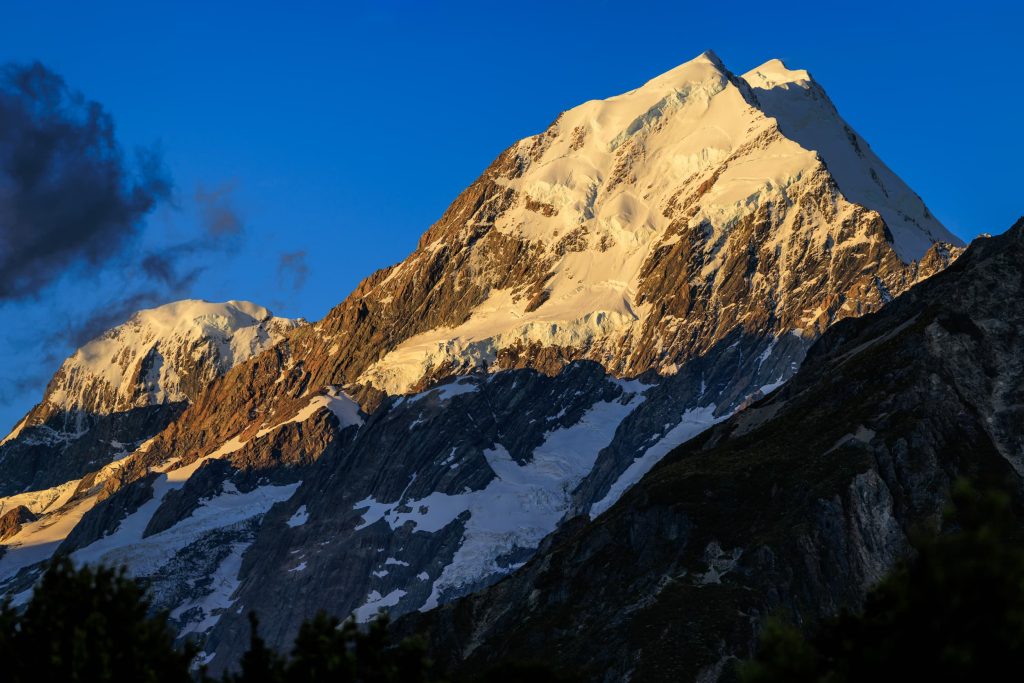
It’s one thing to read about New Zealand’s tallest mountain; it’s quite another to see it suddenly rise above the horizon with such sharp authority.
The Cloud Piercer
The Māori name for the mountain, Aoraki, is often translated as “cloud piercer.” According to Ngāi Tahu tradition, Aoraki was an ancestor exploring the seas with his brothers when their canoe, Te Waka o Aoraki, capsized. As they climbed onto the overturned hull, the cold south wind froze them in place, turning them into the great stone peaks of the Southern Alps. Today Aoraki remains the highest of these brothers and holds deep spiritual and cultural significance.
At 12,218 feet (3,724 meters), Mount Cook might seem modest if you only look at the numbers. For comparison, it is significantly shorter than the giants of the Colorado Rockies, where more than fifty “fourteeners” rise above 14,000 feet. Yet the experience of Mount Cook is entirely different. While many Colorado peaks sit atop a high-altitude plateau, Mount Cook rises dramatically from valleys not far above sea level. This immense vertical relief makes it feel every bit as imposing as its American counterparts, thrusting abruptly out of the landscape in a way that truly takes your breath away.
Life at the Base
We spent two nights at the Hermitage Hotel, a historic landmark that feels like a front-row seat to the Southern Alps. The rooms are comfortable and clean, though you won’t find air conditioning here. The alpine air is usually cool enough that a cracked window provides all the climate control you need, though the high-altitude sun can be surprisingly strong during the day.
Since the village is quite isolated, dining at the hotel is often the most practical option. Fortunately, the food is good, and the views from the hotel bar—especially when the peak emerges from the clouds—are worth the trip alone.
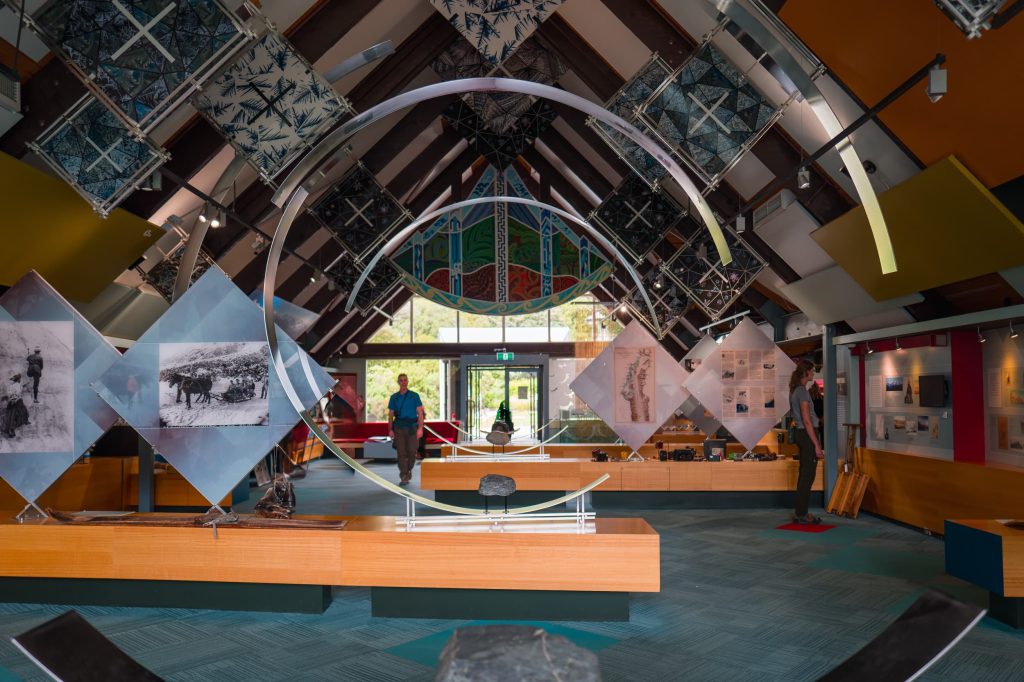
Right next door, the Sir Edmund Hillary Alpine Centre offers a fascinating look into the region’s history. The museum honors the legendary climber who trained in these very mountains before becoming the first person, along with Tenzing Norgay, to summit Mount Everest in 1953. Visiting the center before heading out on the trails gave me a much deeper appreciation for the rugged terrain surrounding the village.
Trails, Glaciers, and Turquoise Waters
The beauty of staying in Mount Cook Village is that adventure begins right outside your door. Several well-marked trails, including the famous Hooker Valley Track, wind through the valley, offering everything from easy walks to more demanding alpine treks.
One of my favorite excursions was a short bus ride to Tasman Lake. From there I boarded a small boat and motored toward the face of the Tasman Glacier. While the glaciers are retreating, weaving among floating chunks of ancient blue ice was still a surreal experience.
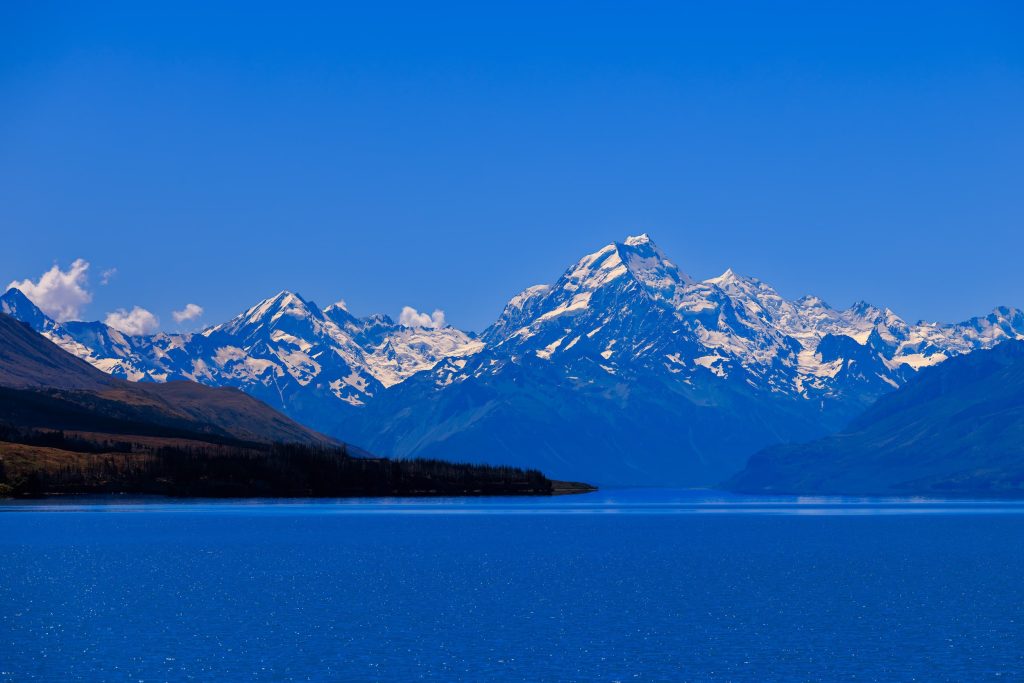
If you are driving through the region, you cannot miss Lake Pukaki. The water is a vivid, milky turquoise—a result of glacial flour, the fine rock particles ground down by glaciers and suspended in the water. On a clear day, the sight of Aoraki’s white summit rising above that brilliant blue lake looks almost unreal.
A Lasting Impression
The weather in the Southern Alps is famously unpredictable, and the mountain often hides behind a thick veil of gray. We were fortunate to catch those brief windows when the clouds parted and sunlight touched the summit. Even in mist and shifting weather, the park feels wild and ancient. Watching the last light fade from the peak is a quiet moment I will remember long after the details of the trip begin to fade.