Albi: Brick, River, and Southern Light

Albi sits quietly in the Tarn, a small city of about fifty thousand people built along the river that shares its name. It’s only an hour from Toulouse, yet it feels more distant, as though it existed slightly apart from the rest of the world. I went without strong expectations and found a place that was coherent, beautiful, and welcoming.

What first struck me was the brick. In Albi, brick is not an architectural choice or a revival style — it is simply what they had. There was no local stone to speak of, so they used the clay from the riverbanks, fired it in kilns, and built an entire city from it. The result is a palette that changes with the light: pale peach in the morning, rose at noon, deep orange as the sun begins to fall. Every surface seems to absorb sunlight. Even the shadows are warm.

The cathedral of Sainte-Cécile rises from this landscape with a kind of massive grace. Often described as the largest brick building in the world, it has the presence of a stronghold rather than an ordinary church. The forms are heavy, cylindrical, almost defensive. It is genuinely difficult to describe the size of it. The building is enormous — far larger than photographs suggest — and from the ground it is hard to take in at once. You find yourself looking up, craning your neck, searching for a vantage point that will allow the whole structure to make sense. It was built in the aftermath of the Albigensian Crusade, when power needed to be proclaimed in masonry. To see it from the outside, one expects austerity. Yet the interior is surprisingly ornate — painted, gilded, and filled with color. The contrast is striking: a fortress with a jewel box within.

Albi rewards walking without urgency. The old town is intimate and charming, with narrow lanes, timbered facades, and small shops and cafés. At the center is the Marché Couvert, a covered market that feels lively without being loud. I had lunch there: grilled beef, a lovely salad, and a glass of wine. It was simple, fresh, and satisfying. The total was fifteen euros — the kind of meal that makes you feel momentarily lucky to be where you are. Travel days do not need to be grand to be memorable.

The Tarn River gives the city its orientation. The view from the Pont Vieux, the Old Bridge, is especially beautiful. From there, the cathedral rises above the water, reflected in slow green currents, and the town ascends the bank in orderly layers of red brick and tile. It is one of those perspectives that feels complete, as though the elements had always been arranged exactly this way. I could have stayed there for an hour, watching light move across the surface of the water.

Next to the cathedral stands the former episcopal palace, now home to the Toulouse-Lautrec Museum. I knew the posters — the dancers, the Parisian nights — but I did not expect the quieter works: tender drawings, portraits, early studies. Seeing them here, in the town where he was born, gives them a certain intimacy. The rooms are large, the walls thick, and the art seems to inhabit the space naturally. Nothing is strained. The museum feels like part of the city rather than an addition to it.

What most impressed me about Albi was its coherence. The materials speak to one another; the river and the architecture are in dialogue; the scale is human. The tourist office, surprisingly large and beautifully designed, fits the same pattern — practical, confident, and unpretentious. The city does not strain to impress you. It does not perform. It simply exists as itself, and that is enough.

I spent only a day in Albi, but the city stayed with me: the warmth of the brick, the shadowed interior of the cathedral, the quiet lunch in the market, the reflection of towers in the river. I had gone thinking it would be a pleasant excursion from Toulouse. I left thinking I could return quite easily, and perhaps stay longer. Some places whisper rather than shout, and linger in memory because of it. Albi is one of them.
Toulouse: Light, Stone, and the Quiet Confidence of a Great City

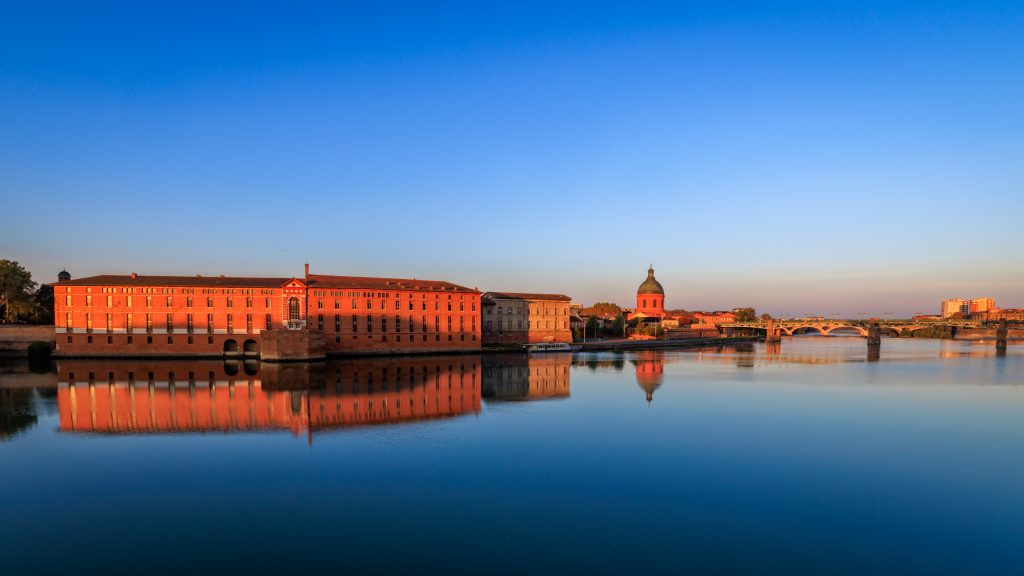
Toulouse doesn’t shout. It doesn’t need to. France’s fourth-largest city has a way of revealing itself slowly—through the glow of its pink brick at sunset, the hum of its cafés, the youthfulness of its streets, and the golden light that pours across the Garonne River as if the whole city has turned its face toward the sun.

I had the privilege of visiting Toulouse as part of a group organized and led by Sarah Diligenti, Executive Director of the Alliance Française of Washington. She is a native of Toulouse, and her affection for the city is contagious. As a long-time member of the Alliance, it was a joy to see her hometown through her eyes. The experience felt less like tourism and more like being welcomed into someone’s place in the world.


The Beautiful Light Along the Garonne

If Paris has the Seine and Lyon the Rhône, Toulouse has the Garonne—and its light is different. Warmer. Wider. More relaxed.

Stand along the Quai de la Daurade in the late afternoon and you’ll see why photographers adore this river. The sun drops low, raking the facades of old brick warehouses and convents, and the water turns a deep metallic blue. The dome of La Grave seems to float. Couples sit on the steps. Friends carry bottles of wine. Life takes on a certain softness.

The Garonne begins high in the Spanish Pyrenees at the Pla de Beret and flows 529 kilometers northward through southwestern France before merging with the Dordogne to form the Gironde estuary, eventually emptying into the Atlantic near Bordeaux. Toulouse grew because of this river—because of its trade, its silt, its life—and the city still orients itself toward it.

Read more

A Lifetime of Love for Paris

For nearly fifty years, I’ve carried a love of Paris. For a long time, I thought it was an inheritance—a gift from teachers, photographers, French cousins, and friends. But only recently have I realized that Paris now belongs to me.

The seeds were planted early by my very first French teacher, Mrs. Stewart in Pittsburgh, who always made me feel valued and welcome. She made French not just a subject but a joy—something expansive, a new world opening before me. Later, a college professor urged me to take my first trip to France—a visit that included meeting my French cousins, who graciously introduced me to the City of Light and its culture, followed by a month at the University of Aix-en-Provence.

Read more

Centre Pompidou — A Place I Came to Love

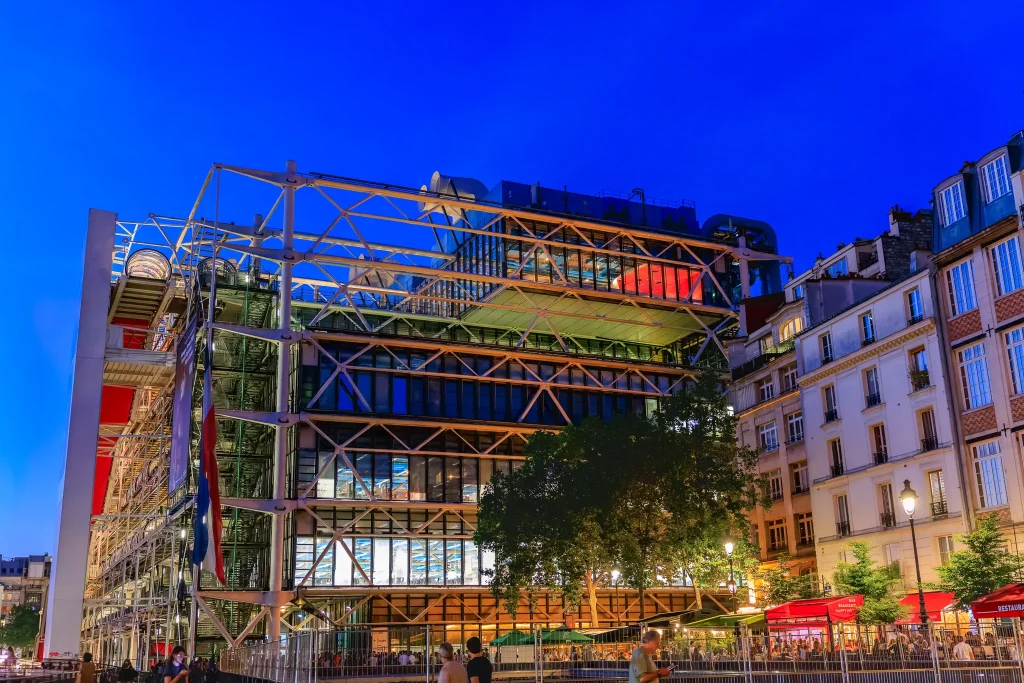
I first visited the Centre Georges Pompidou in 1977, the year it opened. The building felt shocking in its modernity. I had never seen anything like it — exposed pipes and bold colors, right in the heart of Paris. How could this belong in the same city as the Louvre or the Assemblée Nationale?

The idea for the Centre took shape in the late 1960s, when Paris was still unsettled by the protests and strikes of May 1968. President Georges Pompidou, who loved modern art, wanted to create a cultural center that would feel open, democratic, and alive. His vision was to combine a public library, a museum of modern art, and spaces for music and performance under one roof — a place where tradition and the avant-garde could meet.

In 1971, an international competition was launched, drawing more than 600 entries. The jury, chaired by French architect Jean Prouvé, chose the radical proposal of two young architects: Renzo Piano, born in Genoa in 1937, and Richard Rogers, born in Florence in 1933 to a British family. Their design turned architecture inside out. By pushing structure, escalators, and utilities to the exterior, they left the interior wide open and flexible. Prouvé admired their daring — it was exactly the step into a new era that Pompidou had hoped for.

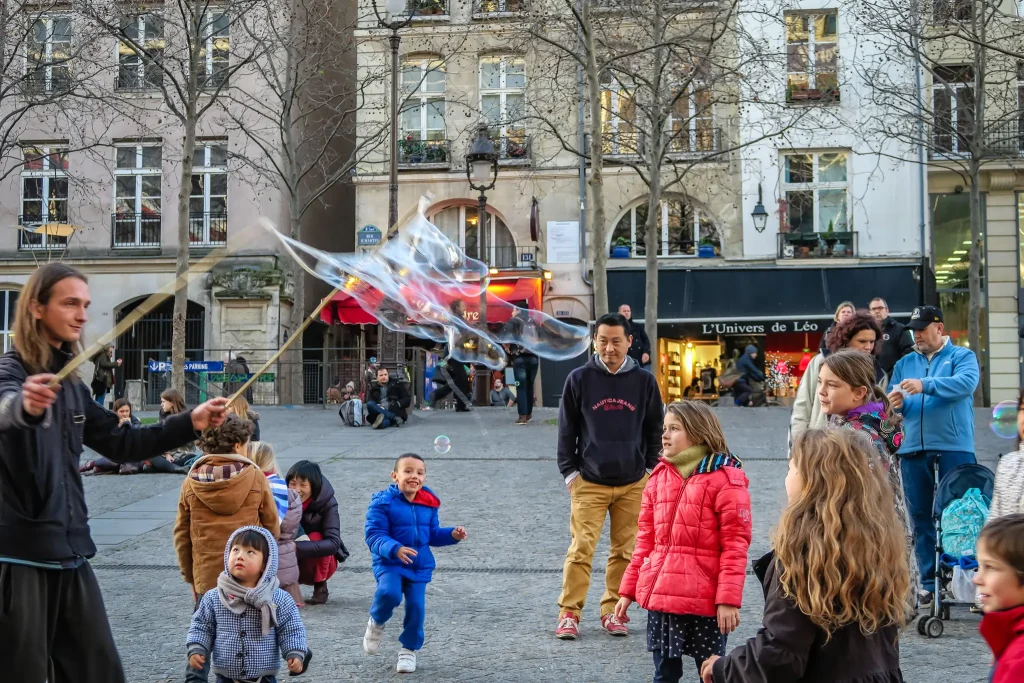
Over the years, as I returned to the Pompidou, I grew to love it. The plaza in front of the museum always recharged me. Young people sprawled on the ground, laughing, playing music, filling the courtyard with life. That sense of openness was not an accident — Piano and Rogers wanted the Centre to be a crossroads of art and community.

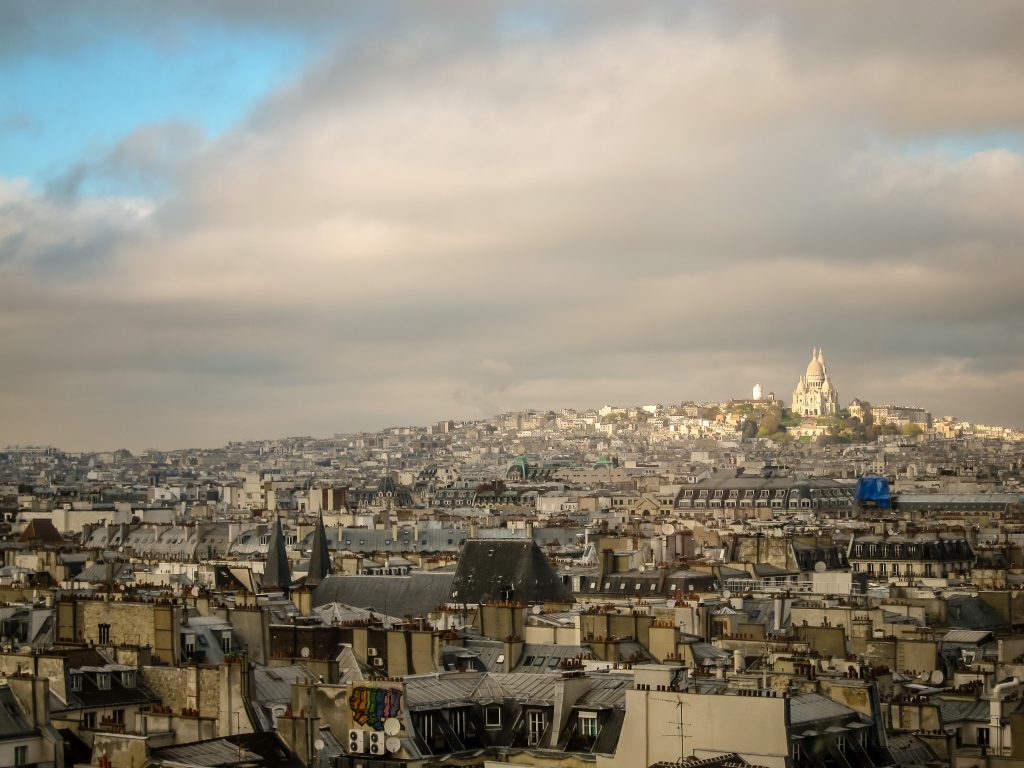
I also remember riding the exterior escalator, climbing above the rooftops of Paris. From there, the city unfolded — Sacré-Cœur glowing on the horizon. It reminded me of Piano’s later projects, like the Shard in London and The New York Times Building in Manhattan, always searching for lightness and views. Rogers, for his part, went on to shape landmarks such as Lloyd’s of London and the Millennium Dome. Both would eventually win the Pritzker Prize — Piano in 1998, Rogers in 2007 — but here in Paris, their collaboration was at its boldest.

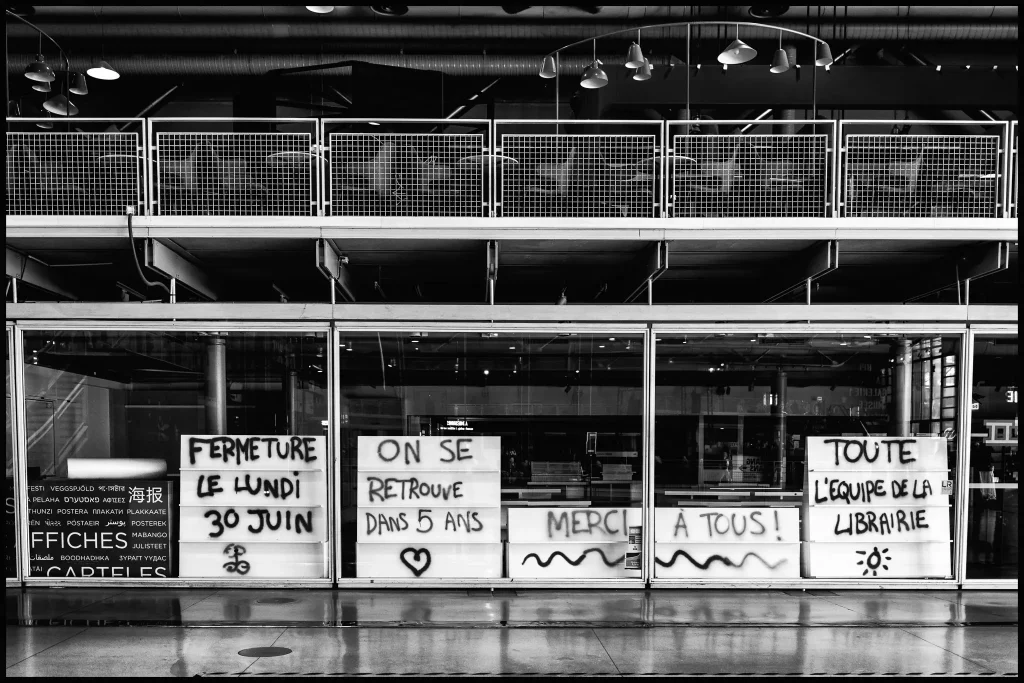
Now, the Pompidou is closed for renovations, with reopening planned for 2030. I don’t know when I will see it again. What I do know is that I will miss it.

The Pompidou began as something I thought was too modern, almost jarring, and became a place I adore. It carries with it the daring of its architects — one Italian, one British — and the conviction of a president and jury who believed Paris could take a step into a new era. For me, it became just that: a space of art, of community, of Paris itself, bold and alive.

The Tomb of William the Conqueror

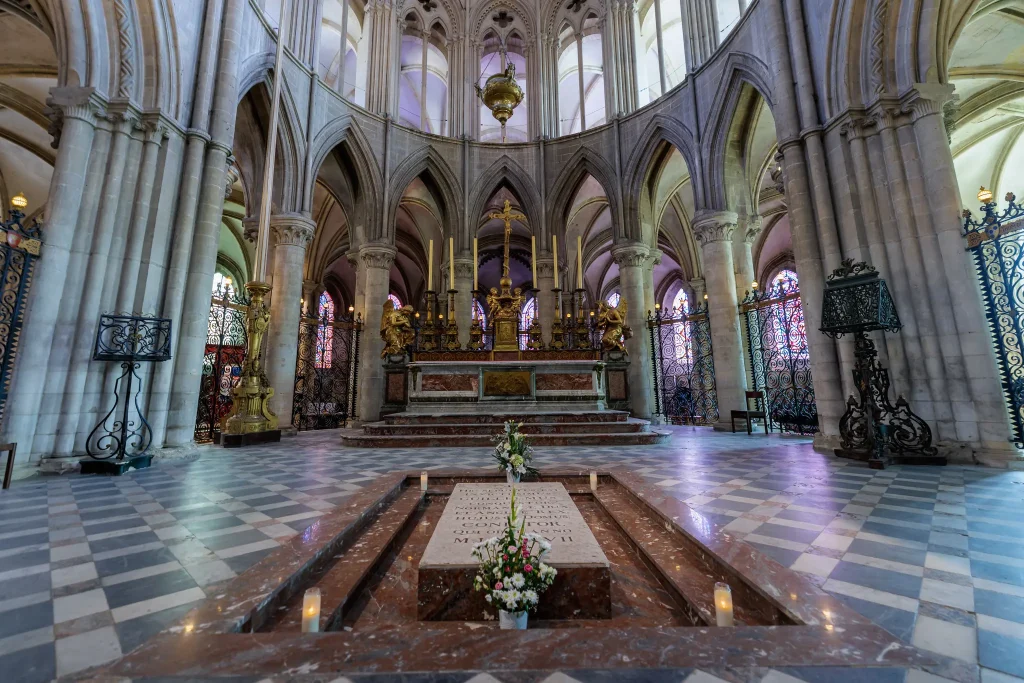
In the heart of Normandy stands a monument to one of Europe’s most consequential rulers. Inside the Abbaye aux Hommes—the Men’s Abbey, also known as Saint-Étienne Abbey—in Caen, France, lies a simple marble tomb marking the final resting place of William the Conqueror.

Born around 1028, William rose from Duke of Normandy to become a formidable force in European history. His decisive victory at the Battle of Hastings in 1066 brought England under Norman rule, setting in motion sweeping changes to the kingdom’s language, law, and social order. He was the first Norman King of England, and his reign reshaped the destiny of a nation.

William founded the abbey as an act of penance, after marrying his cousin Matilda of Flanders against Church law. When he died in 1087, his body was brought here to rest within the walls of the church he had endowed. Yet his remains would not know peace. Over the centuries, his tomb was desecrated multiple times—most violently during the French Revolution. Today, only a single bone, believed to be a femur, is thought to remain.

The tomb we see now, adorned with flowers and lit by candles, is at once modest and monumental. It speaks to the paradox of William’s legacy: a man who conquered kingdoms and changed history, yet whose earthly remains were reduced almost to nothing. The stone slab is a reminder of ambition’s reach and mortality’s certainty—a place of quiet reflection on how even the most powerful lives can end in fragility.


Notre-Dame Reborn

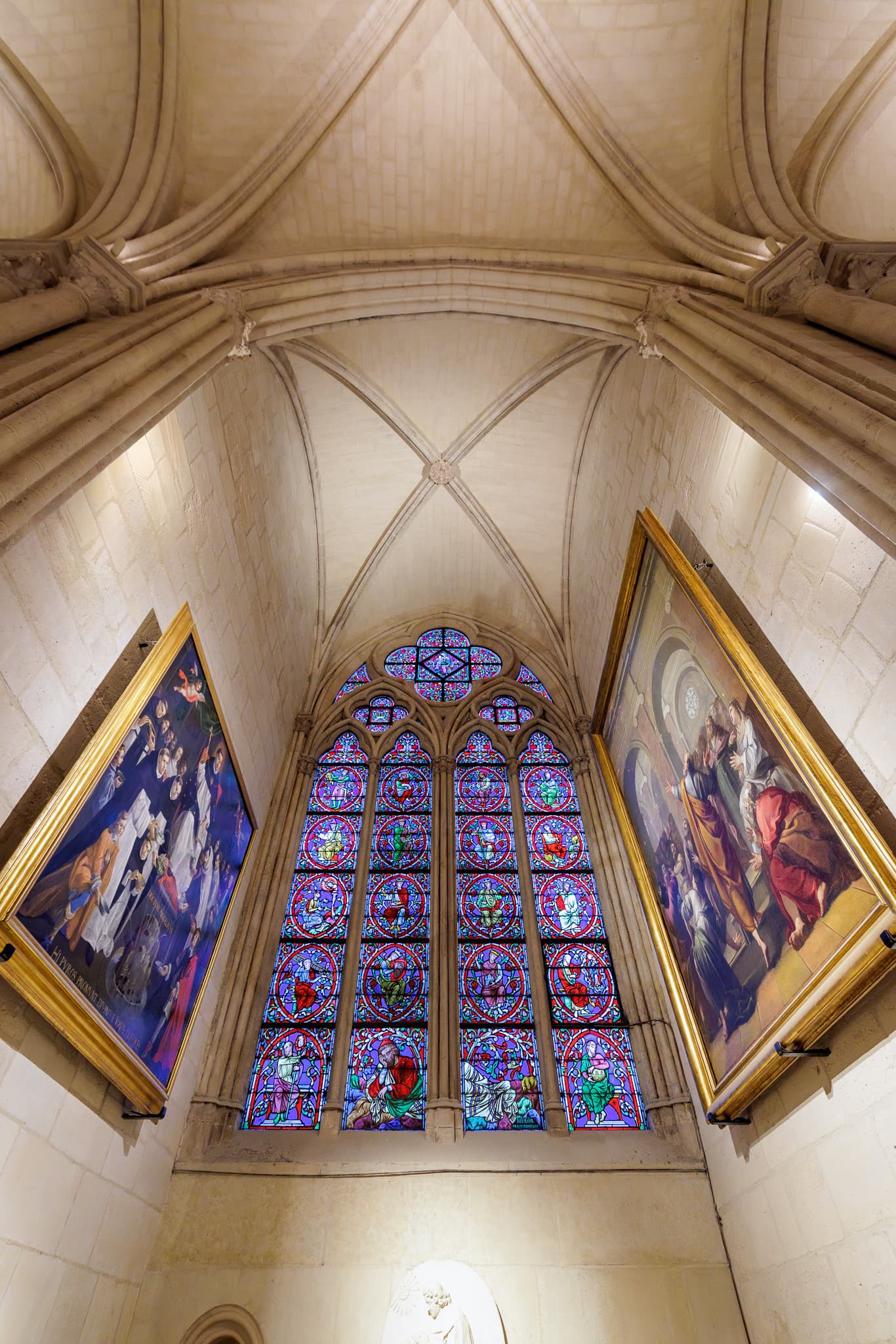
When I stepped inside the restored Notre-Dame de Paris on my recent trip, my jaw dropped. I had braced myself to see scars from the 2019 fire — blackened stone, lingering smoke, a cathedral permanently marked by disaster. Instead, I found a space so clean and luminous it felt renewed. The air was clear, the stone brighter than I remembered, and nothing betrayed the night when flames nearly brought this monument down.

That fire broke out on April 15, 2019. It destroyed the spire and much of the roof, and left the world watching in disbelief as one of the most recognizable buildings in Europe seemed on the verge of collapse. In the days that followed, President Emmanuel Macron promised the French people that Notre-Dame would be rebuilt “within five years.” At the time, it sounded impossibly ambitious.

And yet, in December 2024 — just over five years later — the cathedral reopened to the public. The restoration was a massive undertaking. Carpenters and stonemasons worked with traditional tools and materials, rebuilding the roof frame in oak and covering it again in lead. Specialists cleaned centuries of soot from the interior stone, leaving the walls brighter than I ever remember seeing them. The cost was staggering, estimated at around €700 million, but more than €840 million was pledged, much of it from private donors, corporations, and foundations, with the French state overseeing the effort.

Investigators never determined a single definitive cause for the blaze. Arson was ruled out. The most likely explanations point to either faulty electrical wiring or a cigarette left smoldering on the scaffolding that surrounded the roof. Whatever the origin, the fire became a national trauma — and the restoration a matter of pride.

One of the most striking aspects of the restoration is what cannot be seen: the measures put in place to protect the cathedral from another disaster. Notre-Dame is now equipped with advanced fire detection sensors, a sprinkler system designed to protect the attic timbers, and strict new safety protocols for any construction or maintenance work. Dedicated fire safety teams are trained specifically for the building, and regular inspections are built into its ongoing care. The new oak roof frame may look medieval, but it is now guarded by twenty-first century vigilance.

Now, walking through the nave and looking up at the soaring vaults, you would not guess at the near loss of this building. The absence of smoke stains, the brightness of the walls, even the feeling of clarity inside the space all speak to what was achieved. Notre-Dame does not look like a survivor so much as a rebirth — a reminder of how cultural treasures can be both fragile and resilient.

For me, the experience was moving not only because of what I saw, but because of what I didn’t. I saw no evidence of catastrophe. Instead, I saw continuity — a cathedral that, having nearly perished, now feels more present and alive than ever.


You can get a sense of the magnitude of the destruction and the effort involved in the reconstruction in this video:


Maison Européenne de la Photographie: A Home for Photography

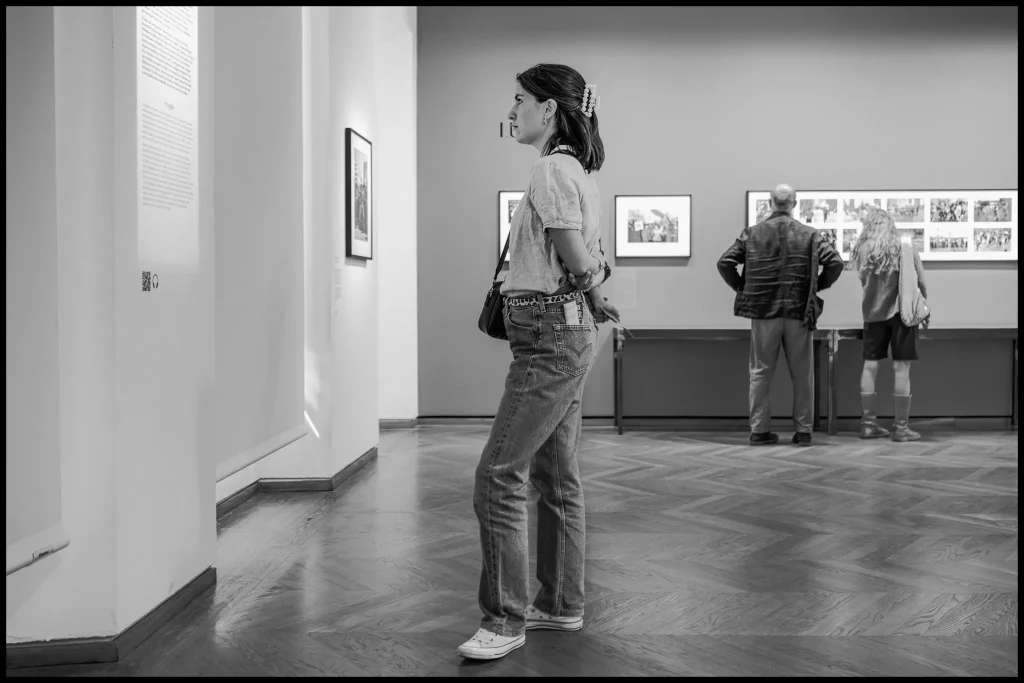
In the heart of the Marais in Paris lies the Maison Européenne de la Photographie (MEP). It isn’t a grand, imposing museum like the Louvre or the Musée d’Orsay. Instead, it feels intimate, almost hidden — a place where you can stand quietly before a single photograph, letting it work on you without distraction.


Encountering Marie-Laure de Decker

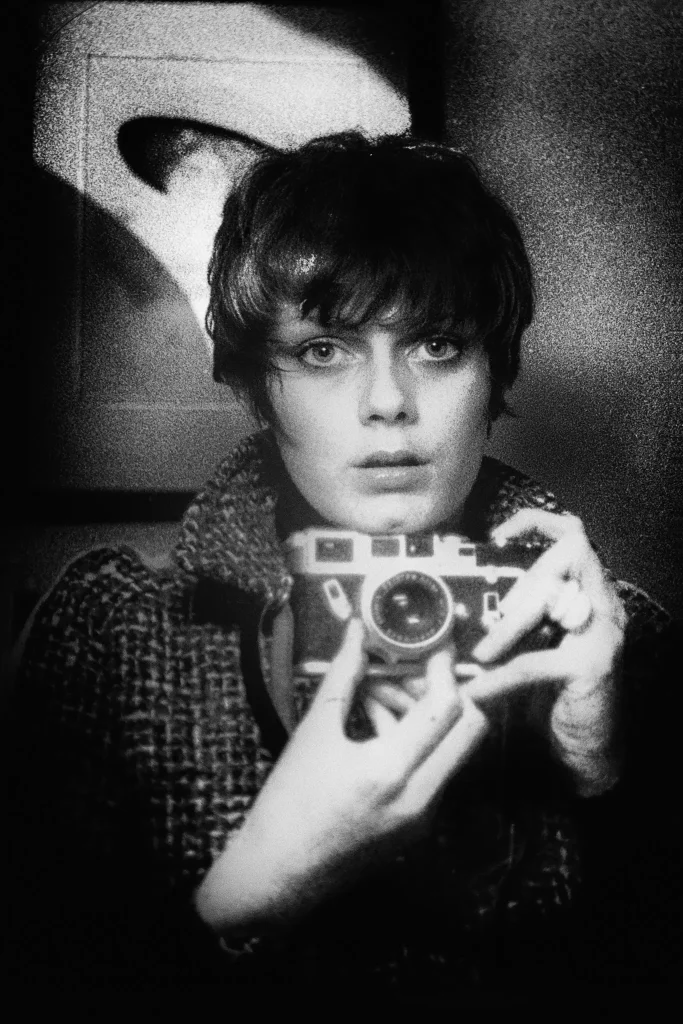
The exhibition that stopped me in my tracks was devoted to Marie-Laure de Decker. Before this visit, I knew nothing about her. Yet her black-and-white images held me still: the grain of film, the intensity of her subjects’ eyes, the strange balance of fragility and strength.

Her story is as remarkable as her photographs. De Decker began as a striking fashion model in Paris. She saved enough money to buy her first Leica and soon turned the camera on the world’s conflicts. Her photographs from Vietnam and Chad carry a rare humanity — not just war and suffering, but dignity, presence, and survival.

Two of her cameras, a well-worn Leica M3 and M4, are on display at the MEP. Ordinary tools, scratched and aged, yet heavy with history and courage.


More Than a Museum

The MEP is not just a gallery of images. It feels like a home for photography itself, where established masters share the stage with emerging voices. Its bookstore is a temptation all its own — shelves lined with rare catalogues, monographs, and books that open like personal invitations into other lives.

And when you step back outside, you’re in the Marais: narrow old streets, bustling cafés, a Paris scaled to human rhythm.

Marie-Laure de Decker – on display at the MEP

What Matters

Standing in front of de Decker’s work, I felt something I sometimes forget: the latest gear matters very little. What endures is the eye, the courage to see, and the willingness to be present.

The MEP reminded me why I fell in love with photography in the first place. It is not only about images. It is about memory, refuge, and meeting the world through another’s gaze.


If You Go

If Paris is in your plans, make time for the Maison Européenne de la Photographie. You may arrive expecting to see photographs. But if you linger, you might leave changed — carrying the weight of another person’s vision, and perhaps, a little more courage to see the world for yourself.

La Grande Arche de la Défense: A Modern Monument to Humanity

La Grande Arche de la Défense (“The Great Arch of the Defense”), originally called La Grande Arche de la Fraternité, is a monumental building in the business district of La Défense, in the commune of Puteaux, west of Paris. Usually referred to simply as La Grande Arche, the 110-meter-high (360 ft) cube is part of the historic axis that runs from the Louvre to the Arc de Triomphe. The distance between the two arches is about 4 km (2.5 miles). Built as one of President François Mitterrand’s Grands Projets, it stands as a symbol of modern France.

In 1982, a national design competition was launched at Mitterrand’s initiative. The winning entry, by Danish architect Johan Otto von Spreckelsen (1929–1987) and engineer Erik Reitzel (1941–2012), reimagined the Arc de Triomphe for the late 20th century. Instead of commemorating military victories, their design celebrated humanity and humanitarian ideals.

Construction began in 1985, led by French civil engineering company Bouygues. In 1986, Spreckelsen resigned and transferred his responsibilities to his associate, French architect Paul Andreu, best known for his work on Charles de Gaulle Airport. Reitzel remained involved until the monument was completed in 1989.

The structure takes the approximate form of a perfect cube, with a width, height, and depth of 110 meters. Some have suggested it resembles a hypercube—or tesseract—projected into three dimensions. Built with a prestressed concrete frame clad in glass and covered in white granite from Bèthel, Italy, the Arche has a striking, minimalist presence.

La Grande Arche was inaugurated in July 1989 during celebrations marking the bicentennial of the French Revolution, including a grand military parade that passed beneath its soaring frame.


Sources: Wikipedia | French moments


Father Pitt: A Public-Domain Photo Treasure of Pittsburgh

If you’re interested in Pittsburgh, the blog Father Pitt offers a wide-ranging collection of photographs of my hometown.

The author remains anonymous, but the site is maintained with care and updated regularly. Each photo is accompanied by thoughtful descriptions, and the entire collection is released to the public domain under a CC0 dedication—making it both a visual resource and a gift to the community.

Planning a Trip to France? Start with the ‘Join Us in France’ Podcast

If you’re planning a trip to France—or simply want to deepen your understanding of French history and culture—the Join Us in France podcast is a superb resource.

Launched in 2014, the podcast was originally co-hosted by Elyse and Annie, two women who know France inside and out. Annie was born in France but has also lived in the United States, while Elyse grew up in New York yet speaks the language fluently and has an encyclopedic grasp of French culture and history. Ironically, Elyse, the American, often seems “more French” than Annie, who was born there. Due to time constraints, Elyse no longer appears regularly but still joins when she can.

The podcast shines in the way it makes France approachable for American listeners. I especially enjoyed episodes on driving in France, French cheese, and Le Marais in Paris. Another episode on modern and contemporary art in France introduced me to 18 museums across the country, many of which I hadn’t known before.

Each episode comes with detailed show notes—an invaluable aid for trip planning. Unlike the many resources that focus mainly on hotels and restaurants, this podcast helps you understand the soul of France.

For additional perspective, Annie and Elyse were also featured in Amateur Traveler episode 428 about Paris. Amateur Traveler is a podcast I listen to often, and it covers destinations around the world. But if your focus is France, Join Us in France is the podcast to follow.