From Synagogue to Frauenkirche: Nuremberg’s Church of Our Lady

The Frauenkirche (“Church of Our Lady”) stands on the eastern side of the main market in Nuremberg, Germany. An example of brick Gothic architecture, it was built between 1352 and 1362 on the initiative of Charles IV (1316–1378), Holy Roman Emperor.

The church’s origins are bound up with tragedy. In 1349, during the Black Death, a violent pogrom led to the expulsion of Nuremberg’s Jewish community. Charles IV ordered the city’s synagogue demolished, and the Frauenkirche was built on its ruins as part of the newly created Hauptmarkt.

Yet within a few years, the city authorities, short of money, sought to attract Jews back. In 1351, Charles IV allowed their return under specific conditions, and by 1382 the Jewish community numbered more than 500, concentrated in the Judengasse (today’s Judenstrasse). More background can be found at the Jewish Virtual Library.

Centuries later, between the two world wars, Nuremberg became a stronghold of the Nazi Party. Julius Streicher (1885–1946) founded one of the first local branches there in 1922 and published the antisemitic weekly Der Stürmer. The city also hosted massive Nazi rallies, and its Jews lived under daily harassment and threat.

The Frauenkirche itself was nearly destroyed during the bombing of Nuremberg (see photo above) in World War II, leaving only its nave walls and façade. Restoration was completed in 1953, and today the church once again dominates the Hauptmarkt as both a historic monument and a reminder of the city’s layered past.

The Institut de France: Guardian of Knowledge and the Arts

The Institut de France is a French learned society that brings together five académies, including the prestigious Académie Française, guardian of the French language. Founded in 1795 at the direction of the National Convention, it is housed on the Quai de Conti in the 6th arrondissement of Paris.

Today, the Institut oversees nearly 1,000 foundations, along with museums and châteaux open to visitors. It also distributes prizes and grants—amounting to more than €27 million annually in 2017—most of them awarded on the recommendation of the académies.

Faithful to the mission set for it in 1795, the Institut and its five académies continue “to contribute, on a non-profit basis, to the progress and influence of letters, sciences, and the arts; to honor useful inventions and discoveries; to recognize distinguished artistic achievements; and to reward noble deeds and the steadfast practice of civic and social virtues.”

Dancing in the Heart of Paris: Place Colette

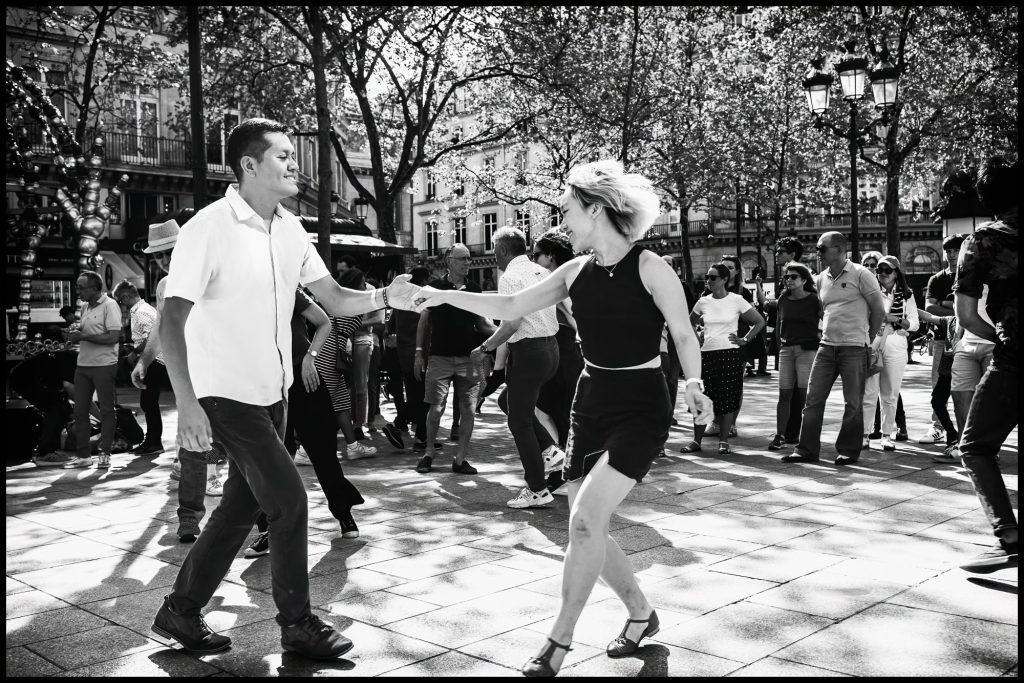
Tucked beside the Comédie-Française, Place Colette is more than just a Parisian square—it’s a stage where the city itself performs. Named in 1966 after the writer Colette (1873–1954), following a request by her daughter to then–Minister of Culture André Malraux, the square has since become a beloved gathering spot. On warm evenings, people often come here to dance in public, filling the air with music and movement. It’s a joy to witness, and a reminder of Paris’s enduring spirit of playfulness.

Suggestion: If you’re nearby, try this walking route that includes Place Colette, the Palais-Royal, and surrounding streets. It’s a beautiful way to experience Parisian history and atmosphere at a relaxed pace.

The Pegnitz River and Nuremberg’s Place in History

The Pegnitz is a river in Franconia, in the German state of Bavaria. Its source is in the town of Pegnitz (population ~15,000), about 27 km south of Bayreuth. The river runs for about 113 km (70 mi) before meeting the Rednitz in Fürth to form the Regnitz. Along its course, it flows through Nuremberg (population ~545,000), the largest city in Franconia, the second-largest in Bavaria, and the 14th-largest in Germany.

Nuremberg is famous for its castle and extensive city walls, with their many towers—among the most impressive fortifications in Europe.


Nuremberg in the Nazi Era

From 1933 to 1945, Nuremberg held special significance for the Nazi regime. The city was chosen as the site of massive Nazi Party rallies, staged in 1927, 1929, and annually from 1933 to 1938. These events were designed as propaganda spectacles.

  • The 1934 rally was filmed by Leni Riefenstahl, resulting in the propaganda film Triumph des Willens (Triumph of the Will).
  • At the 1935 rally, Hitler convened the Reichstag in Nuremberg to pass the Nuremberg Laws, which stripped Jews and other so-called “non-Aryans” of German citizenship.

After the collapse of Nazi Germany, Nuremberg again became a focal point of world history. Between 1945 and 1946, the surviving top Nazi leaders were tried for war crimes and crimes against humanity at the International Military Tribunal. The proceedings took place in Courtroom 600 of the Nuremberg Palace of Justice. (The cross visible today in the courtroom was added later by the postwar German government and was not present during the trials.)

Honduras: Resilience and Natural Beauty Amid Challenges

Ponant’s Dumont-d’Urville is a beautiful way to travel in French style. We spent much of our cruise exploring Honduras and the rest in Belize.

Honduras is bordered to the west by Guatemala, to the southwest by El Salvador, to the southeast by Nicaragua, to the south by the Pacific Ocean at the Gulf of Fonseca, and to the north by the Gulf of Honduras, a large inlet of the Caribbean Sea. Its capital and largest city is Tegucigalpa, home to about 1.6 million of the country’s 9.5 million people. Slightly larger than Tennessee, Honduras is unique in Central America for having two major urban centers: Tegucigalpa and San Pedro Sula.

Honduras is one of the poorest countries in Latin America and has one of the world’s highest murder rates. More than half the population lives in poverty, with rural and indigenous communities particularly affected. Per capita GDP was about $5,600 (2021 est.), and nearly half the population lives below the poverty line. Honduras is also a major transshipment point for cocaine bound for the United States.

Although primary school enrollment is near 100%, the quality of education is low, with high dropout and grade repetition rates and weak accountability.

Honduras gained independence from Spain in 1821 and has held regular elections since 1838. During the 1980s, the United States established a strong military presence in the country to support operations in neighboring El Salvador and Nicaragua, while developing strategic infrastructure.

The country was devastated by Hurricane Mitch in 1998, which killed about 5,600 people and caused approximately $2 billion in damage. While the economy has slowly rebounded, setbacks from COVID-19 and severe storms in 2020–21 remain.

Despite these hardships, Honduras offers extraordinary natural beauty.

Guanaja, one of the Bay Islands of Honduras, lies about 70 km off the north coast and 12 km from Roatán. Most of its 10,000 residents live on a nearby cay called Bonacca, often referred to as the Venice of Honduras for its waterways.

The Cuero y Salado Wildlife Refuge, on the Atlantic coast, is a protected area home to manatees, monkeys, and countless bird species. Its mangrove canals, fed by the Cuero and Salado rivers, create a rich brackish habitat where freshwater meets the sea.

The Cayos Cochinos (or Cochinos Cays) consist of two small islands and 13 coral cays northeast of La Ceiba. Although small in population (108 residents as of 2001), the islands form part of the Mesoamerican Barrier Reef System, the world’s second-largest barrier reef. With no roads, cars, or bikes, Cayos Cochinos remains a pristine marine reserve managed by the Honduras Coral Reef Foundation.

You can see more photos of Honduras here.


Sources: CIA World Factbook | Wikipedia | Honduras Official Tourism Site | Audley Travel


Belize: Natural Beauty with a Note of Caution

Belize borders the Caribbean Sea, between Guatemala and Mexico. With about 400,000 residents, it is the most sparsely populated nation in Central America. Roughly 60,000 people live in Belize City, the country’s economic center and main port. It is a frequent stop for cruise ships, though not without risk.

Belize is larger than El Salvador and about the size of Massachusetts. Slightly more than half the population lives in rural areas. English is the official language—Belize is the only English-speaking country in Central America—but Kriol and Spanish are also widely spoken.

The Belize dollar (BZ$) is pegged to the U.S. dollar at BZ$2 = US$1, making conversion simple. U.S. dollars are accepted almost everywhere, but visitors often receive change in Belize dollars, which may be less convenient on short stays.

A former British colony once known as British Honduras, Belize gained independence in 1981 and is now a member of the Commonwealth, retaining King Charles III as head of state. After Hurricane Hattie devastated Belize City in 1961, the capital was moved inland to Belmopan, today the smallest capital city in the continental Americas.

Over sixty percent of Belize remains covered in forest. Tourism is a cornerstone of the economy, drawing travelers to the Belize Barrier Reef, more than 450 offshore cayes, wildlife reserves, Maya sites, and opportunities for diving, snorkeling, hiking, and birdwatching.

The United States established diplomatic relations in 1981, and today about 160,000 Belizeans live in the U.S.—the largest community outside Belize.

Yet safety is a serious concern. According to the U.S. Department of State, violent crime—including sexual assault, armed robbery, and murder—is common, even in tourist areas during daylight. Gang violence is widespread, police resources are limited, and many crimes remain unsolved. Visitors are advised to avoid the south side of Belize City.

I used to think that if a cruise ship docked somewhere, the port must be safe. I no longer believe that. When I landed in Belize City before joining a cruise, I quickly understood why the warnings are taken seriously. Belize City is best avoided if possible—there are far more beautiful and welcoming places to see.

On the cruise ship, though, and while exploring Belize’s waters and islands by zodiac and on foot, I felt safe and captivated by the natural beauty. The country’s reefs, cayes, and wildlife are unforgettable.


Sources: U.S. Department of State | CIA World Fact Book | World Population Review | Travel Belize | Wikipedia


Lake Needwood: A Year-Round Retreat

Lake Needwood is a 75-acre reservoir in Derwood, Maryland, created in 1965 by damming Rock Creek to help with flood control and soil erosion. Nestled just east of Rockville, in Montgomery County, the lake is also the starting point of the Rock Creek Trail, which winds its way down to the Potomac River in Washington, D.C. Today, it’s a favorite spot for walking, biking, and running.

I often walk at Lake Needwood. It’s a calming refuge in a busy suburban county, and I enjoy it in every season — especially in the fall, when the trees blaze with color and the light turns golden.

You can see more photos of Lake Needwood here.

Decatur House: A Historic Home Near the White House


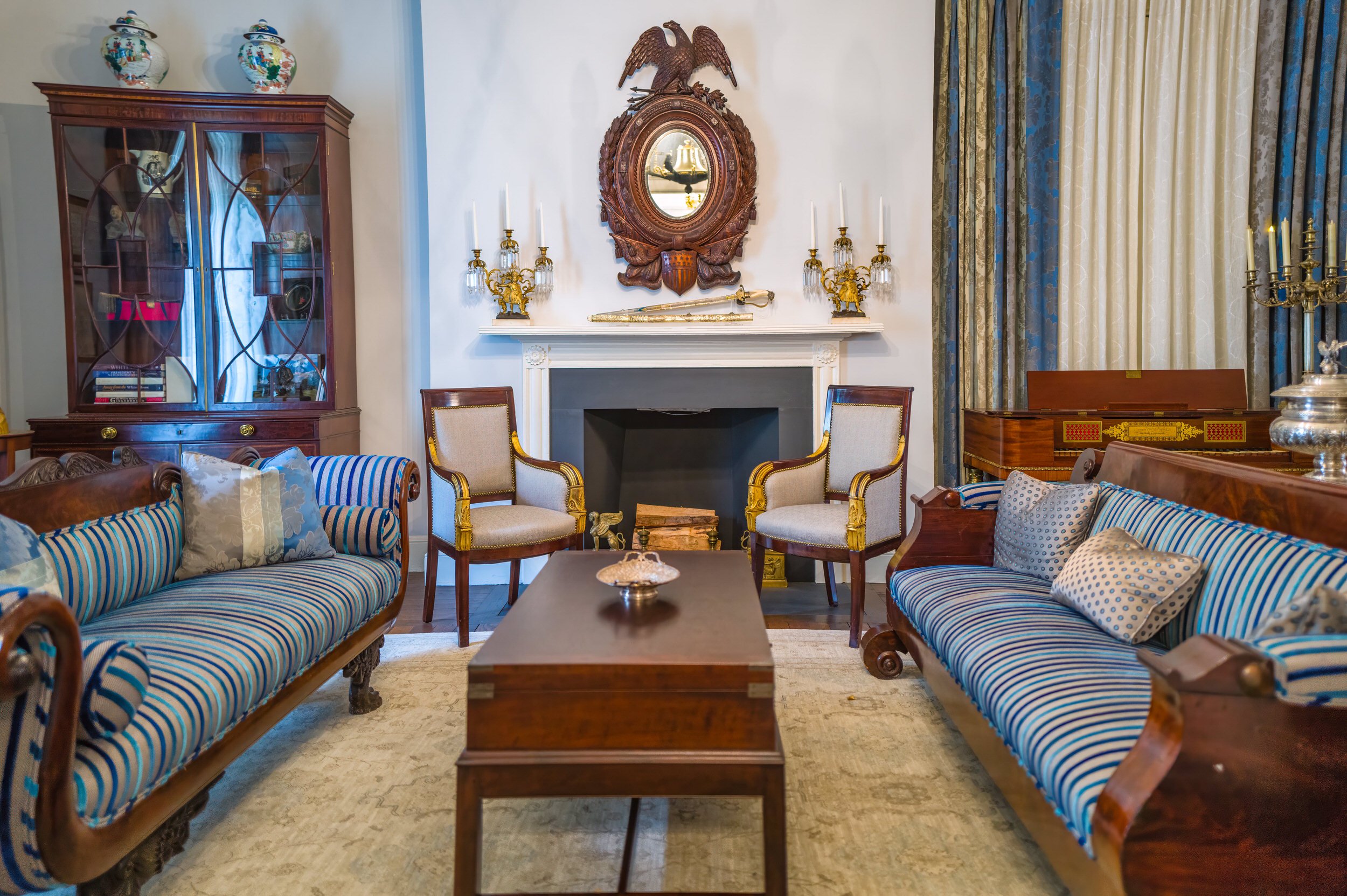
Decatur House is one of Washington’s most historic homes, standing just steps from the White House at the corner of Lafayette Square. Built in 1818 by the great neoclassical architect Benjamin Henry Latrobe, it is one of only three of his houses still standing in the United States.

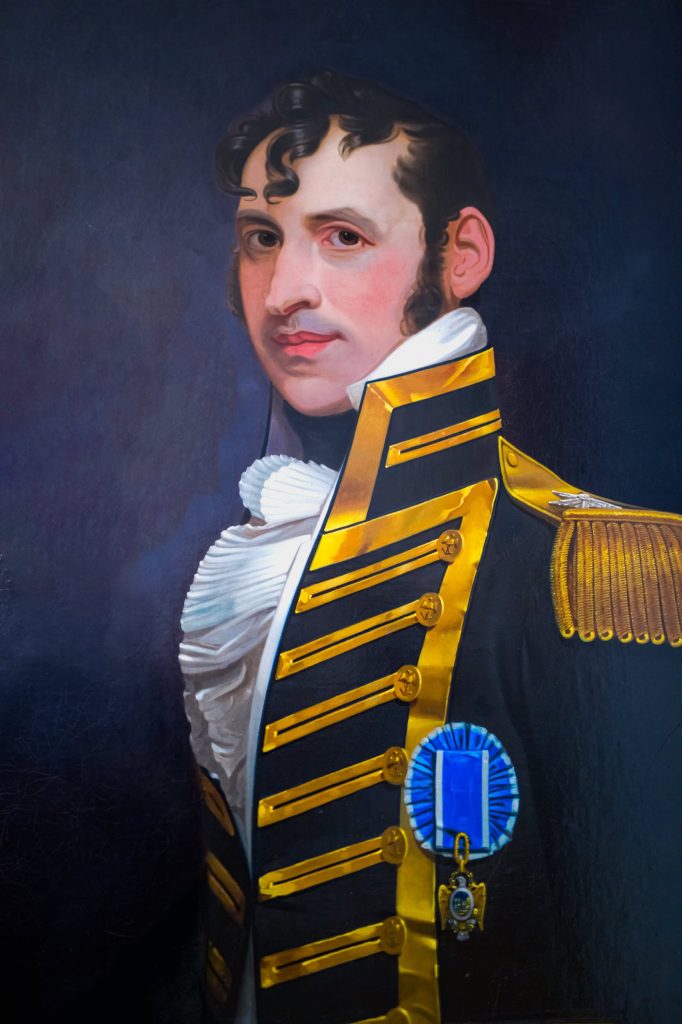
Portrait of Stephen Decatur Jr. in Decatur House

The home was commissioned by Stephen Decatur Jr., a celebrated naval officer who became the nation’s first post–Revolutionary War hero. Decatur supervised the construction of U.S. naval vessels, commanded them in battle, and won fame for his victories against pirates and foreign adversaries. His promising career ended abruptly in 1820, when he was killed in a duel with fellow officer James Barron. Decatur’s death at just 41 shocked the young republic.

In 1836, later owners added an outbuilding behind the house, which included slave quarters — a reminder that the grandeur of Lafayette Square coexisted with the realities of enslavement.

Today, Decatur House is both a museum and the home of the National Center for White House History, operated by the White House Historical Association, the nonprofit founded by First Lady Jacqueline Kennedy in 1961 to preserve and share the history of America’s Executive Mansion. The association offers free public tours of Decatur House every Monday (excluding federal holidays and the Monday after Thanksgiving). The house and courtyard can also be rented for private events, including weddings. A small shop offers books, gifts, and keepsakes that make excellent mementos of a visit to the nation’s capital.

Standing in its elegant rooms, it’s easy to sense the layers of history — from Decatur’s tragic end to the continuing work of preserving White House history. Decatur House remains both a monument to a naval hero and a reminder of the complexities of America’s past.


Sources: The White House Historical Association | National Trust for Historic Preservation | National Park Service | Wikipedia


Where Hitler’s Crowds Once Roared

Nazi Party Rally Grounds, Nuremberg, Germany – © David H. Enzel, 2024

Between 1933 and 1938, Nazi Germany staged massive rallies in Nuremberg. The former Nazi Party Rally Grounds remain the largest surviving complex of National Socialist architecture in today’s Germany. Designed by Hitler’s architect Albert Speer, the vast structures still convey the immense power of Nazi propaganda. Speer was later convicted of war crimes and crimes against humanity at the International Military Tribunal in Nuremberg. He served 20 years in prison and died in London in 1981.

The Zeppelinfeld (Zeppelin Field), shown above, is one of the most striking remains. Its massive grandstand, 360 meters wide, was modeled on the Pergamon Altar of ancient Greece, with square piers inspired by Franco-American architect Paul Philippe Cret. After Germany’s defeat in 1945, American forces famously blew the swastika from its top. The name “Zeppelinfeld” refers to the landing of Count Zeppelin’s airship (LZ6) here in 1909.

I visited in April 2024, on a cold and windy day, with my cousin from Nuremberg who graciously served as my guide. The site felt stark, desolate, and impossibly vast—its scale resisting any attempt to capture it in photographs. Only a handful of visitors were there, but the immensity of the place chilled me. I tried to imagine the grounds filled with uniformed followers of Adolf Hitler, roaring in unison. The thought sent a shiver down my spine.

How could this have happened in Germany—a country with such a deep tradition of culture, learning, and science? Could it happen again? Is it already happening? The pull of the far right has not disappeared; it is rising once more.

What happened here was not inevitable. It can happen again.

Read more

The Peabody Room: Georgetown’s Window into Local History

Peabody Room, Georgetown Library

The Peabody Room is a special collection dedicated to Georgetown neighborhood history and is part of The People’s Archive, the D.C. Public Library’s local history center focused on Washington, D.C. and African American history and culture. Among its resources is a house history file covering many Georgetown home

Peabody Room, Georgetown Library

Peabody Room, Georgetown Library

This local branch dates back to 1875, when the first library in Georgetown was funded by George Peabody (1795–1869), an American financier and philanthropist.

Peabody was born into a poor family in Massachusetts. He began in the dry goods trade and later moved into banking. In 1837, he relocated to London—then the capital of world finance—where he became the most noted American banker and helped to establish the young nation’s international credit.

Having no son of his own, Peabody took on Junius Spencer Morgan as a partner in 1854. Their joint business would evolve into the global financial services firm J.P. Morgan & Co. after Peabody’s 1864 retirement.### George Peabody’s Legacy

Peabody is often considered the father of modern philanthropy. His charitable initiatives included:

For his generosity, he was awarded the Congressional Gold Medal and named a Freeman of the City of London.

Fire and Renewal

In 2007, a large fire broke out at the Georgetown Library, severely damaging much of the building and causing the roof to collapse. The blaze irreparably damaged parts of the library’s holdings and artwork, including items in the Peabody collection.

Repairs and a major renovation were completed in 2010, restoring the library and ensuring the Peabody Room’s continued role as a steward of Georgetown’s history.


Sources: Georgetown Library | Wikipedia | Georgetown Property Listings | The Hoya | Have You Visited the Peabody Room? | Mapping Georgetown: Meet the Real McCoy of the Peabody Room