The residence of the United States Ambassador to Paris is at 41 rue du Faubourg Saint-Honoré in the 8th arrondissement. It is known as the Hôtel de Pontalba. It was built by Louis Visconti for the New Orleans–born Baroness Micaela Almonester de Pontalba between 1842 and 1855. Edmond James de Rothschild acquired the building in 1876.
During the German occupation of France, the mansion, then owned by Baron Maurice de Rothschild, was requisitioned as an officers’ club for the Luftwaffe. After the war, it was rented out to the British Royal Air Force Club, and then to the United States.
In 1948, the American government purchased the building, primarily for the United States Information Service. These offices were moved to the Hôtel Talleyrand as restoration was completed in 1971 during the tenure of Ambassador Arthur K. Watson. The building then became the official residence of the ambassador. This magnificent structure has only been the Ambassador’s residence for a little more than fifty years.
Henry Clay Folger (1857-1930) and his wife, Emily Jordan Folger (1858-1936), established the Folger Shakespeare Library as a gift to the American people, after decades of assembling the world’s largest collection of Shakespeare materials. It opened in 1932, two years after the death of Henry Folger. The Folger’s collection features the 82 First Folios of Shakespeare, the 1623 publication that is one of the most sought-after and important books in the history of publishing.
Henry Folger was a first cousin six times removed of Benjamin Franklin and a nephew of J. A. Folger, the founder of Folger Coffee.
After opening, the Folger steadily expanded its holdings to become a world-class research center on the early modern period, while remaining the premier center for Shakespeare studies and resources outside of England. The Folger has the world’s largest collection of the printed works of William Shakespeare, and is a primary repository for rare materials from the early modern period (1500–1750) in Britain and Europe.
The Folger’s public outreach programs, beginning in the library’s early decades with exhibitions, lectures, and publications, have also grown over time.
Emily Folger wrote of Henry Folger’s belief that Shakespeare “is one of our best sources, one of the wells from which we Americans draw our national thought, our faith and our hope.” This belief in the deep connection between Shakespeare and America is the reason the Folger Shakespeare Library is located in the nation’s capital.
The Folgers worked closely with the French-born architect Paul Philippe Cret (1876-1945) to create a marble building which reads like a book, and whose placement testified to the hope that Washington, DC, would become the nation’s civic and cultural capital.
The Folger collection began in 1889 with Henry Folger’s first purchase of a rare book, a copy of the 1685 Fourth Folio of Shakespeare’s plays. By the time the collection was transported to the new library, it amounted to 200,000 items.
In 1938, the library acquired the collection of the late Sir Robert Leicester Harmsworth, comprising more than 8,000 rare books printed in England between 1475 and 1640. Together with later acquisitions, the Harmsworth purchase expanded the Folger’s focus beyond Shakespeare studies to include virtually all aspects of the early modern period in Europe.
From 1948 to 1968, Folger Director Louis B. Wright added substantial materials from the Renaissance in Europe, acquiring 22,000 continental books and 19,000 more English books.
The Folger continues to make new acquisitions of rare material.
In 1930, the library was placed in trust of Amherst College, Henry Folger’s alma mater. The library building is listed on the National Register of Historic Places.
The beautiful Reading Room officially opened in January 1933 and today contains reference works for easy accessibility to readers. Henry Folger wanted the Library’s reading room to feel at once like a private home and the Great Hall of an English college. It features stained-glass windows and a large stone fireplace which has never been used. The large stained-glass window overlooking what is now the Gail Kern Paster Reading Room was designed and created by Nicola D’Ascenzo (1871-1954), an Italian-born American stained glass designer, painter and instructor. The Reading Room also features 16th- and 17th-century French and Flemish tapestries, carved oak paneling and a high trussed roof.
On a hall screen at the east end hang portraits of the Folgers in their academic robes, painted by the British artist Frank O. Salisbury (1874-1962). Above the Salisbury portraits is a bust of Shakespeare based on his memorial in Holy Trinity Church, Stratford-upon-Avon. The ashes of both Folgers are immured behind a memorial plaque.
At the west end of the Reading Room is one of the Folger’s treasures, a large stained-glass window depicting the Seven Ages of Man from Jaques’s speech in As You Like It. Although the window is exposed to exterior sunlight, it is in an interior space and is not visible from outside the building.
The intimate Elizabethan Theatre is the setting for Folger Theatre productions. With its three-tiered wooden balconies, carved oak columns, and half-timbered facade, the Theatre evokes the courtyard of an English Renaissance inn. The theater seats around 260. It has no pit. The first theatrical performance in the Elizabethan Theatre was a 1949 production of Julius Caesar.
A major four-year expansion and renovation led by Kieran Timberlake was completed in 2024.
The Folger Shakespeare Library (201 E. Capitol St. SE) is open 11 a.m.-6 p.m. Tuesday through Sunday, with extended hours to 9 p.m. on Thursdays, Fridays and Saturdays. Free timed entry passes are recommended.
Solothurn (pop. 16,777) is a town, a municipality, and the capital of the canton of Solothurn in Switzerland. It is located in the northwest of Switzerland on the banks of the Aare and on the foot of the Weissenstein Jura mountains.
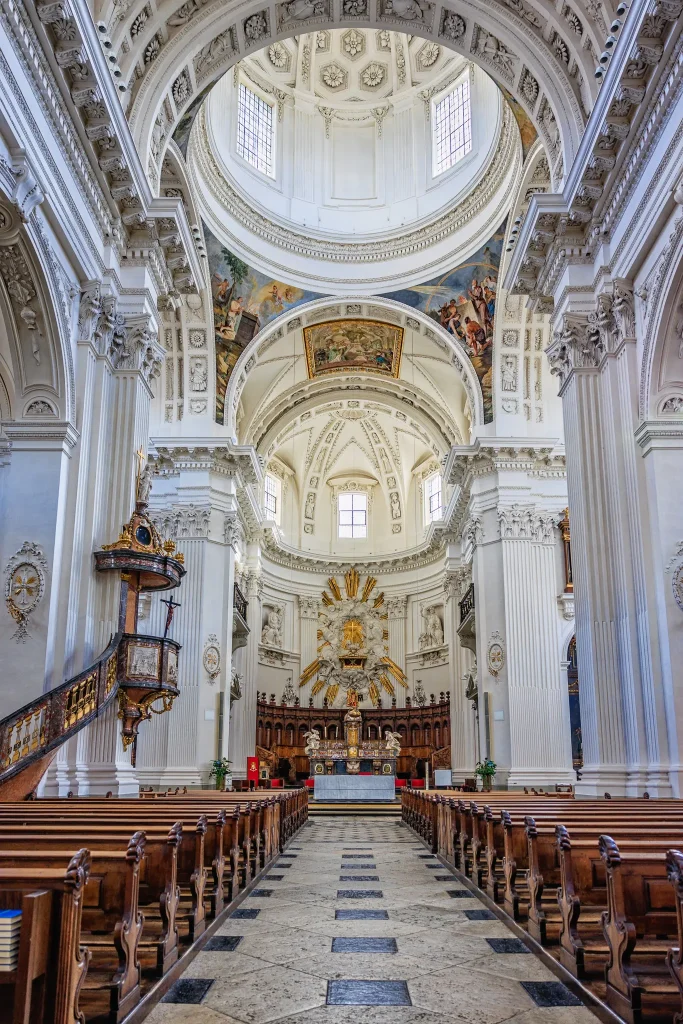
Cathedral of St. Ursus. Solothurn, Switzerland
The town is the only municipality of the district of the same name.
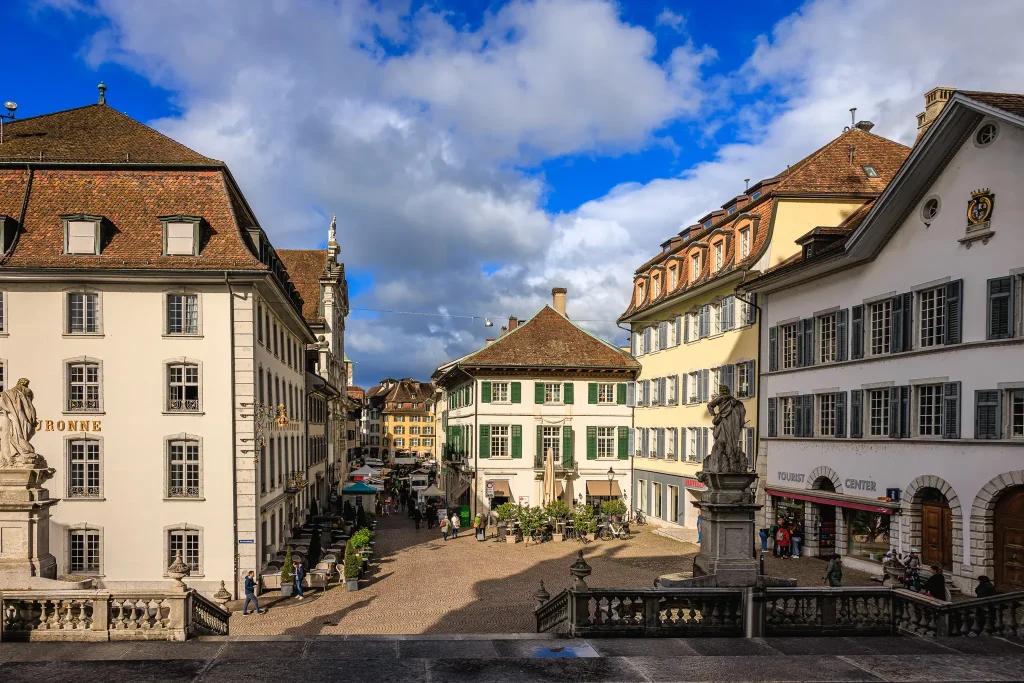
The town got its name from Salodurum, a Roman-era settlement. From 1530 to 1792 it was the seat of the French ambassador to Switzerland. The pedestrian-only old town was built between 1530 and 1792 and shows an impressive array of Baroque architecture, combining Italian Grandezza, French style, and Swiss ideas. The town has eighteen structures listed as heritage sites.
The official language of Solothurn is (the Swiss variety of Standard) German, but the main spoken language is the local variant of the Alemannic Swiss German dialect.
Solothurn is said to be the most beautiful baroque city in Switzerland. The imposing buildings were constructed in various epochs: ranging from the first half of the 12th century, when the clock tower was built, to 1773, when St. Ursus Cathedral was constructed in baroque and neo-classical style.
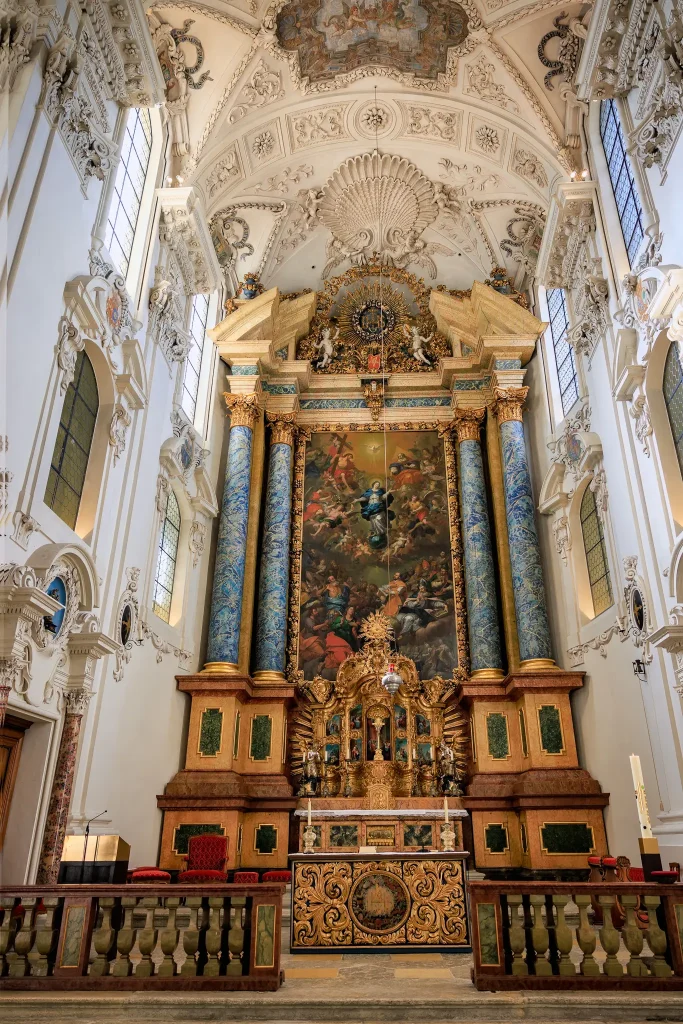
Cathedral of St. Ursus. Solothurn, Switzerland
St. Ursus Cathedral is Solothurn’s main attraction. It is the cathedral of the Roman Catholic Diocese of Basel in Solothurn.
St. Ursus Cathedral is considered the most significant Swiss building from the early neoclassical period, and was constructed using light-colored Solothurn marble. The cathedral is also full of Solothurn’s magic number 11: three sets of 11 imposing steps lead up to the cathedral; inside, the cathedral has 11 altars; and the tower is 66 m tall (6 x 11) and has 11 bells.
The historic heart of Solothurn, Switzerland, with it cobblestone square framed by centuries-old buildings under a brilliant autumn sky.
The third complete reconstruction of the cathedral took place from 1762 to 1773 according to a design by Gaetano Matteo Pisoni from Ascona – lasting exactly 11 years. Pisoni’s nephew, Paolo Antonio Pisoni, managed the later years of the construction. Eleven bells from the Kaiser foundry in Solothurn (1764–1768) hang behind large acoustic openings. The high altar by Carlo Luca Pozzi echoes the form of a sarcophagus. The cathedral treasure is stored on the ground floor of the tower.
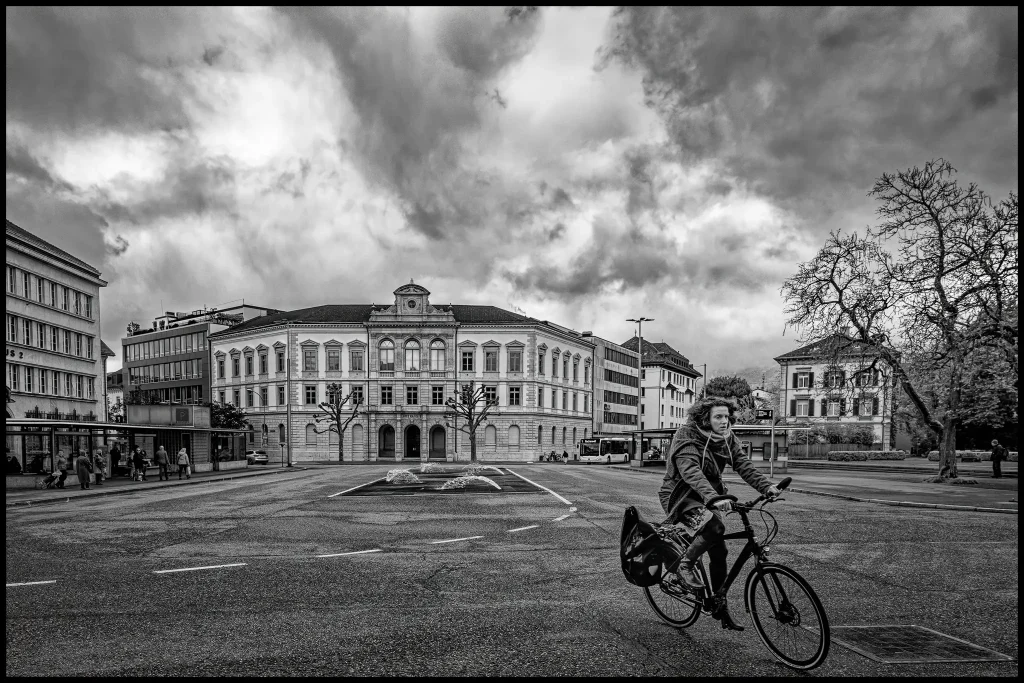
Under brooding skies in Switzerland, a lone cyclist rides past the stately facades of a quiet town square.
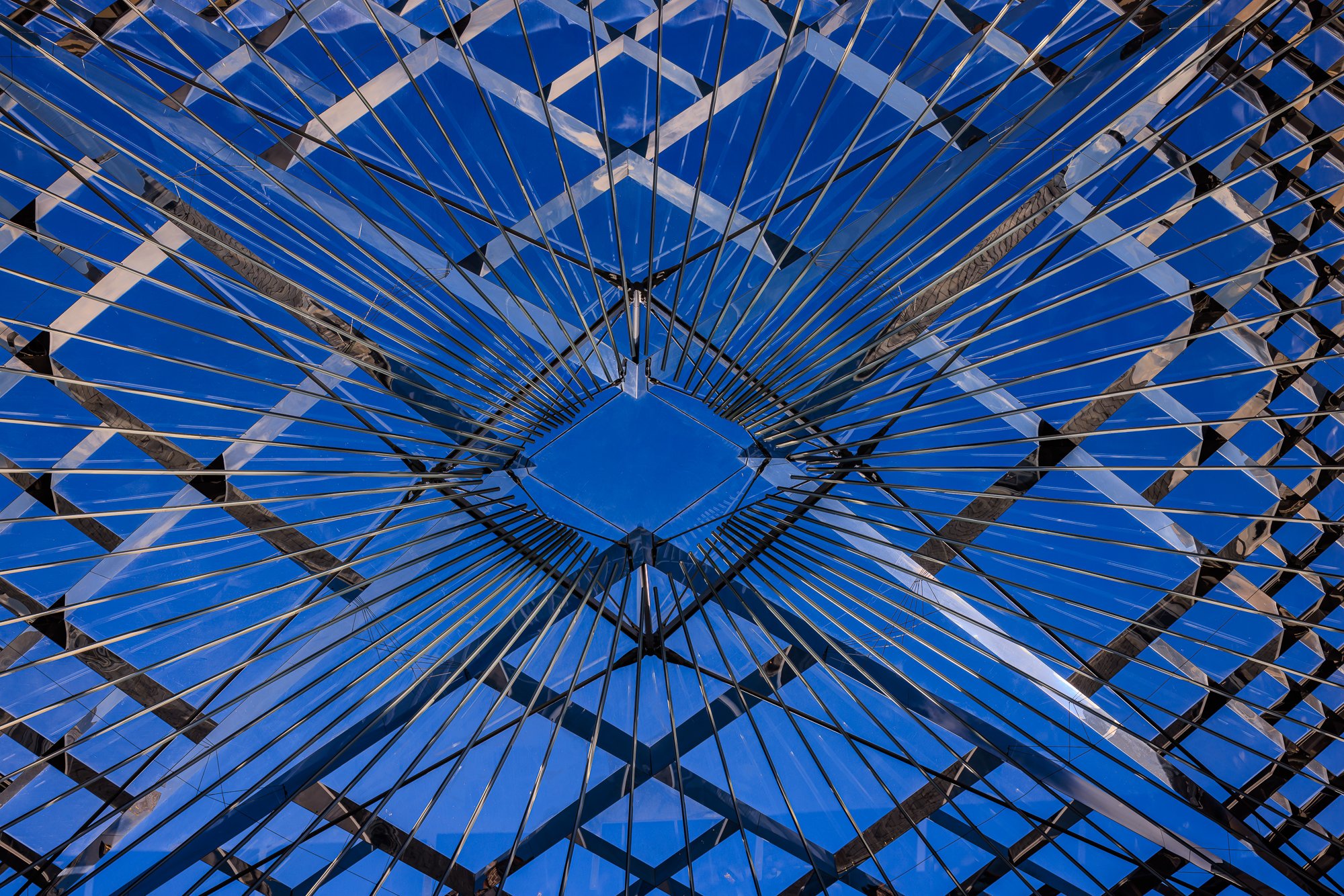
The Bourse de Commerce in Paris began as a circular wheat exchange built between 1763 and 1767. Its open-air court was capped with a wooden dome, later replaced in 1811 by a copper dome supported by an iron framework—an early example of modern engineering. A major reconstruction in 1888–89 preserved the layout but added glass and a mounted canvas to the dome, giving the building much of its present form.
The $170 million redevelopment was led by Pritzker Prize–winning Japanese architect Tadao Ando, who had previously collaborated with Pinault in Venice at the Palazzo Grassi. Ando inserted a striking 108-foot-diameter concrete cylinder into the rotunda, creating a central exhibition space while preserving the original dome and framework.
Since 2021, the Bourse de Commerce has been the Paris home of the Pinault Collection, offering exhibitions and events that reflect Pinault’s fifty years as a collector and patron of the arts. The immense dome—listed as a historic monument—is breathtaking in itself, and the contemporary art on display is modern, challenging, and original.
One of two theaters (the other being the Théâtre de la Ville) built on the site of a châtelet, a small castle or fortress, it was designed by Gabriel Davioud (1824-1881) at the request of Baron Haussmann between 1860 and 1862. Originally named the Théâtre Impérial du Châtelet, it has undergone remodeling and name changes over the years. Currently it seats 2,500 people. The theater was registered as a historic monument on November 14, 1979.
Since 1979, the theatre has been operated by the City of Paris, and, after undergoing a major restoration, re-opened in 1980 under the name Théâtre Musical de Paris. It was acoustically re-modeled again in 1989 and reverted to the Théâtre du Châtelet name.
From 2017 to 2019, the theatre was closed for a $34.7 million renovation. While the main purpose of the renovation was to renew electrical circuits, fire safety and security, the Grand Salle was returned to its appearance of 1862 and the Grand Foyer to its Napoleon III style. Outside of the theatre, allegorical statues symbolizing dance, music, comedy and drama which were removed at the end of the 19th century were restored.
Paris-Charles de Gaulle airport (CDG) opened on March 13, 1974. It has three terminals. Terminal 1 (shown above) is the oldest terminal. It was inaugurated on March 8, 1974 by French Prime Minister Pierre Messmer (1916-2007), after eight years of construction.
Designed by the young architect Paul Andreu (1938-2018), this first terminal featured an innovative design of brutalist architecture. It has a central circular building linked to seven satellites. Designed to facilitate the distribution of passenger flows, this singular structure earned the terminal its nickname, which is still used today, the Camembert.
The first Air France flight from Paris-Charles de Gaulle took off on April 30, 1974. The Caravelle F-BHRA, the first aircraft of its type delivered to Air France, took off for Belgrade and Sofia, with a crew led by flight captain Henri Cibert.
Paris-Charles de Gaulle is the busiest airport within the European Union. In 2022, it handled 57,474,033 passengers and 34,657 aircraft movements, thus making it the world’s ninth busiest airport and Europe’s third busiest airport (after Istanbul and Heathrow) in terms of passenger numbers.
The American Red Cross National Headquarters in Washington, D.C was built between 1915 and 1917. It serves both as a memorial to women who served in the American Civil War and as the headquarters building for the American Red Cross. The building was declared a National Historic Landmark in 1965.
The American Red Cross was founded in 1881 in the aftermath of the American Civil War as a public-private partnership to provide disaster relief and medical support for military forces.
Free, guided tours are offered Wednesdays and Fridays at 11:00 a.m. and 2:00 p.m. by reservation only.
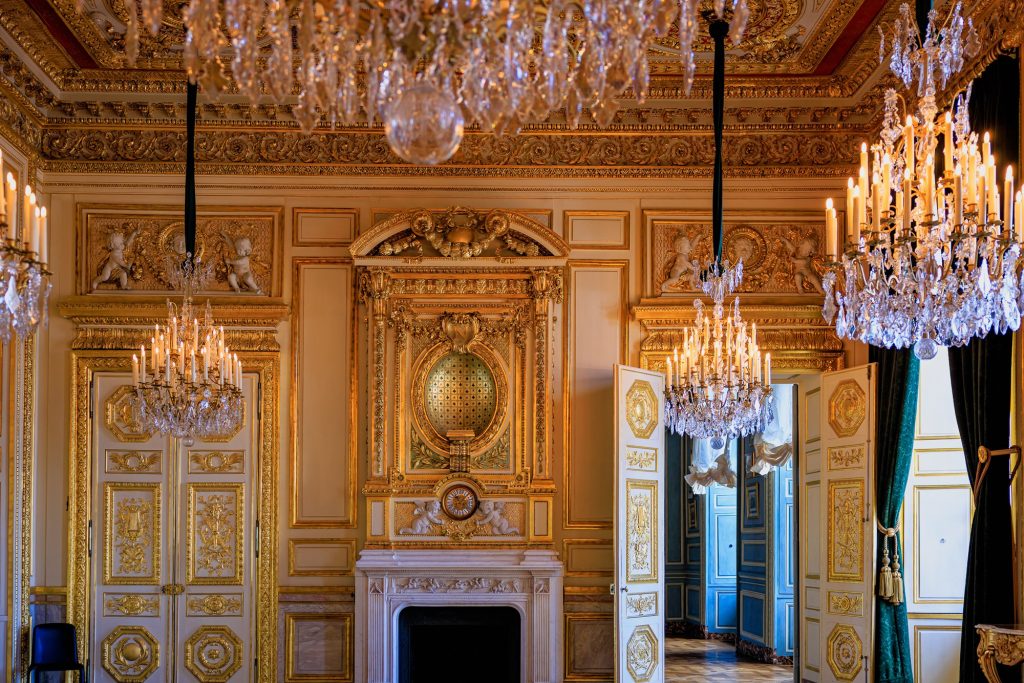
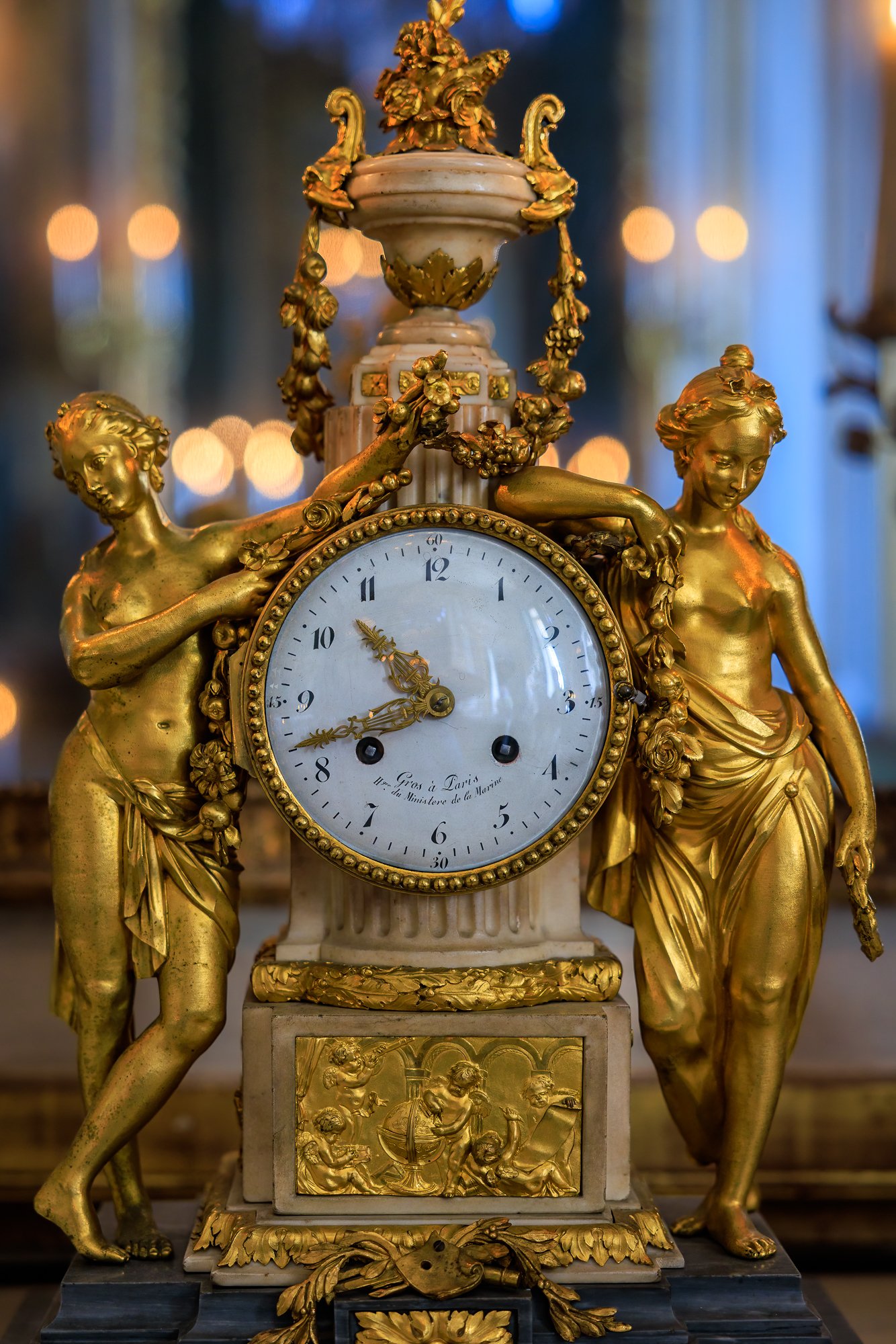
The hôtel de la Marine (also known as the hôtel du Garde-Meuble) is an historic building located on Place de la Concorde in Paris, to the east of rue Royale. It was designed and built between 1757 and 1774 by the architect Ange-Jacques Gabriel, on the newly created square first called Place Louis XV. The identical building to its west, constructed at the same time, now houses the hôtel de Crillon and the Automobile Club of France.
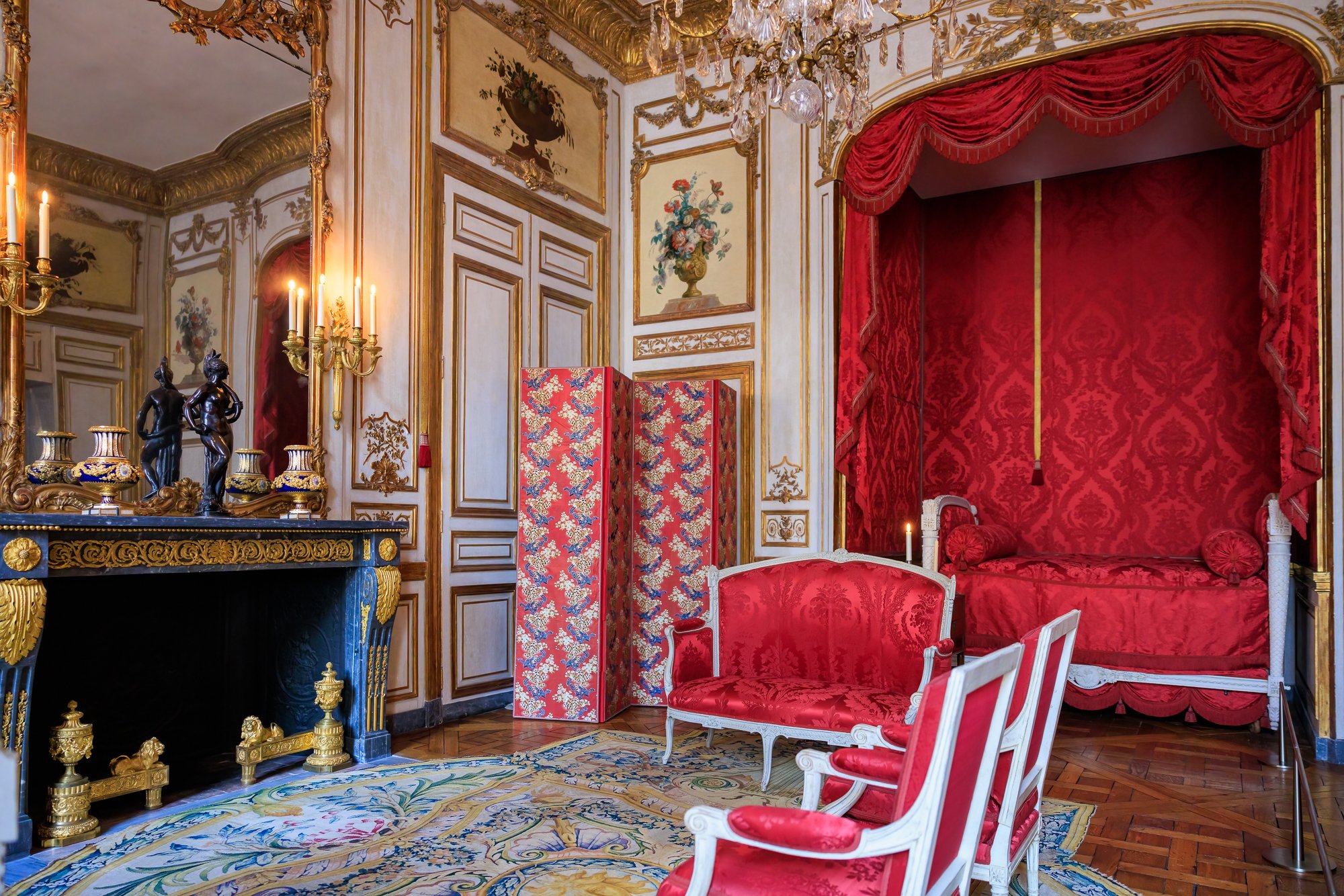
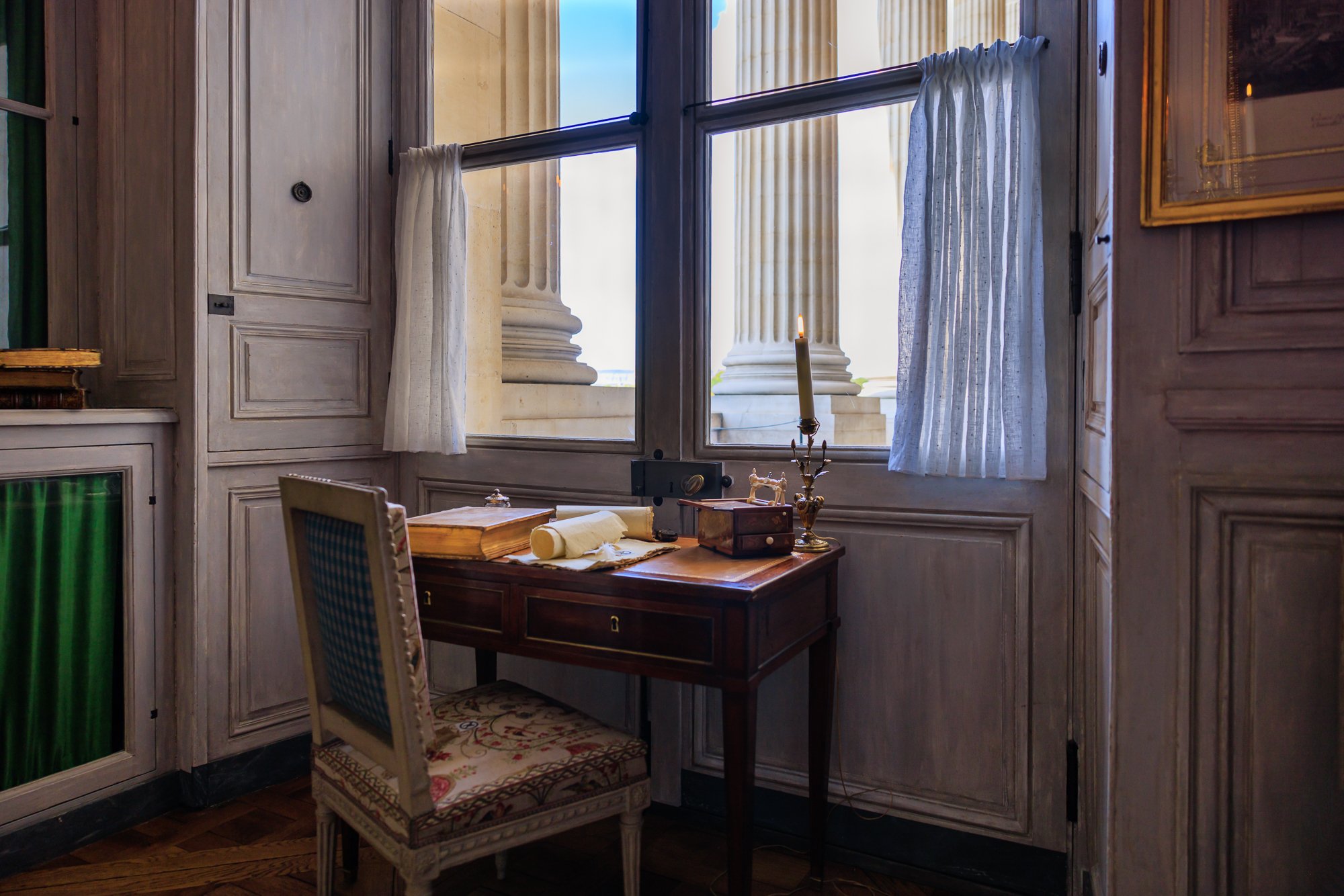
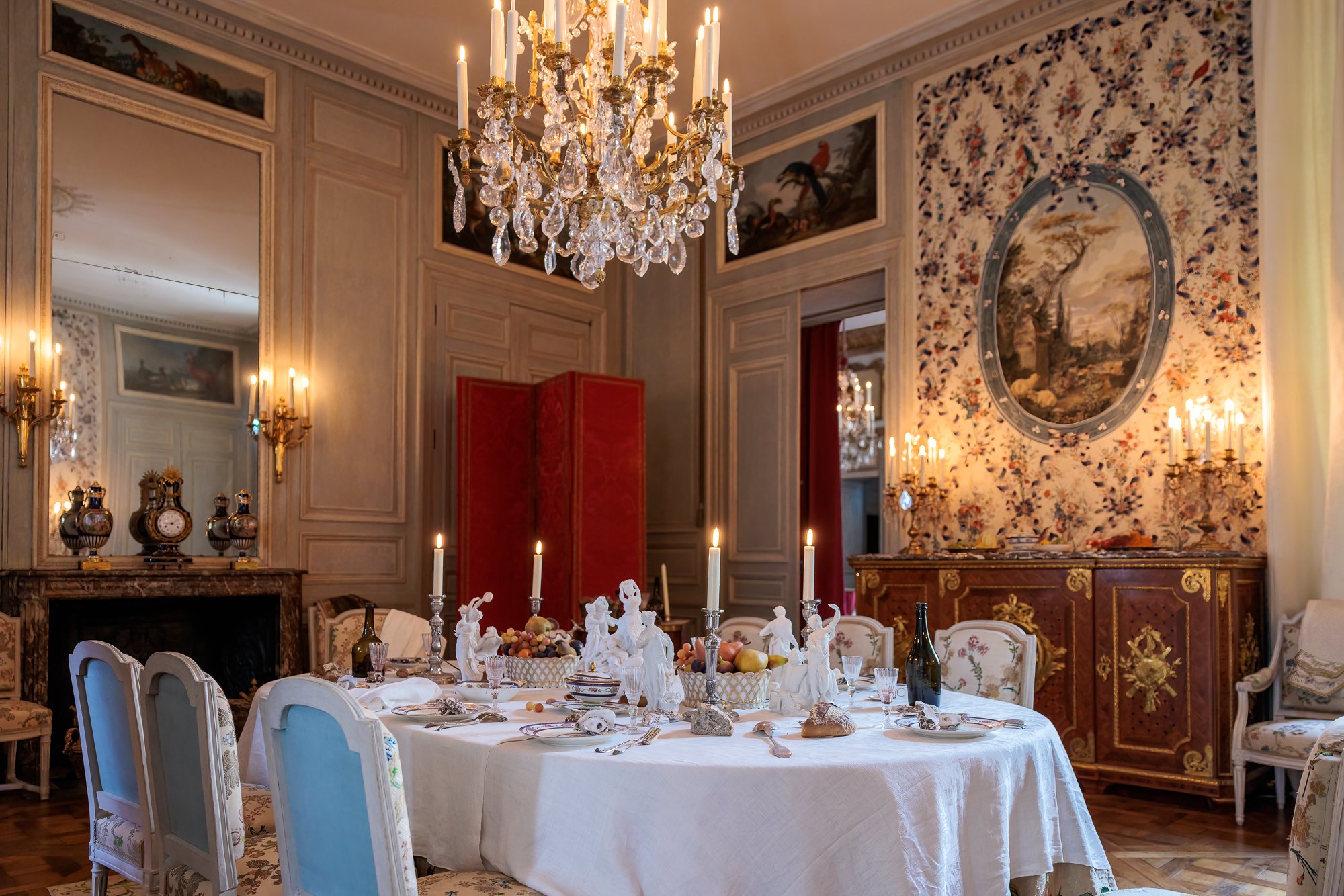
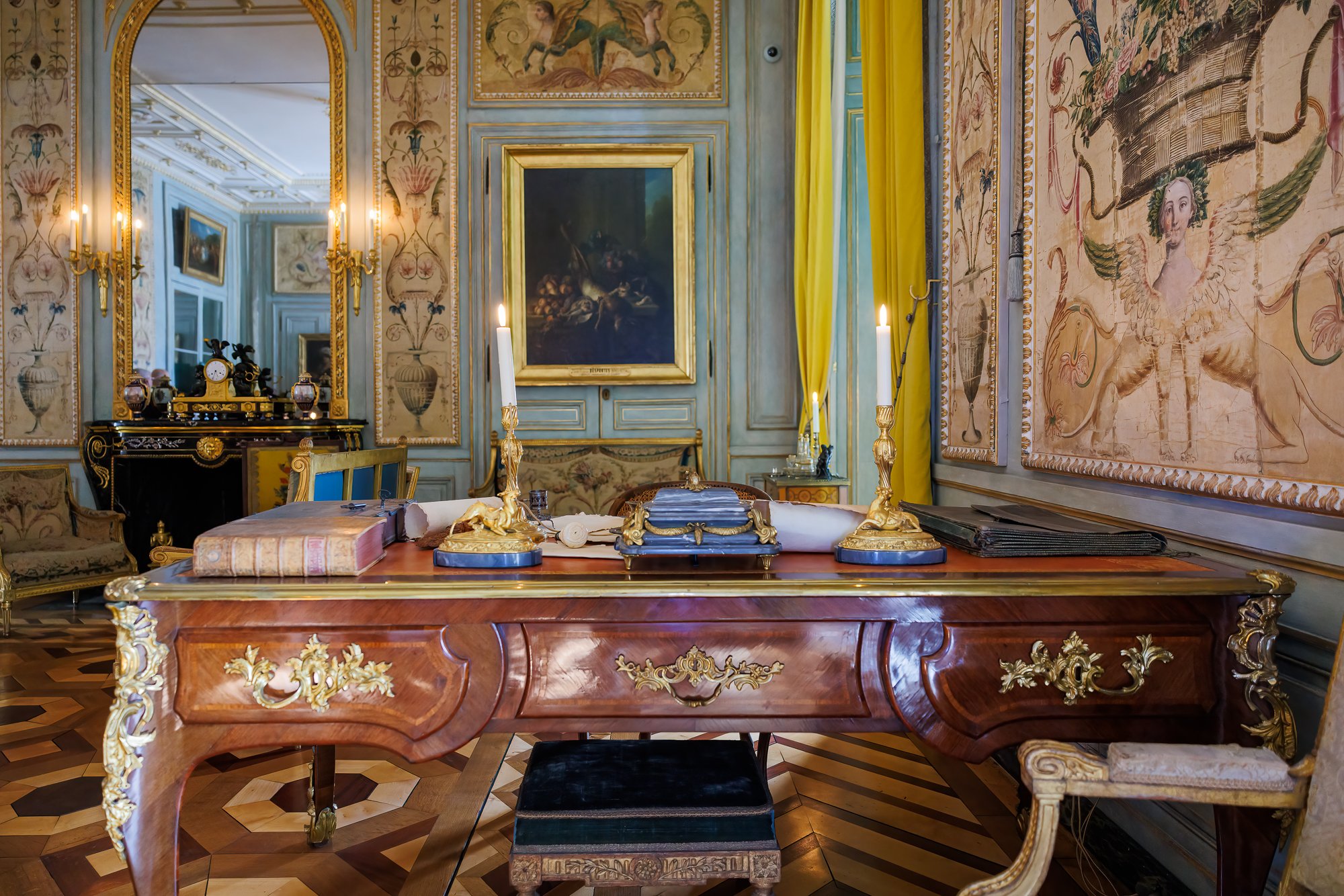
The hôtel de la Marine was originally the home of the royal Garde-Mobile, the office managing the furnishing of all royal properties. Following the French Revolution it became the Ministry of the French Navy, which occupied it until 2015. It was entirely renovated between 2015 and 2021. It now displays the restored 18th century apartments of Marc-Antoine Thierry de Ville-d’Avray, the King’s Intendant of the Garde-Meuble, as well the salons and chambers later used by the French Navy.
Major historical events have taken place in the hôtel de la Marine:
On 16 September 1792, the Crown Jewels were stolen at the Hôtel de la Marine. At night, around forty people got inside the reception room where the jewels were displayed and stole goods worth around 30 million French francs. Most of the jewels were found again two years later. However, The French Blue (Le bleu de France) was not recovered. It reappeared 20 years later in England, completely recut with the largest section of the diamond appearing under the Hope name in an 1839 gem catalog from the Hope banking family. The Hope Diamond is now in the National Museum of Natural History in Washington, D.C.
In a room overlooking Place de la Concorde Marie Antoinette’s death warrant was signed. She was guillotined on 16 October 1793 on Place de la Concorde. She was 37 years old.
On 27 April 1848, in the office of minister François Arago in the Hôtel de la Marine, the decree to abolish slavery in the French colonies was signed in Paris. Victor Schœlcher, an ardent defender of human rights, was the man behind this historic decision.
The renovation is beautiful. The views of Paris monuments are exceptional.
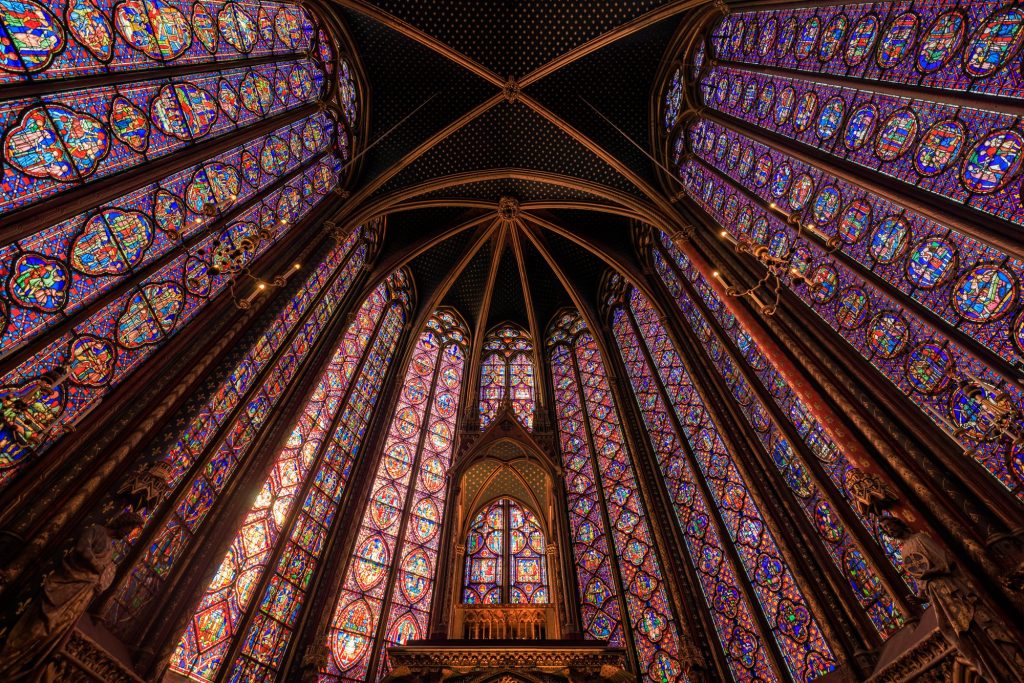
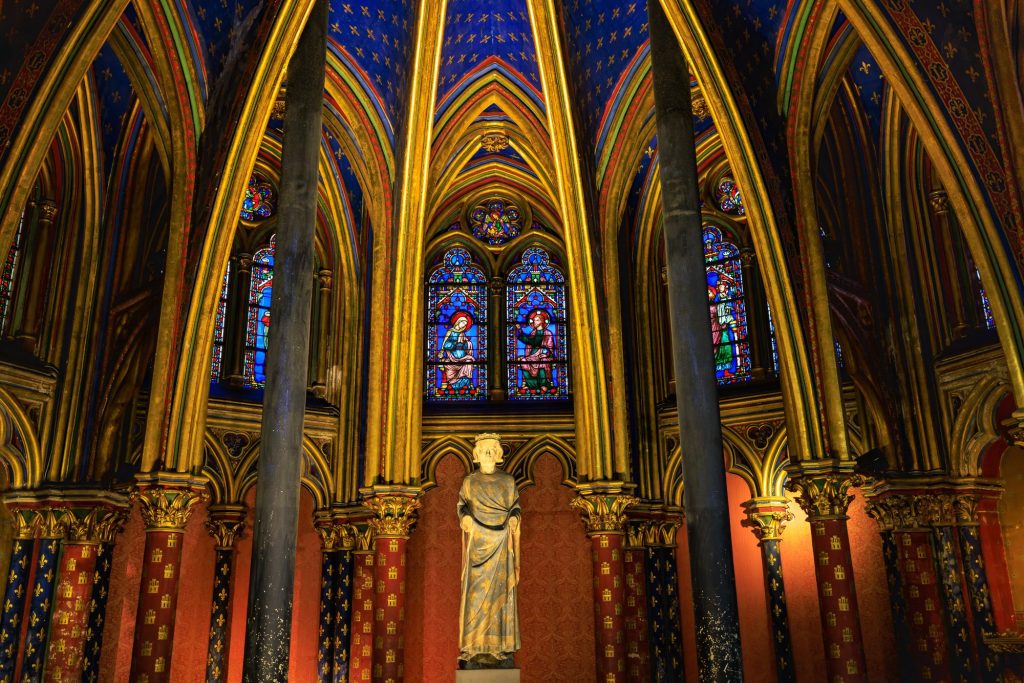
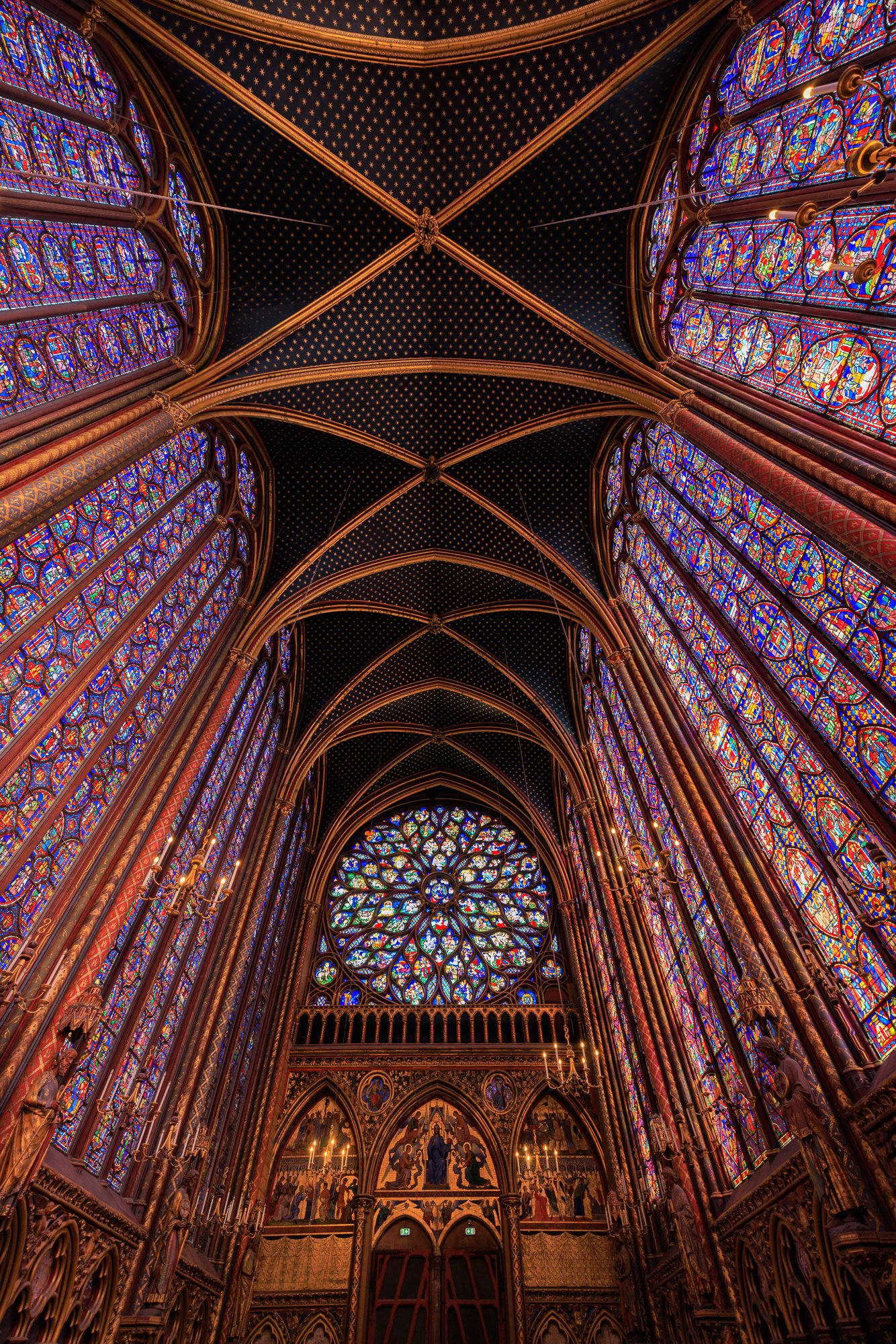
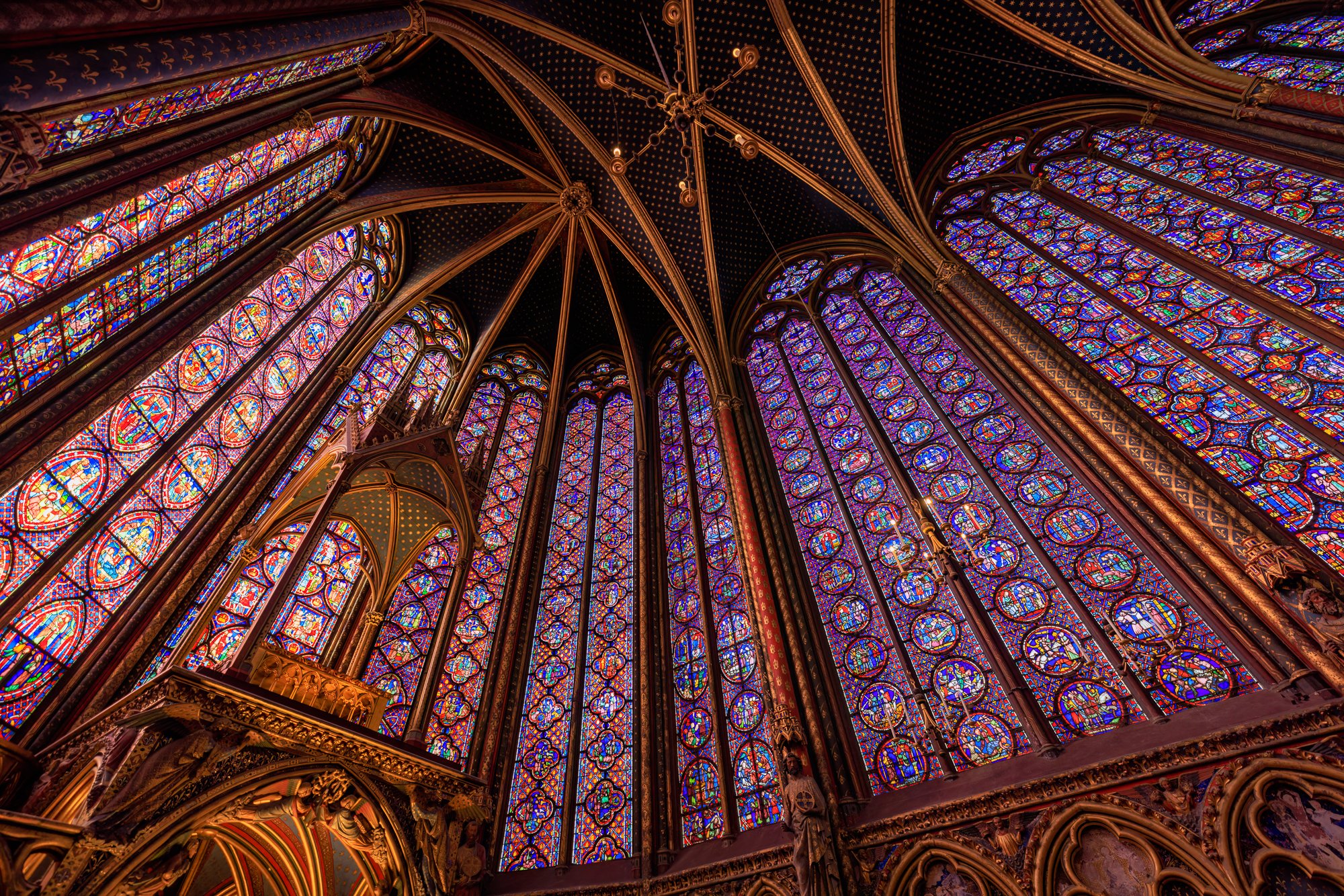
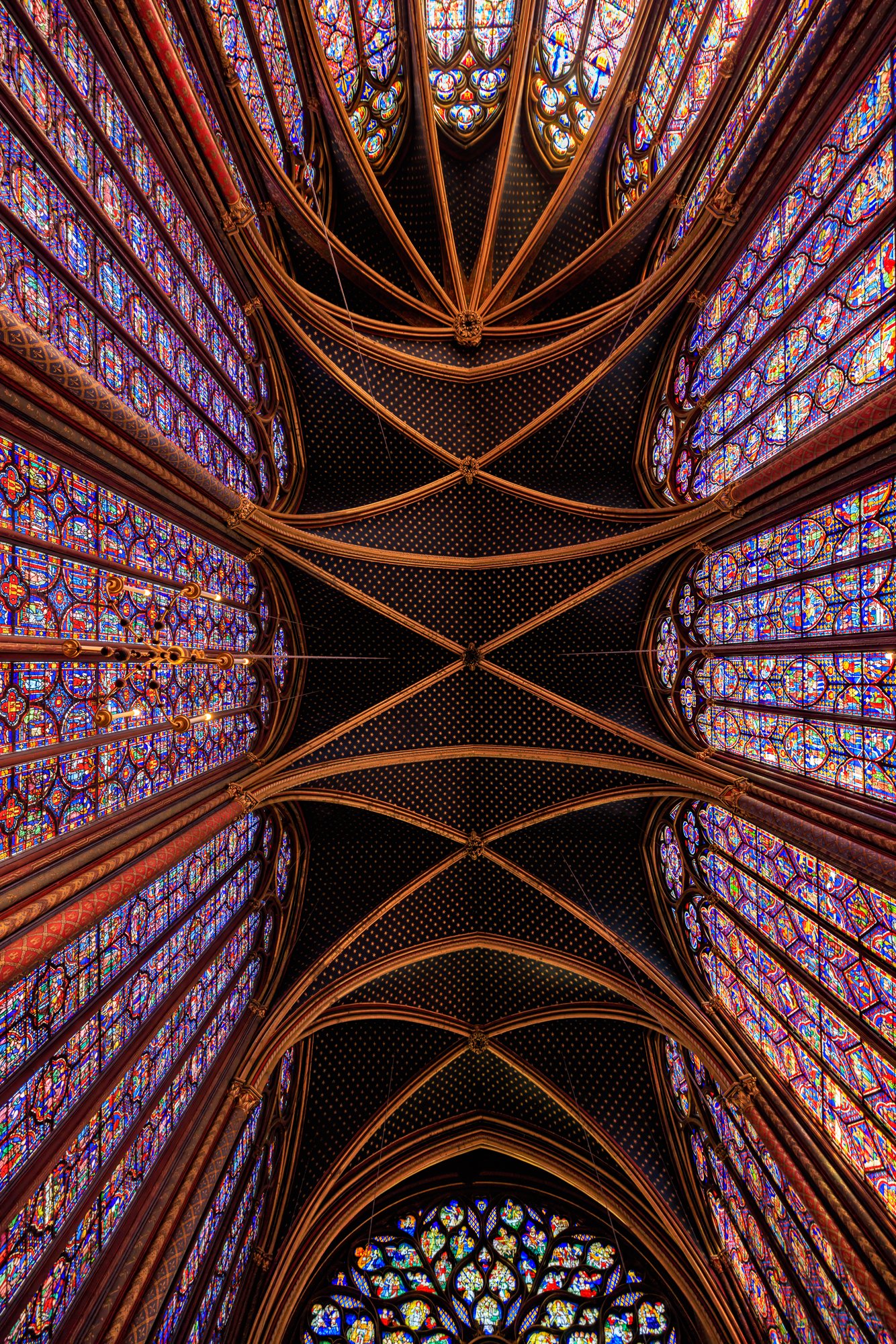
The Sainte-Chapelle is the finest royal chapel to be built in France. The chapel is filled with 1,113 stained glass windows illustrating the Bible. Construction of the chapel began sometime after 1238 and it was consecrated on April 26, 1248. King Louis IX of France commissioned the chapel to house his collection of Passion relics, including Christ’s Crown of Thorns – one of the most important relics in medieval Christendom. This was later held in the nearby Notre-Dame Cathedral until the 2019 fire, which it survived.
Along with the Conciergerie, Sainte-Chapelle is one of the earliest surviving buildings of the Capetian royal palace on the Île de la Cité. The Capetian dynasty was the ruling house of France from 987 to 1328. Although damaged during the French Revolution and restored in the 19th century, Sainte-Chapelle has one of the most extensive 13th-century stained glass collections anywhere in the world.
Sainte-Chapelle, created so long ago, inspires awe in the modern world. You can buy timed tickets here.
Washington, D.C.’s Martin Luther King Jr. Memorial Library recently underwent a $210 million three-year renovation by Netherlands-based Mecanoo and New York firm OTJ Architects. The library, which originally opened in 1972, now boasts expanded and updated spaces. The renovation included a dramatic staircase, depicted here, that winds up the library’s six stories. The library is just a mile from the White House.
You can learn more about the library and its beautiful renovation in Architectural Digest.