Film: ‘Ida’

Anna, a young woman training to be a nun in 1960s Poland is on the verge of taking her vows when she meets her only living relative for the first time and learns that she is Jewish and that her real name is Ida Lebenstein. Together they discover what happened to Anna/Ida’s family.

This jewel is only 82 minutes long and every moment makes good use of the viewer’s time. The story is one example of the decimation of Poland’s Jews during World War II. But in the end, this is not a film about Poland or the Holocaust – but about life.

The film, which came out in 2013, is in black and white. The places photographed are ordinary yet the cinematography is stunning. Each scene looks like a black and white photograph made by a Magnum photographer using a Leica camera. Łukasz Żal is a superb, young cinemaphotographer born in Koszalin, Poland.

Ida is played by Agata Trzebuchowska. Her character is sweet, innocent and beautiful. Her aunt Wanda – Agata Kulesza – is also a fine actress.

Pawel Pawlikowski directed the film. He was born in Warsaw in 1957. At the age of 14, Pawlikowski left Poland to live in Germany and Italy, before settling in Britain. In 2004, he directed My Summer of Love with Emily Blunt and Natalie Press.

This film touched me deeply and left me thinking for a long time about what’s important and what’s not. It is among the best films I have seen.

Friedrich Kellner’s Wartime Diaries: Seeing Through Nazi Propaganda

The second and final volume of German historian Volker Ullrich’s biography of Adolf Hitler, Hitler: Downfall 1939–1945, opens with high praise for the wartime diaries of Friedrich Kellner.

Kellner, a court official in the small town of Laubach, had no special access to inside information. Yet he was repulsed by the Nazi regime and began keeping a detailed diary, recording what he read in the German press and what he heard from those around him. He hoped his writings would serve as a warning to future generations against blind faith and dictatorship.

Ullrich explains that Kellner’s diaries “show that it was entirely possible for normal people in small-town Germany to see through the lies of Nazi propaganda and learn of things like the ‘euthanasia’ murders of patients in psychiatric institutions and the mass executions carried out in occupied parts of eastern Europe.”

The Kellner diaries were first published in German in 2011 and are now available in English. They are also the subject of a moving 2007 television documentary created by Kellner’s American grandson.


Photographers Worth Exploring

This is a list of photographers who inspire me, in no particular order. I hope readers will suggest other photographers in the comments.

Last updated: April 30, 2026

Tracing Quotations

Quote Investigator is a website that fact-checks the reported origins of widely circulated quotations. According to Wikipedia, the website was started in 2010 by Gregory F. Sullivan, a former Johns Hopkins University computer scientist who runs the site under the pseudonym Garson O’Toole. Many of the quotes examined on the site are emailed to him by readers.

O’Toole is also the author of a book entitled Hemingway Didn’t Say That: The Truth Behind Familiar Quotations. The New York Times reviewed the book in 2017 and confirmed that Gregory F. Sullivan is indeed the author of the website.

Sullivan “tries to track down correct information about the provenance of sayings by utilizing the massive text databases that are being constructed right now along with other quotation history resources.”

The site reports that it had more than 4.2 million visitors between June 1, 2021 and May 31, 2022. It’s a free site.

The Library of Congress also hosts a list of quotation reference websites. However, many of these websites, unlike Quote Investigator, do not cite an original source. Even so, it is a good resource.

Chicago at Night

Jim Hill is a Chicago photographer worth getting to know. He became fascinated by Chicago’s nighttime alleys and back streets during the pandemic:

I submerged myself in studies of how artificial lights penetrate the darkness of an urban environment. That darkness provided me comfort and cover from the events going on around me. The artificial lights transformed what is bland and ugly in the daylight into a beautiful hidden world, which is visible to those willing to risk the unknown, the shadows. 

During the pandemic, fear and death seemed to permeate everything. Roaming forgotten places in the darkness to capture the hope of the light allowed me to confront the panic around me and gave me the strength to carry on. Ultimately, my work is about confronting fear and finding the beauty, which can emerge from the unknown, the darkness.

You can follow Jim Hill’s thought provoking photographs on Flickr and Instagram.

Progress

SF’s ‘Bay Bridge Lights’ to Go Dark

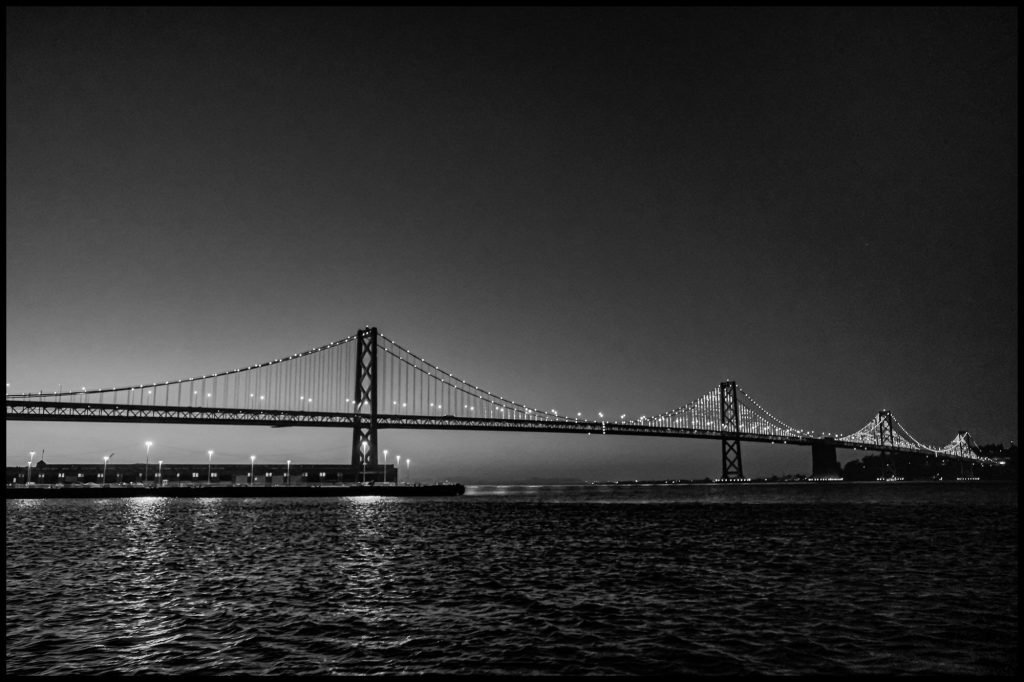
I made this photograph of the San Francisco–Oakland Bay Bridge in 2019. This was only possible because of the beautiful lights on the span. The lights have been on the bridge since 2013 when a public art installation called “The Bay Lights” was activated on the bridge.

The installation was designed by artist Leo Villareal and consists of 25,000 LED lights. This beautiful display stretches 1.8 miles across 300 cables on the western span of the Bay Bridge. Sadly, after ten years the display is worn out and and, according to the San Francisco Chronicle, will go dark on March 5, 2023. However, efforts are underway to raise $11 million to keep “Bay Lights” shining on the Bay Bridge.

I hope they succeed.

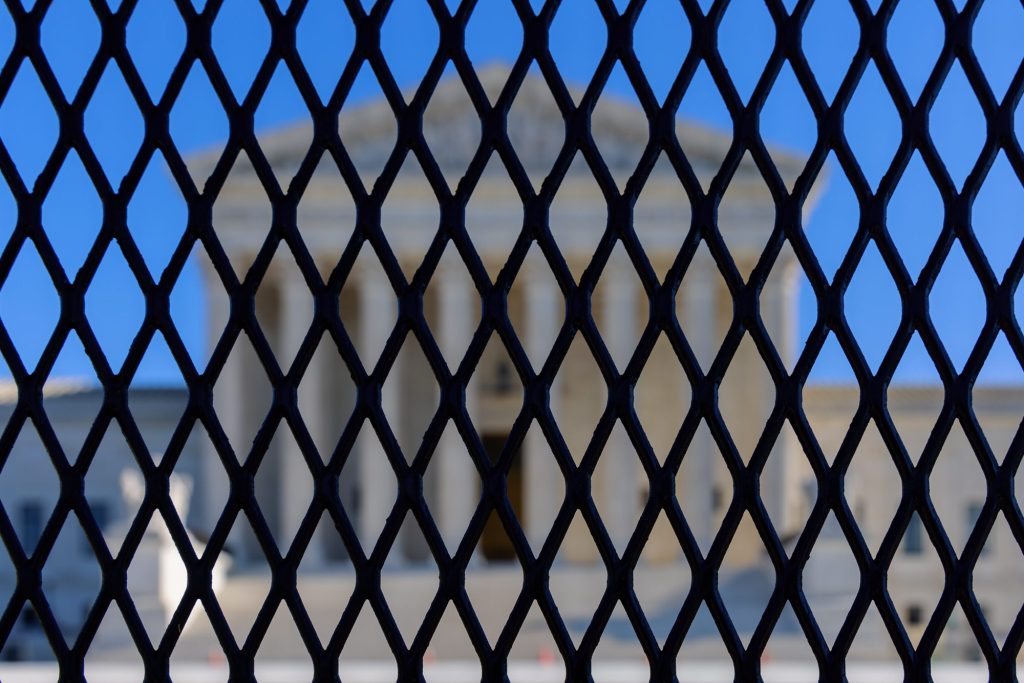
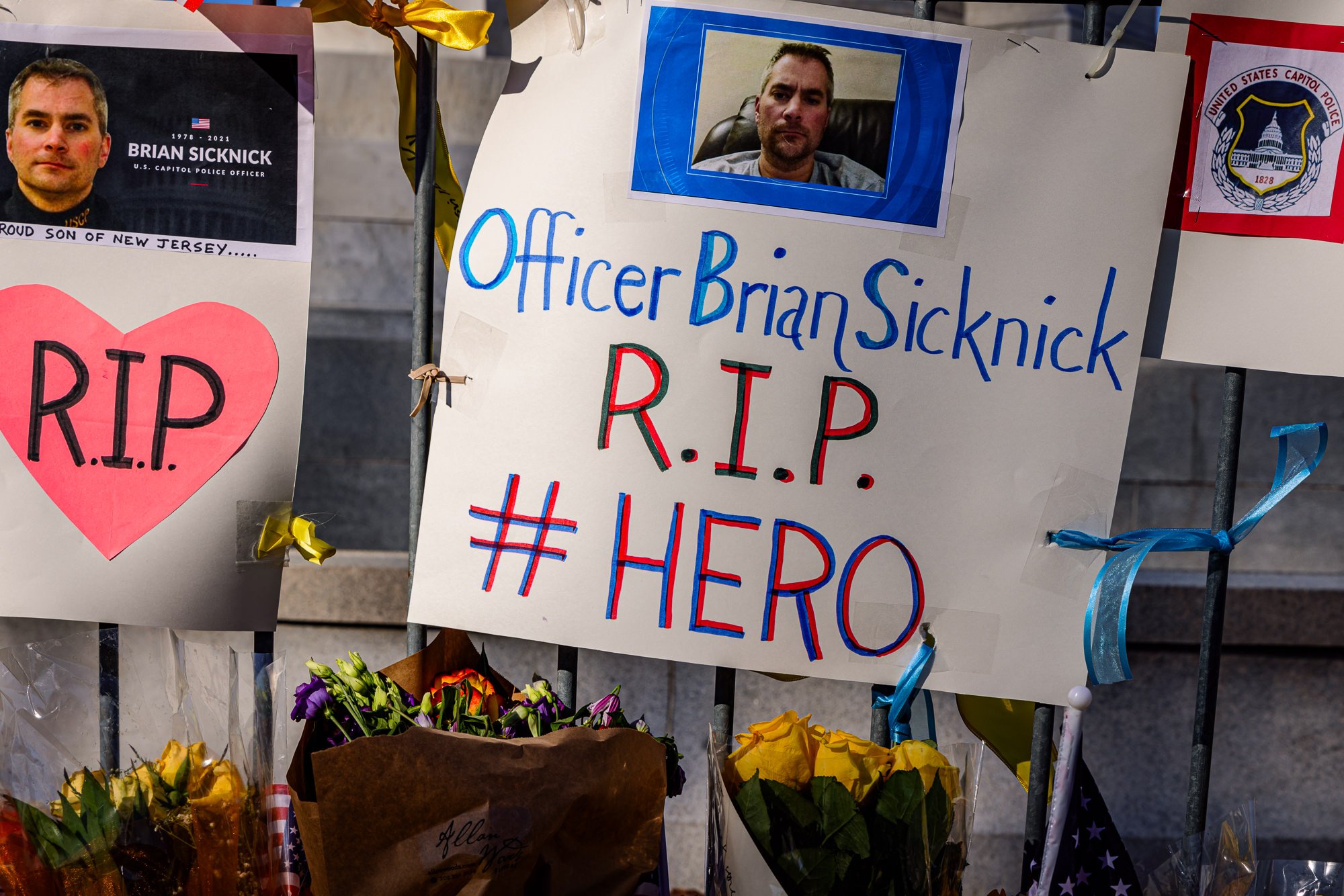
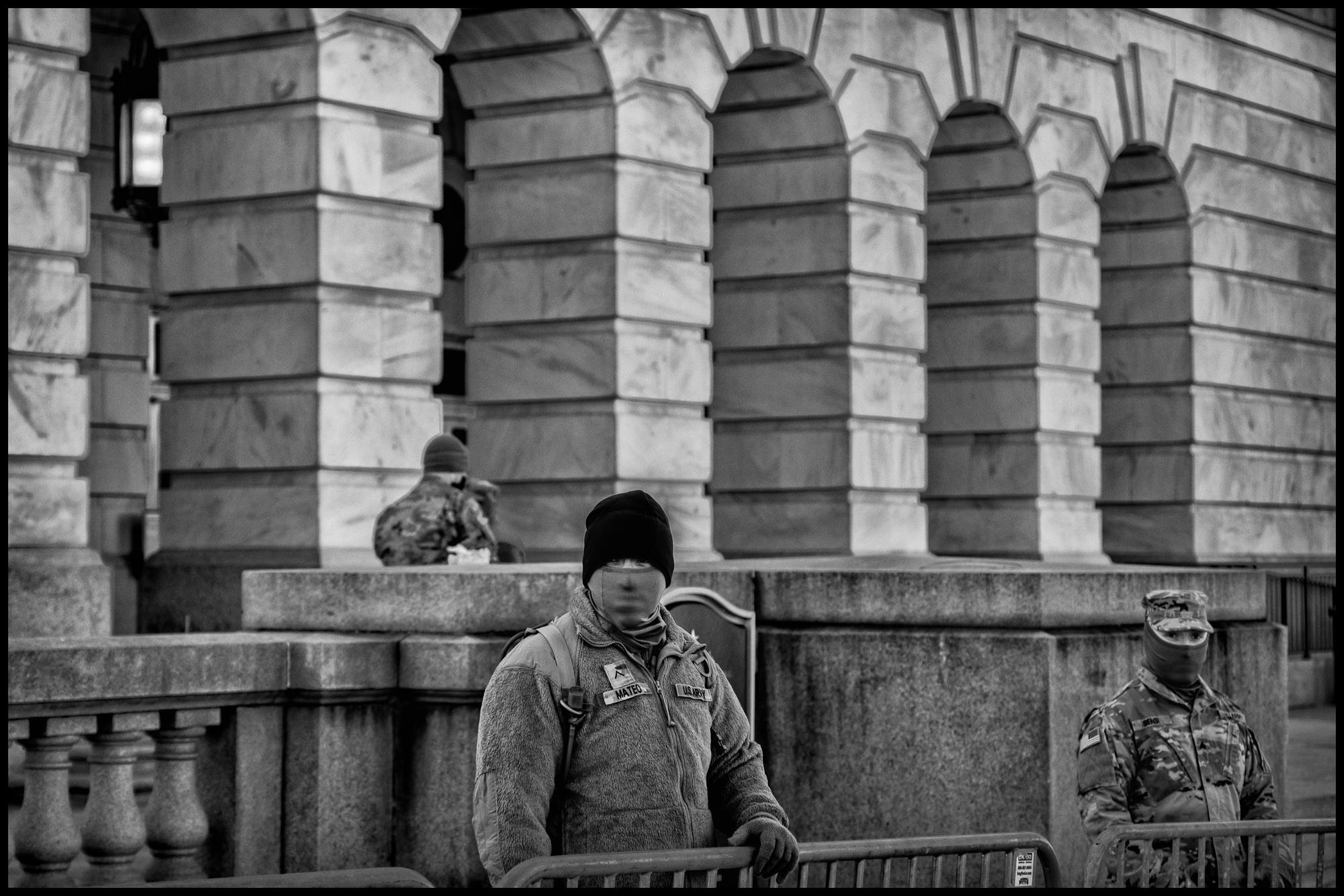
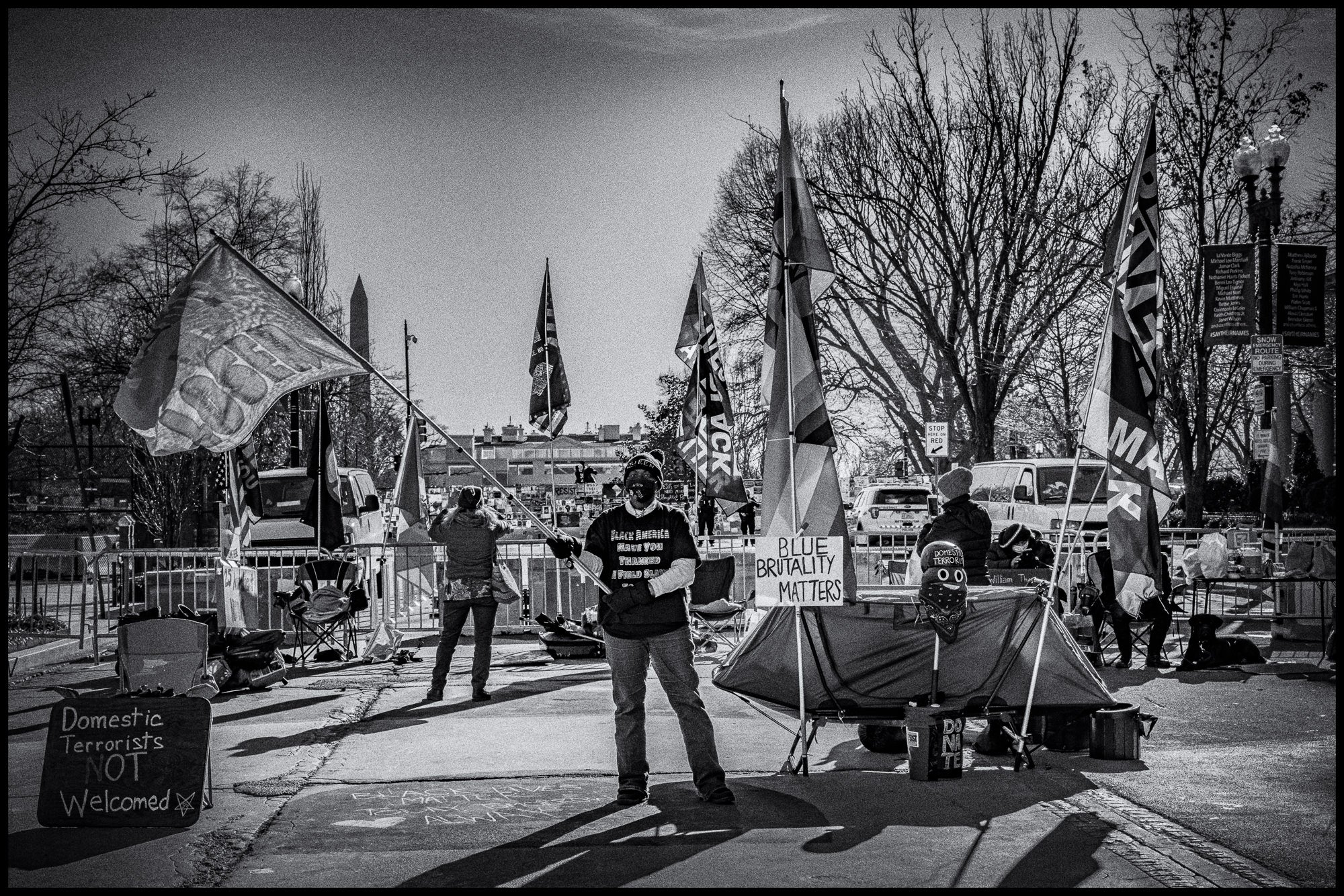
A Deeply Divided America

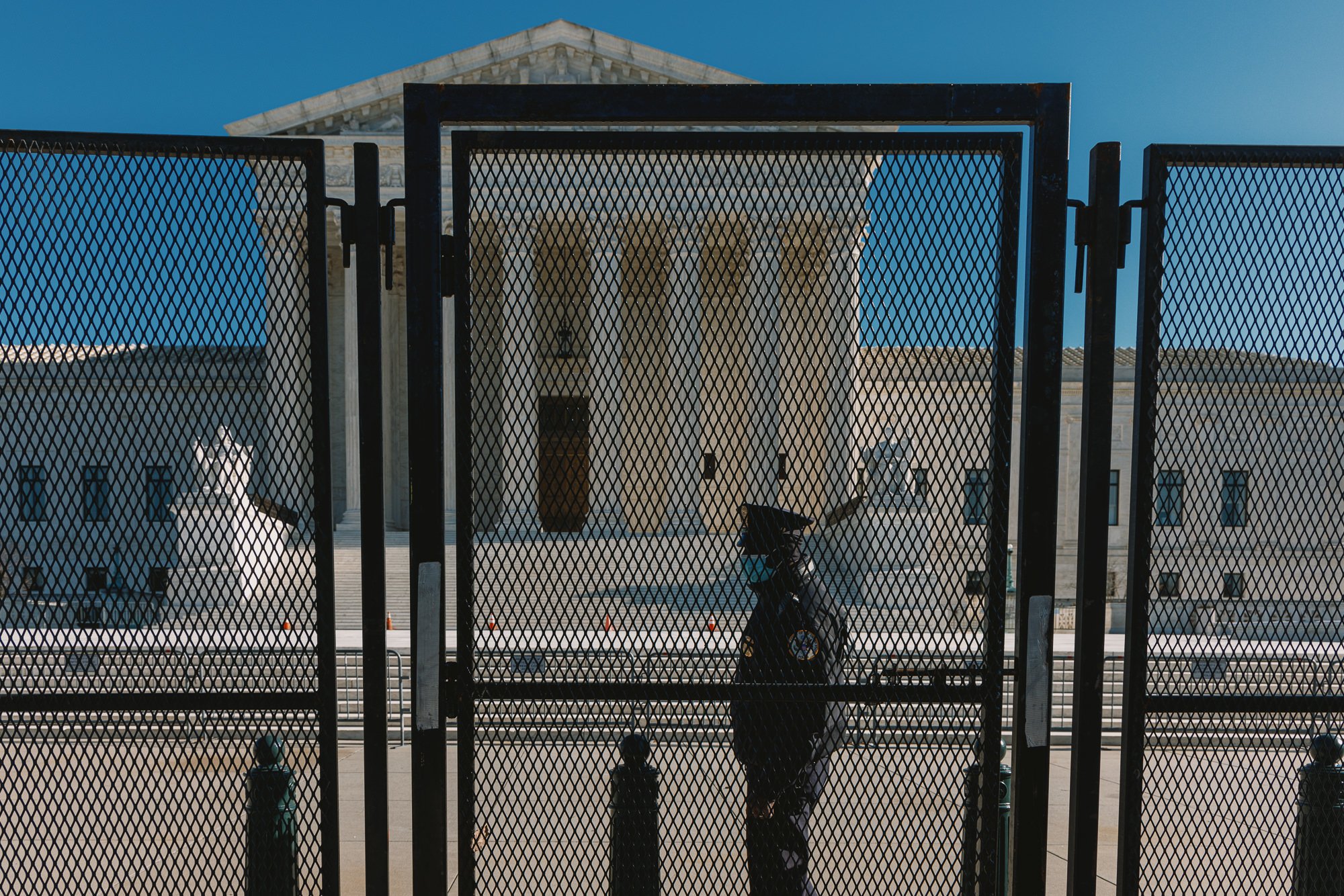
The United States is deeply divided as these images at the White House, the Supreme Court and the U.S. Capitol portray.

Jimmy Carter (1924-2024)

Life-Size Portrait of Jimmy Carter (1924-2024) by Robert Templeton, 1980, oil on canvas, seven feet, nine inches high by four feet, nine inches wide, dressed in black bunting, National Portrait Gallery, Washington, DC – Photo by David Enzel (January 5, 2024)

Jimmy Carter was President when I began my Federal career in 1979, marking the start of a journey through decades of public service. I retired during the Biden Administration, reflecting on the many changes and milestones I witnessed in our nation’s history.

President Carter was not only a capable leader but also a person of exceptional character. His humility, compassion, and unwavering commitment to humanitarian causes embody a kind of leadership that earns enduring respect and admiration.

As I reflect on his extraordinary life and legacy, I am both comforted and inspired by President Carter’s steadfast dedication to justice, peace, and the betterment of humanity. His example serves as a powerful reminder of what can be achieved when integrity and empathy guide our actions, leaving a profound and lasting impact on those fortunate enough to have witnessed his contributions to the nation and the world.


Neon Museum, Las Vegas

The Neon Museum in Las Vegas features signs from old casinos and other businesses displayed outdoors on a 2.27 acre campus. The Neon Museum has an outdoor exhibition space known as the Neon Boneyard. Boneyard is traditionally the name for an area where items no longer in use are stored.

Efforts to establish a neon sign museum date to the late 1980s, but stalled due to a lack of resources. On September 18, 1996, the Las Vegas City Council voted to fund such a project, to be known as the Neon Museum. The organization started out by re-installing old signage in downtown Las Vegas, to attract more visitors to the area.

Young Electric Sign Company (YESCO) had manufactured many neon signs in the city, and the company had a storage site for old signs which would eventually become part of the Neon Museum collection. In 2000, as YESCO prepared to close its storage lot, the city provided the museum with land to start its own. Tours of the new site, known as the Neon Boneyard, began in 2001, by appointment only.

The lobby of the former La Concha Motel, located on the Las Vegas Strip, was donated to the museum and moved there in 2006, eventually becoming its visitor center. Construction to convert the lobby began in May 2011, and the museum officially opened to the general public on October 27, 2012, eliminating the appointment system.

Each of the more than 250 signs in the Neon Museum’s collection offers a unique story about the personalities who created it, what inspired it, where and when it was made, and the role it played in Las Vegas’ distinctive history.

The Museum has announced plans for relocation and expansion in downtown Las Vegas’ Art District. The plan is to nearly triple the size of its current location. Currently, only 35 percent of the museum’s collection is visible to the public.

The Neon Museum is located at 770 Las Vegas Blvd. N, Las Vegas NV, 89101. You can buy tickets here.


Sources: The Neon Museum | Wikipedia


Alta, Norway

Alta is located at 70 degrees north, far above the Arctic Circle. Alta is considered the northernmost city in the world with a population surpassing 10,000. The 9.81-square-kilometre (2,420-acre) town has a population (2023) of 15,931. At this latitude, nature is in total control.

Alta is a good place to see the Northern Lights due the region’s relatively stable climate and minimal light pollution, particularly when heading out of town into the surrounding wilderness. The Aurora has been known to be seen here for up to 200 nights a year. 

Alta is a center of transportation in Finnmark county. The town has port facilities along Altafjorden, just alongside Alta Airport in Elvebakken. The airport has direct flights to Oslo and certain other big cities in Norway like Tromsø. The European route E6 highway also runs through the town and the European route E45 has its northern terminus in the town. The main industries present in Alta include a concrete product factory; several wood mills and sawmills; and dairy, horticulture trade, and maritime services.


Resources: Wikipedia – Alta | Alta Tourist Site | Aurora Zone – Alta