Pan Am ‘First Moon Flights’ Club

Between 1968 and 1971, Pan American World Airways issued over 93,000 “First Moon Flights” Club cards to those eager to make a reservation for the first commercial flight to the Moon. The cards were free. I was a proud member.

The Club originated from a waiting list that is said to have started in 1964, when Gerhard Pistor, an Austrian journalist, went to a Viennese travel agency requesting a flight to the Moon. The agency forwarded his request to Pan Am, which accepted the reservation two weeks later and replied that the first flight was expected to depart in 2000.

On July 20, 1969, Neil Armstrong became the first human to step foot on the moon.
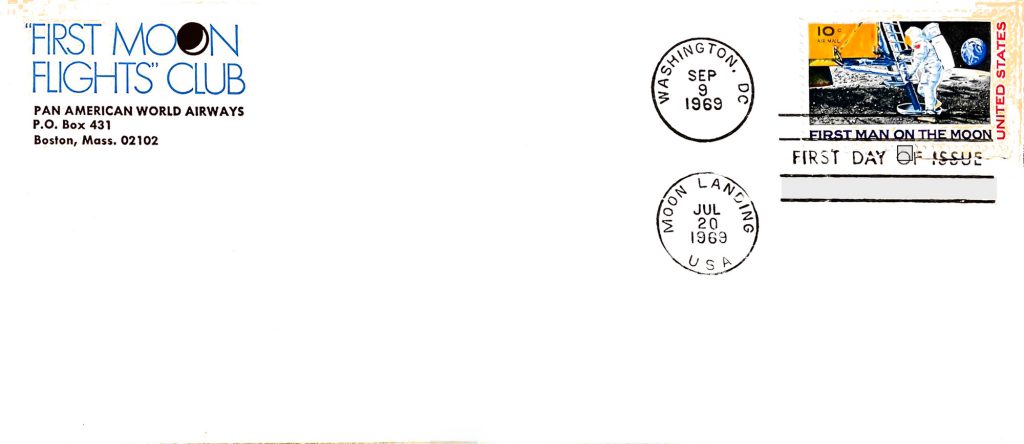
“First Man on the Moon” stamp depicting Neil Armstrong stepping from the Apollo 11 lunar module Eagle.

On September 9, 1969, the United States Postal Service issued a 10 cent postage stamp showing an astronaut walking on the surface of the moon. It was called the “First Man on the Moon” postage stampAccording to the National Postal Museum, the stamp was made from the same master die that the astronauts took with them to the moon. Additionally, it was the largest stamp the United States had issued up to that point.

Pan Am sent members of the “First Moon Flights” Club “First Day of Issue” envelopes. I was excited to get mine and have kept it all this time. I now doubt I will make it to the moon. But it was an exciting thought.

Unfortunately, Pan Am did not survive. It went bankrupt in 1991.

Helen Reddy (1941-2020)

Singer Helen Reddy, born in Melbourne, Australia in 1941, died in Los Angeles on September 29, 2020, at the age of 78.

Her first hit came in 1971 with a cover of I Don’t Know How to Love Him from Jesus Christ Superstar. It remains my absolute favorite of her songs — tender, emotional, and beautifully sung. A year later, she released what would become her signature anthem: I Am Woman.” It reached number one on the Billboard Hot 100 in December 1972. Reddy was the first Australian-born artist to top that chart — and the first to win a Grammy.

I’ve always loved Helen Reddy’s music. Her voice was strong and expressive, and her songs made an impression that lasted. “I Am Woman” was more than a hit — it was a declaration of presence and power, especially at a time when those words carried weight.

Reddy’s life wasn’t easy. She had a kidney removed at 17 and lived with Addison’s disease. Still, she built a career that was both groundbreaking and lasting, and her music continues to resonate.

Remembering Constantine “Costa” Manos (1934-2025)

Constantine “Costa” Manos was an American photographer best known for his vivid images of Boston and Greece. A longtime member of Magnum Photos, he was born in Columbia, South Carolina, the son of Greek immigrants.

In 2002, I took one of his street photography workshops in Maine. His critiques were sharp, honest, and always insightful. To this day, I often find myself wondering, What would Manos say about this photograph? The experience was both humbling and transformative.

What impressed me most was his approach to color. His photographs are bold and crisp, alive with saturated hues and deliberate composition. He taught me to see color in a completely new way. At the time, I had never encountered photographs quite like his.

In the preface to his now out-of-print 1995 book, American Color, Manos wrote:

My favorite pictures have always been complex ones which ask questions and pose problems, but leave the answers and solutions to the viewer. These are images with a long and evolving life, in which the photograph may transcend the subject and become the subject. Central to the strength of these images is photography’s most precious and unique quality, believability: that the moment preserved on a piece of paper is true and unaltered, that it really happened and will never happen again.

The photographs in American Color are uncaptioned — and they don’t need captions. They invite reflection. They remind me that powerful images can be found close to home, and that beauty often emerges from the ordinary.

As Magnum President Cristina de Middel observed:

“[H]is ability to capture the poetry of everyday life with unmatched sensitivity and a keen eye for light and color has left an indelible mark on the history of photography.”

Guided Tour of the U.S. Ambassador’s Residence, Paris

The residence of the United States Ambassador to Paris is at 41 rue du Faubourg Saint-Honoré in the 8th arrondissement. It is known as the Hôtel de Pontalba. It was built by Louis Visconti for the New Orleans–born Baroness Micaela Almonester de Pontalba between 1842 and 1855. Edmond James de Rothschild acquired the building in 1876.

During the German occupation of France, the mansion, then owned by Baron Maurice de Rothschild, was requisitioned as an officers’ club for the Luftwaffe. After the war, it was rented out to the British Royal Air Force Club, and then to the United States.

In 1948, the American government purchased the building, primarily for the United States Information Service. These offices were moved to the Hôtel Talleyrand as restoration was completed in 1971 during the tenure of Ambassador Arthur K. Watson. The building then became the official residence of the ambassador. This magnificent structure has only been the Ambassador’s residence for a little more than fifty years.

Read more

Audiobook: ‘The Liberation of Paris’

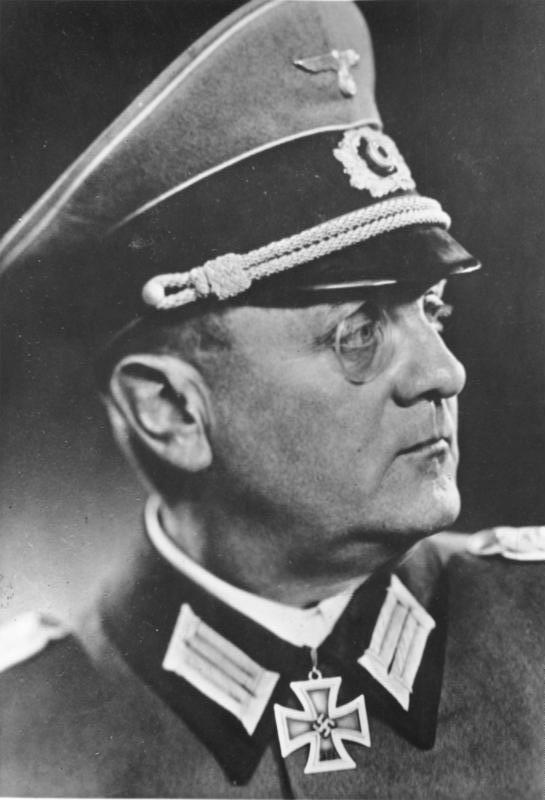
The Liberation of Paris is a gripping book that is packed full of interesting details about Nazi-occupied Paris and its last commander Dietrich von Choltitz.

At the end of WWII, Adolf Hitler ordered Choltitz to hold Paris, but if that wasn’t possible, to destroy it. Although General Choltitz had been very loyal to Hitler, he could not bring himself to obliterate the City of Light. He ultimately surrendered Paris to French forces on August 25, 1944. He’s been called the “Saviour of Paris” for preventing its destruction.

After his surrender, Choltitz was held for the remainder of the war in London and the United States and was ultimately released from captivity in 1947. He died in Baden-Baden in 1966.

The author of this exceptional book was the distinguished political scientist and biographer Jean Edward Smith. Smith’s work includes highly regarded biographies of Ulysses S. Grant and Dwight D. Eisenhower. He died on September 1, 2019 at the age of 86.

The audiobook is ably narrated by Fred Sanders, who has narrated many fine audiobooks including Elon Musk by Ashlee Vance.

Remembering Maisie Hitchcock

I recently learned that, Maisie Hitchcock, a guide on a Rick Steves tour of Switzerland I took in 2018 died peacefully of ovarian cancer on August 9, 2023 in the company of her family.

Maisie was a kind, gentle guide who did an excellent job showing us the highlights of Switzerland. Although she was English, she lived in Berlin and spoke fluent German.

Maisie enjoyed people and knew how to relate to each person as an individual. Maisie’s father, Robyn Hitchcock, is an English singer-songwriter and guitarist. He wrote a loving memory of his daughter on Instagram.

During that 2018 trip, my suitcase broke and I asked Maisie where I could buy a new bag. Maisie helpfully sent me to Manor in Lugano where I bought a bag that I continue to use on my travels.

May Maisie’s memory be a blessing for many years to come.

London’s Wiener Holocaust Library Celebrates 90 Years of Service

The Wiener Holocaust Library in London is celebrating its 90th birthday. It is the oldest continuously functioning archive documenting Nazi crimes.

The Library has its origins in the work of Dr. Alfred Wiener (1885-1964). Dr. Wiener was a German Jew from Berlin who campaigned against Nazism during the 1920s and 30s and gathered evidence about antisemitism and the persecution of Jews in Germany.

Dr. Wiener and his family fled Germany in 1933 and settled in Amsterdam. Later that year he set up the Jewish Central Information Office (JCIO) at the request of the Board of Deputies of British Jews and the Anglo-Jewish Association. This archive collected information about the Nazis, which formed the basis of campaigns to undermine their activities.

Following Kristallnacht (the November Pogrom of 1938), Wiener prepared to bring his collection to the UK. It arrived the following summer and is believed to have opened on the day the Nazis invaded Poland. 

During the war, staff gathered evidence to document and publicize reports of Nazi efforts to annihilate European Jewry, including an eyewitness account of Kristallnacht.

Throughout the war, the JCIO served the British Government as it fought the Nazi regime. Increasingly the collection was referred to as ‘Dr Wiener’s Library’ and eventually this led to its renaming.


Wiener’s recognition of the danger posed by the Nazis didn’t begin after Hitler came to power in 1933. Instead, he can justly lay claim to having been one of the first intellectuals to raise the alarm about the rise of antisemitism after World War I.

Horrified by the surge in anti-Jewish right-wing nationalism that he encountered when he returned from the trenches to his homeland, in 1919 Wiener published a tract, “Prelude to Pogroms?”, in which he warned: “A mighty antisemitic storm has broken over us.” If left unchecked, Wiener predicted, this antisemitism would lead to “bestial murders and violence” and the “blood of citizens running on the pavements.” 

The Times of Israel

Sources: The Holocaust Explained | The Times of Israel


Friedrich Kellner’s Wartime Diaries: Seeing Through Nazi Propaganda

The second and final volume of German historian Volker Ullrich’s biography of Adolf Hitler, Hitler: Downfall 1939–1945, opens with high praise for the wartime diaries of Friedrich Kellner.

Kellner, a court official in the small town of Laubach, had no special access to inside information. Yet he was repulsed by the Nazi regime and began keeping a detailed diary, recording what he read in the German press and what he heard from those around him. He hoped his writings would serve as a warning to future generations against blind faith and dictatorship.

Ullrich explains that Kellner’s diaries “show that it was entirely possible for normal people in small-town Germany to see through the lies of Nazi propaganda and learn of things like the ‘euthanasia’ murders of patients in psychiatric institutions and the mass executions carried out in occupied parts of eastern Europe.”

The Kellner diaries were first published in German in 2011 and are now available in English. They are also the subject of a moving 2007 television documentary created by Kellner’s American grandson.


A Deeply Divided America

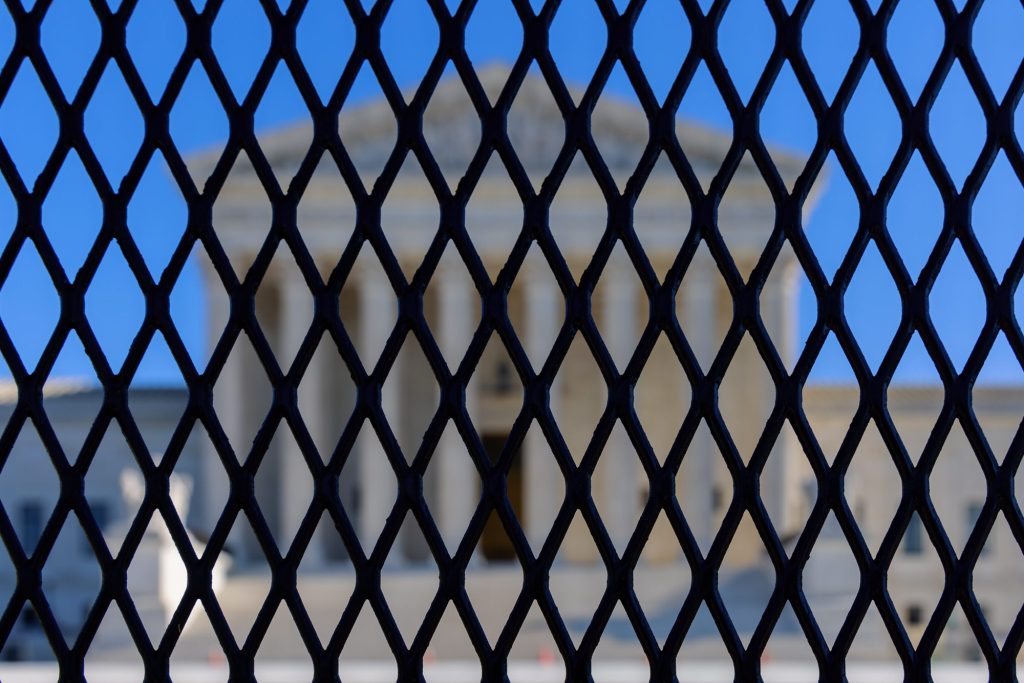
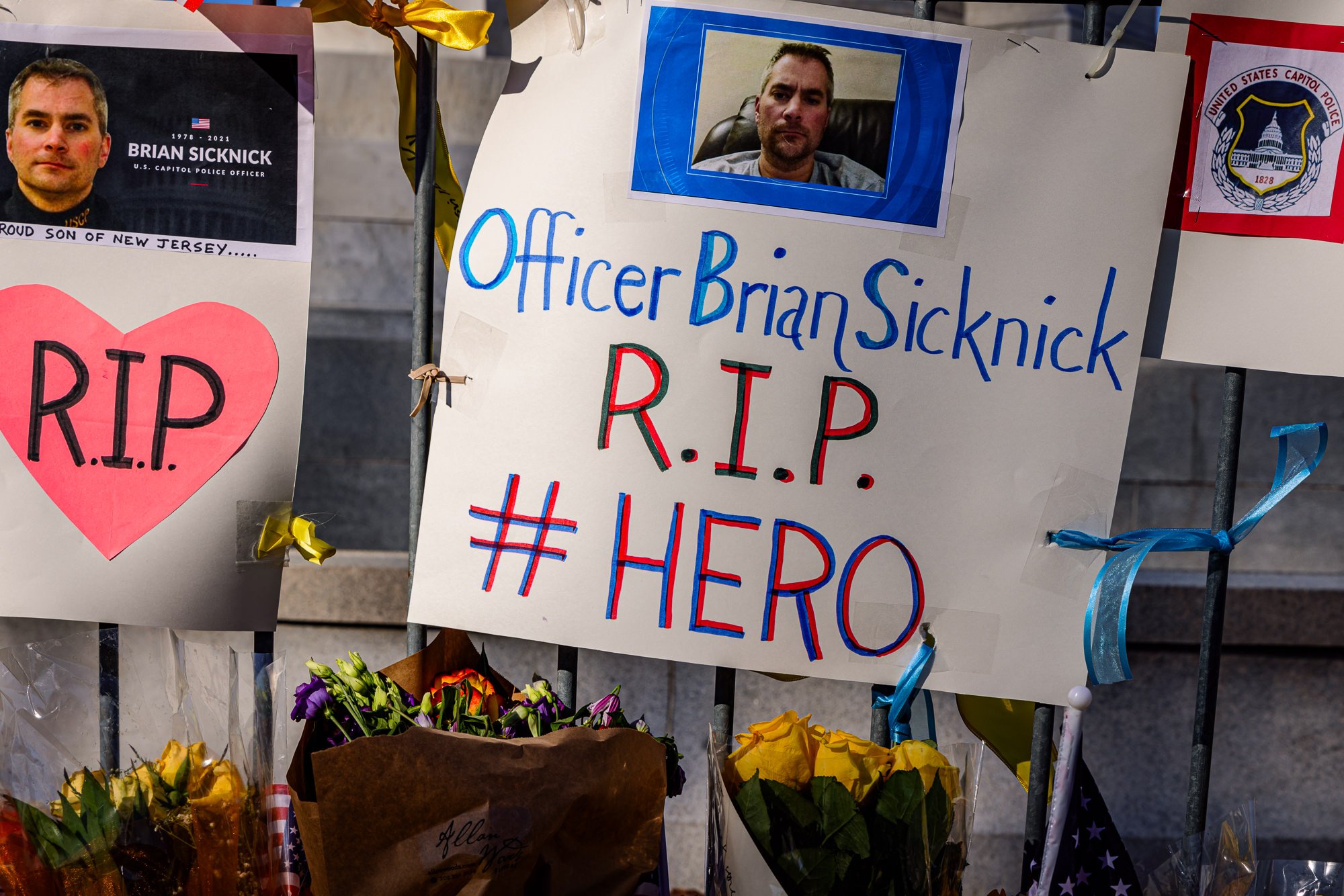
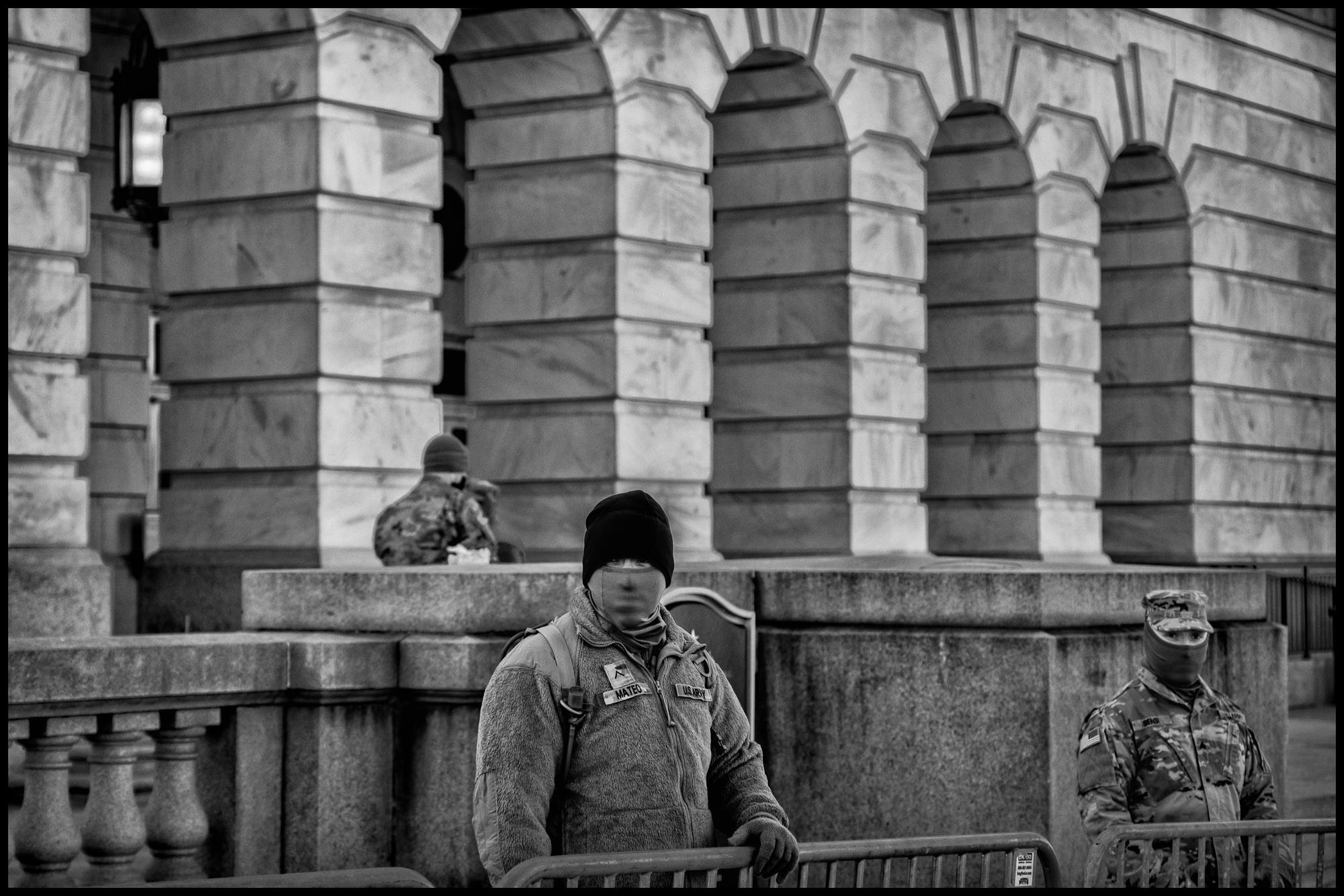
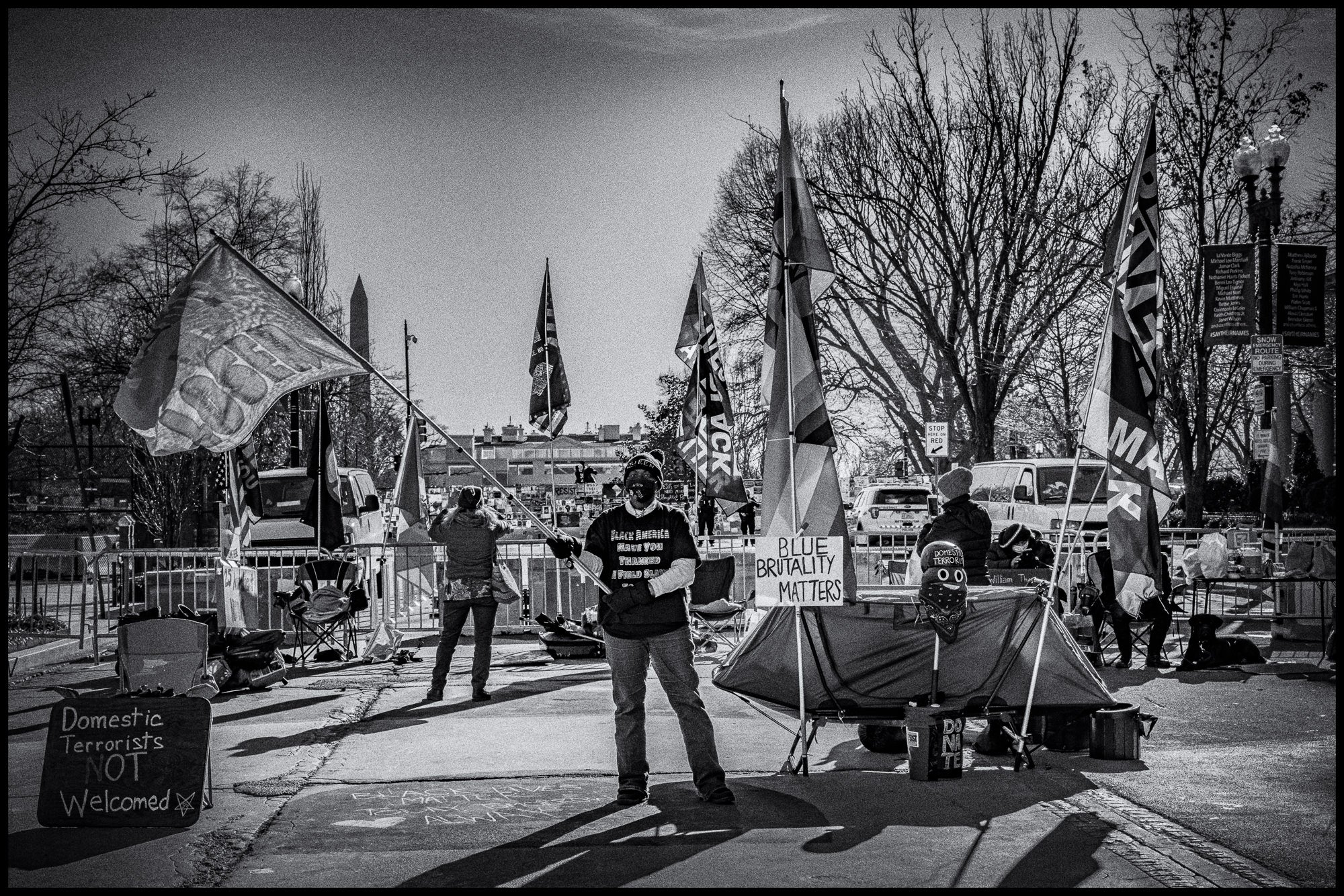
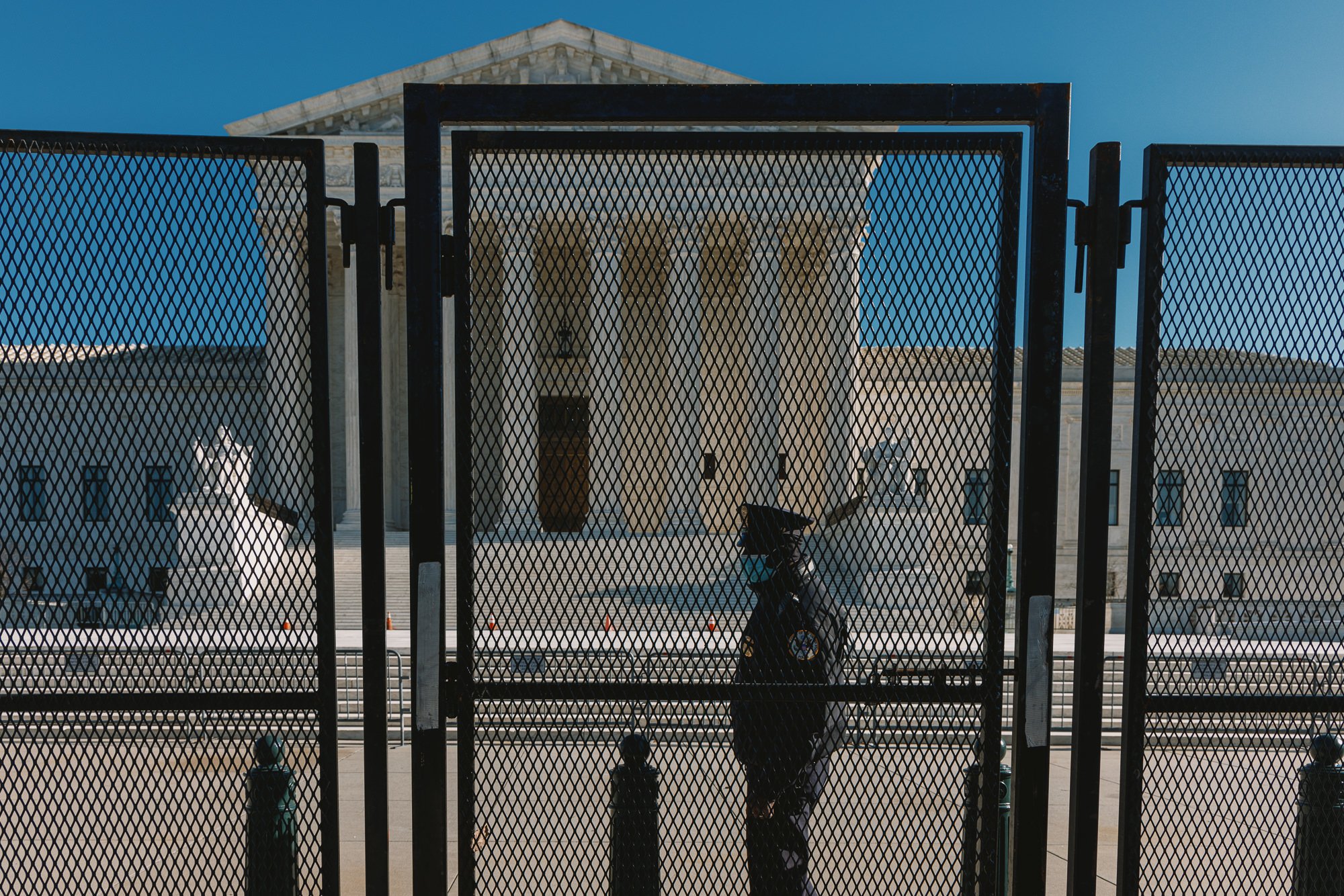
The United States is deeply divided as these images at the White House, the Supreme Court and the U.S. Capitol portray.

Jimmy Carter (1924-2024)

Life-Size Portrait of Jimmy Carter (1924-2024) by Robert Templeton, 1980, oil on canvas, seven feet, nine inches high by four feet, nine inches wide, dressed in black bunting, National Portrait Gallery, Washington, DC – Photo by David Enzel (January 5, 2024)

Jimmy Carter was President when I began my Federal career in 1979, marking the start of a journey through decades of public service. I retired during the Biden Administration, reflecting on the many changes and milestones I witnessed in our nation’s history.

President Carter was not only a capable leader but also a person of exceptional character. His humility, compassion, and unwavering commitment to humanitarian causes embody a kind of leadership that earns enduring respect and admiration.

As I reflect on his extraordinary life and legacy, I am both comforted and inspired by President Carter’s steadfast dedication to justice, peace, and the betterment of humanity. His example serves as a powerful reminder of what can be achieved when integrity and empathy guide our actions, leaving a profound and lasting impact on those fortunate enough to have witnessed his contributions to the nation and the world.