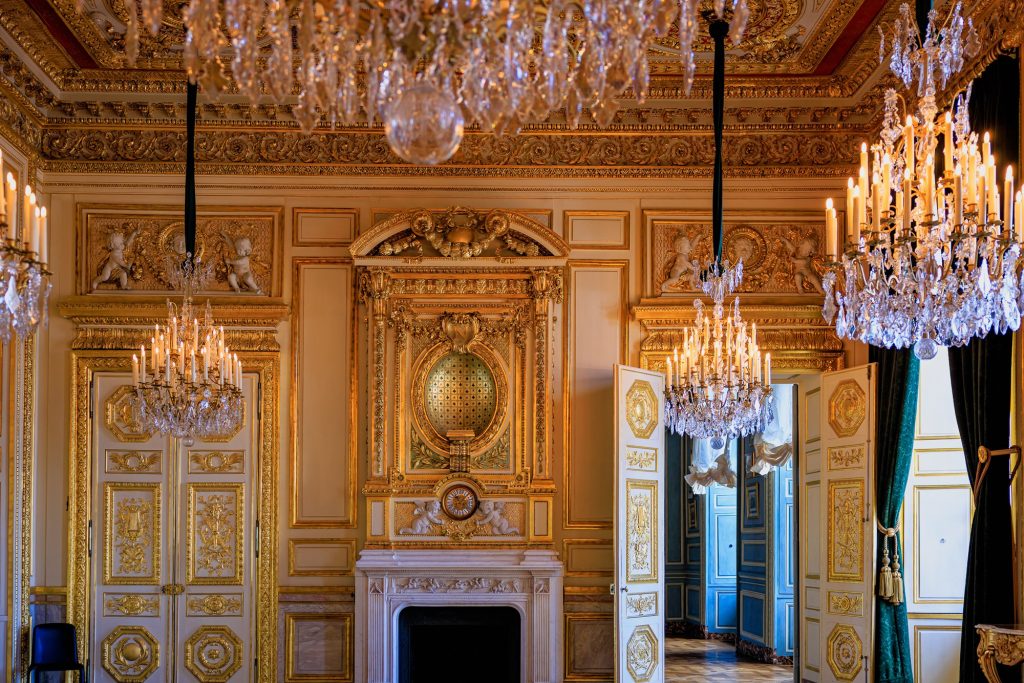
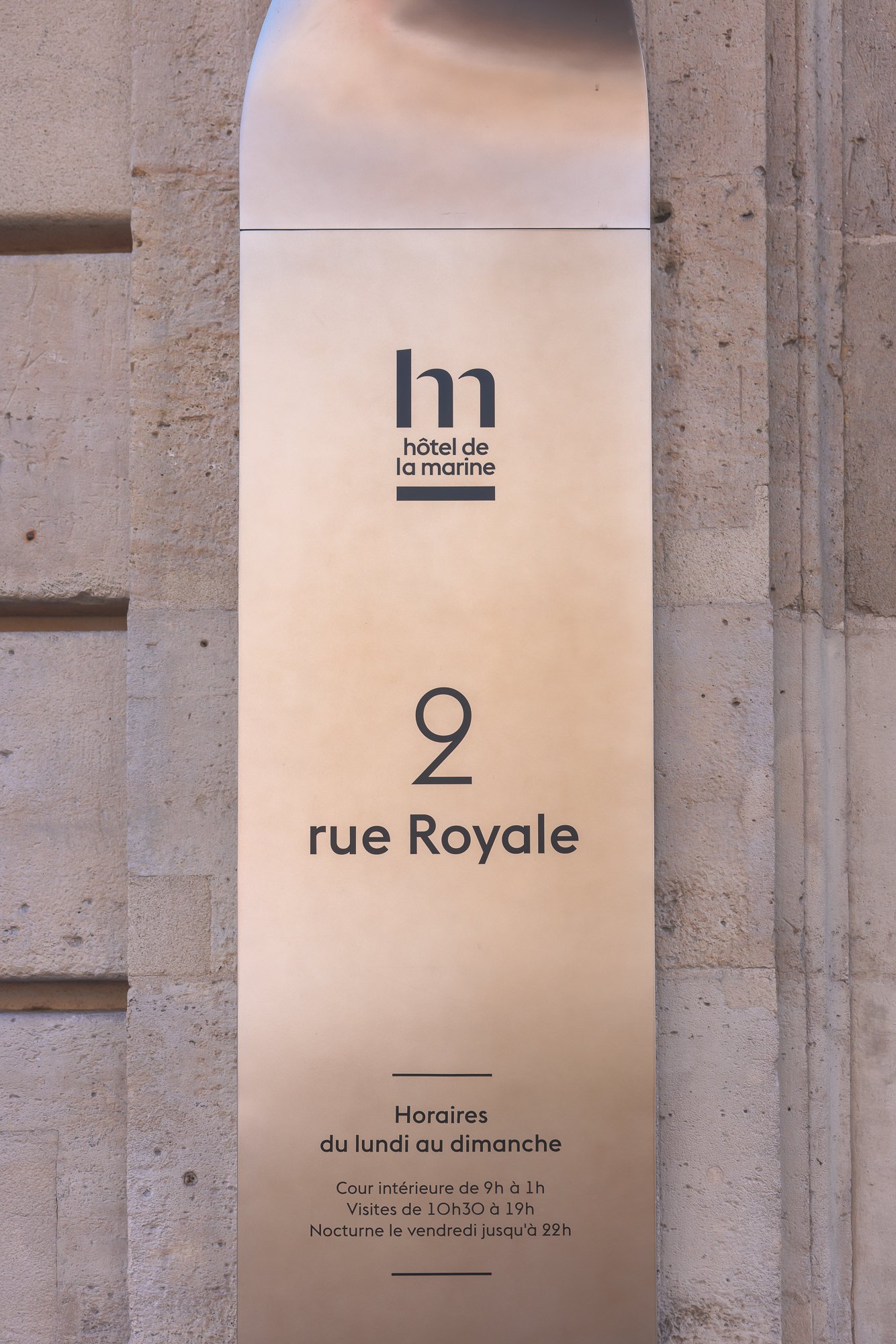
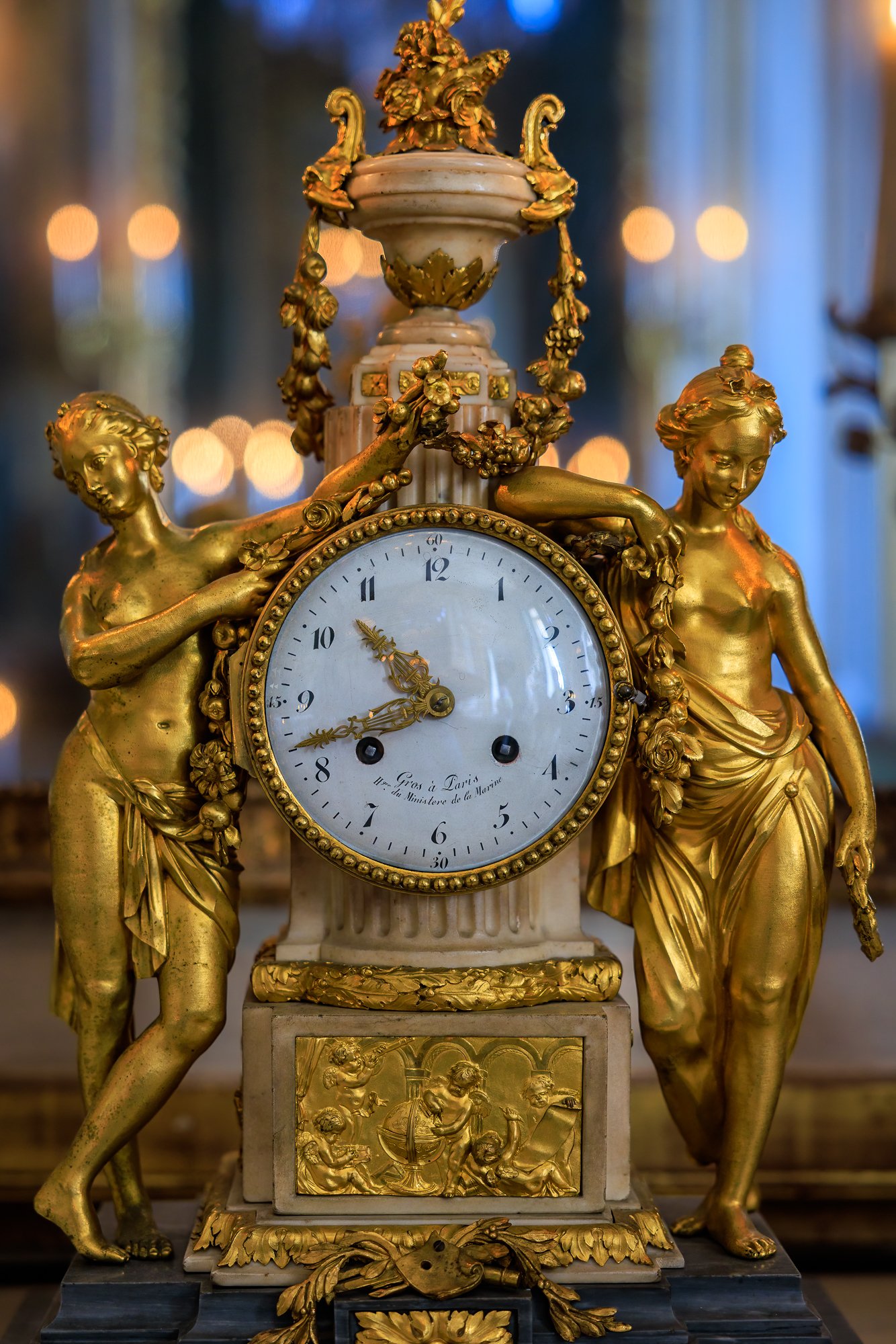
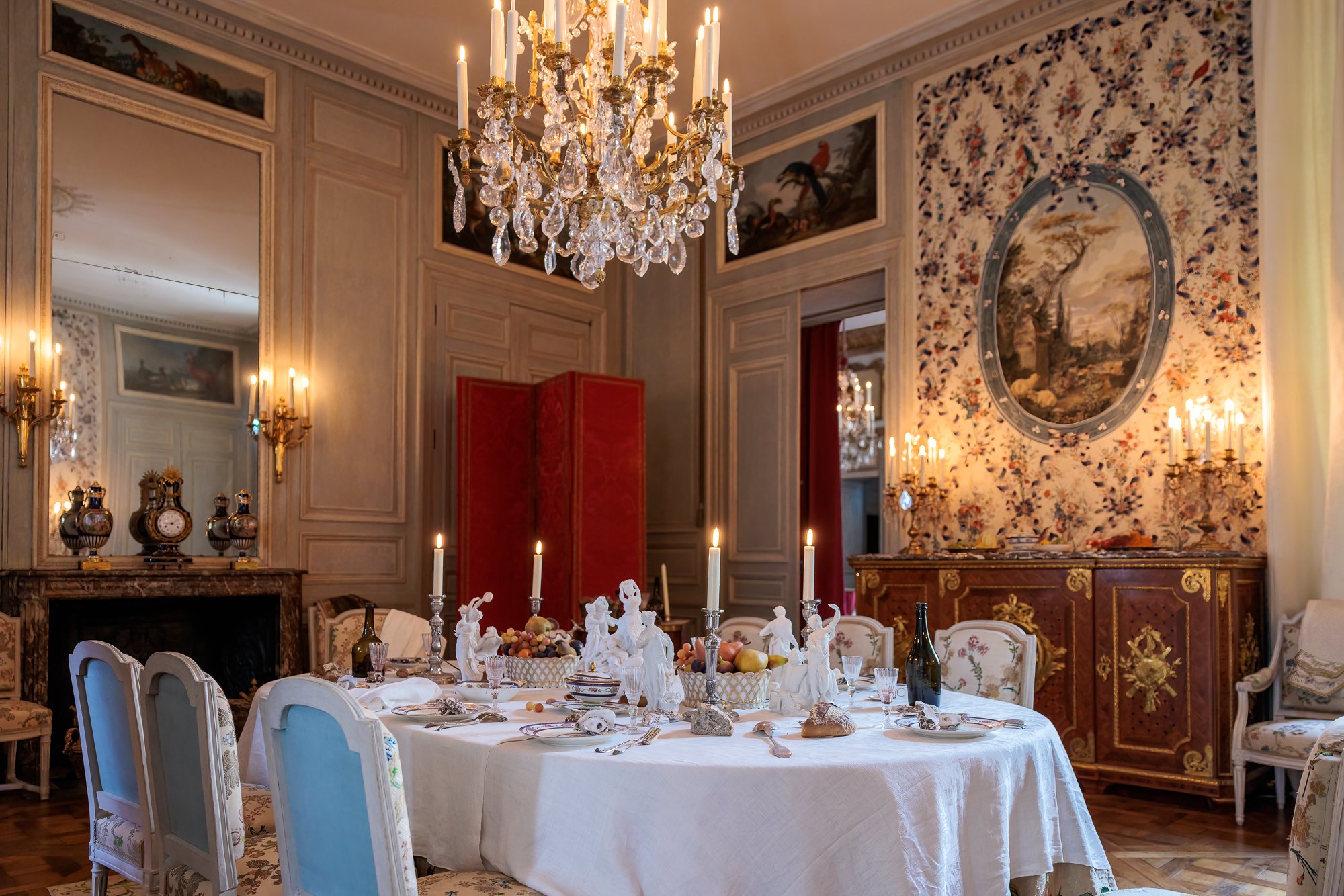
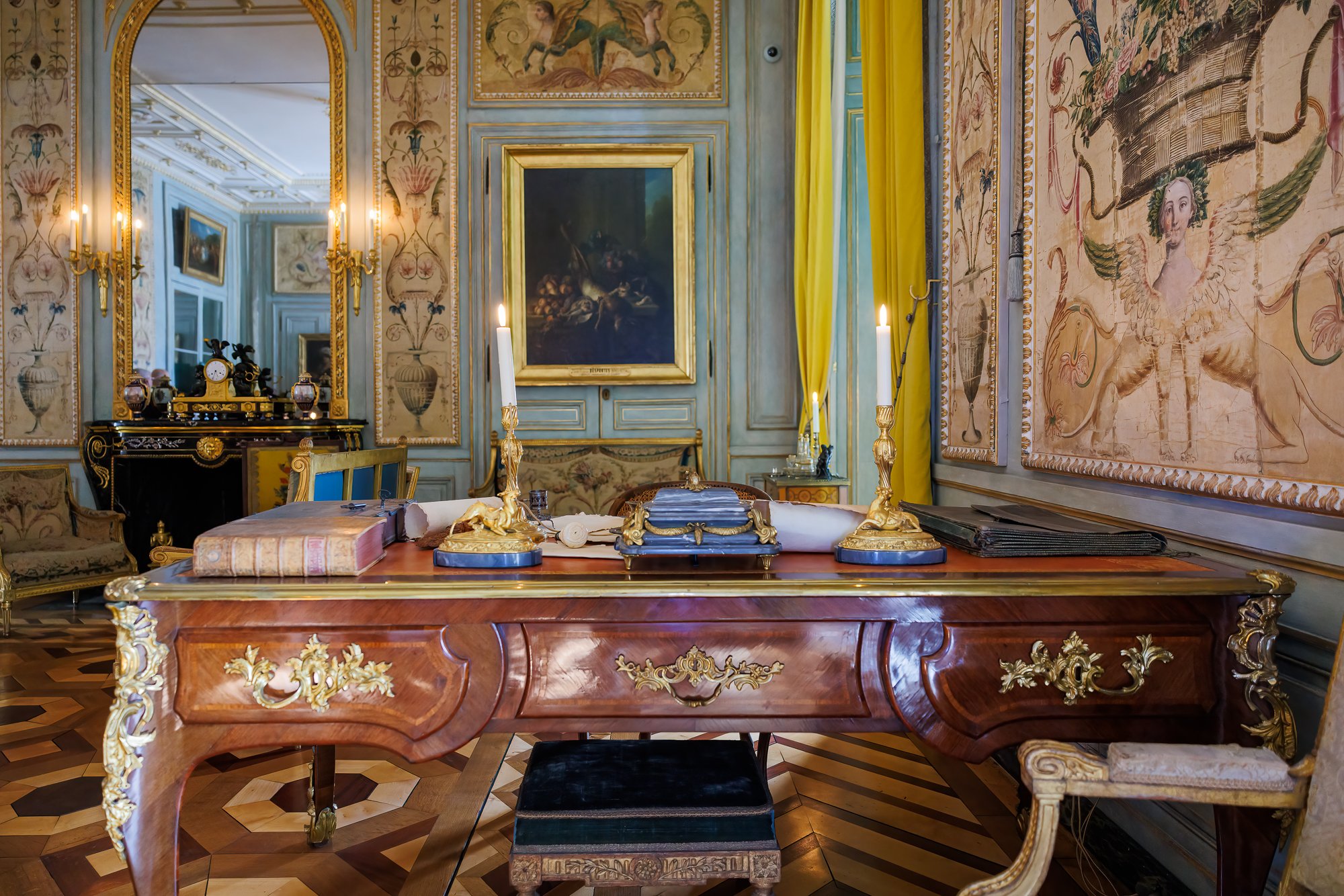
The hôtel de la Marine (also known as the hôtel du Garde-Meuble) is an historic building located on Place de la Concorde in Paris, to the east of rue Royale. It was designed and built between 1757 and 1774 by the architect Ange-Jacques Gabriel, on the newly created square first called Place Louis XV. The identical building to its west, constructed at the same time, now houses the hôtel de Crillon and the Automobile Club of France.
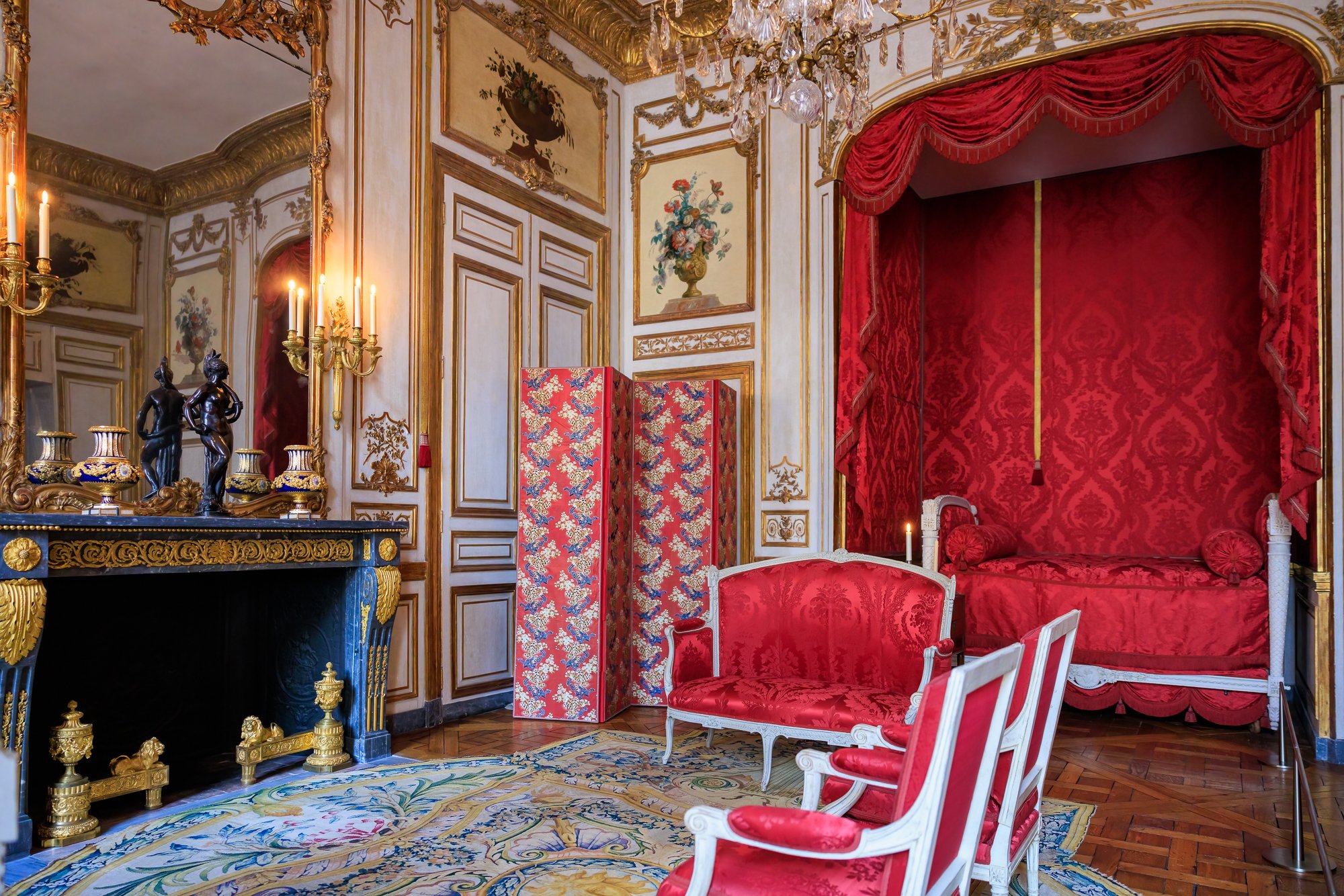
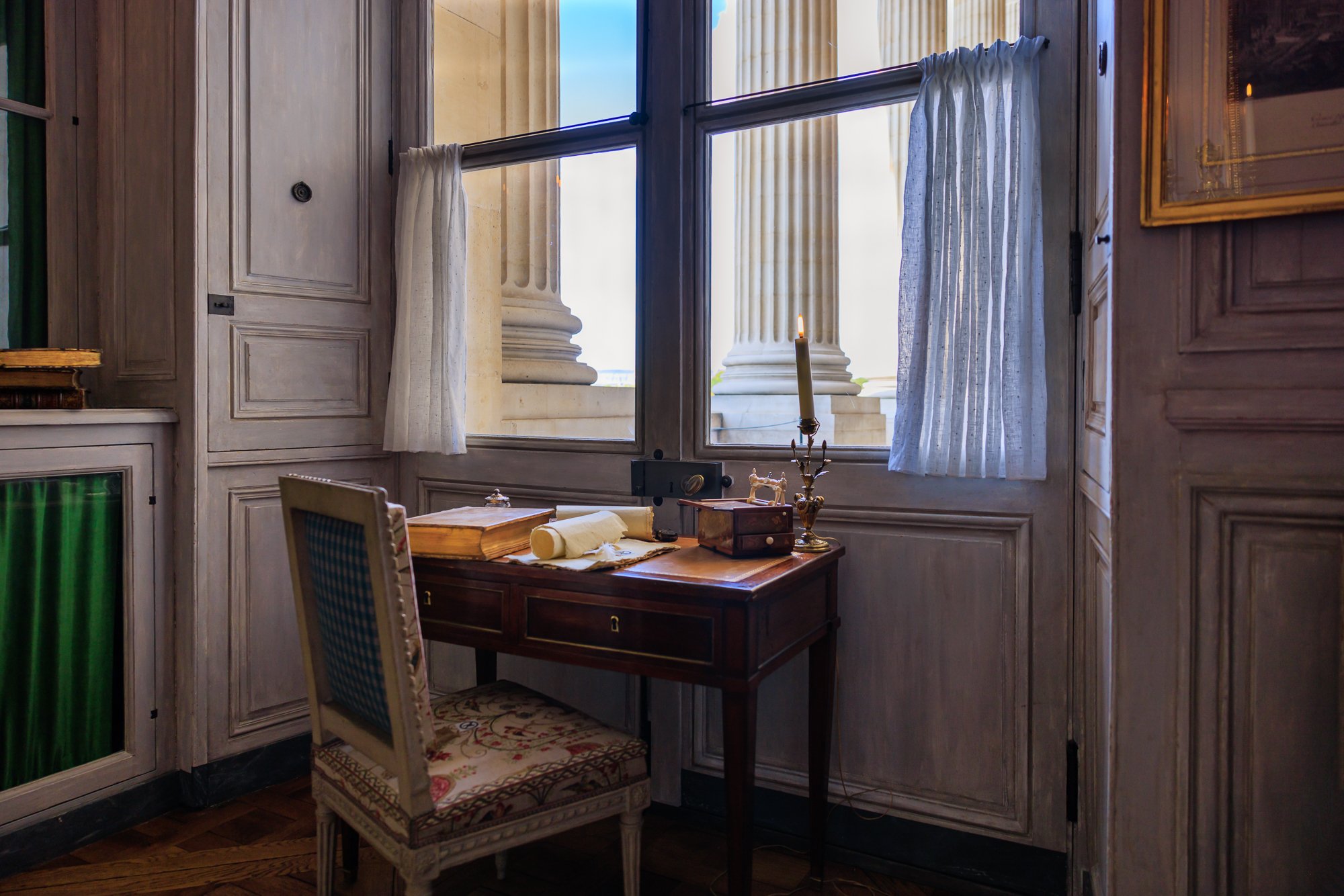
The hôtel de la Marine was originally the home of the royal Garde-Mobile, the office managing the furnishing of all royal properties. Following the French Revolution it became the Ministry of the French Navy, which occupied it until 2015. It was entirely renovated between 2015 and 2021. It now displays the restored 18th century apartments of Marc-Antoine Thierry de Ville-d’Avray, the King’s Intendant of the Garde-Meuble, as well the salons and chambers later used by the French Navy.
Major historical events have taken place in the hôtel de la Marine:
On 16 September 1792, the Crown Jewels were stolen at the Hôtel de la Marine. At night, around forty people got inside the reception room where the jewels were displayed and stole goods worth around 30 million French francs. Most of the jewels were found again two years later. However, The French Blue (Le bleu de France) was not recovered. It reappeared 20 years later in England, completely recut with the largest section of the diamond appearing under the Hope name in an 1839 gem catalog from the Hope banking family. The Hope Diamond is now in the National Museum of Natural History in Washington, D.C.
In a room overlooking Place de la Concorde Marie Antoinette’s death warrant was signed. She was guillotined on 16 October 1793 on Place de la Concorde. She was 37 years old.
On 27 April 1848, in the office of minister François Arago in the Hôtel de la Marine, the decree to abolish slavery in the French colonies was signed in Paris. Victor Schœlcher, an ardent defender of human rights, was the man behind this historic decision.
The renovation is beautiful. The views of Paris monuments are exceptional.
The Arc de Triomphe de l’Étoile stands at the western end of the Champs-Élysées at the center of Place Charles de Gaulle, formerly named Place de l’Étoile—the étoile or “star” of the juncture formed by its twelve radiating avenues. The location of the arc and the plaza is shared between three arrondissements, 16th (south and west), 17th (north), and 8th (east). The Arc de Triomphe honors those who fought and died for France in the French Revolutionary and Napoleonic Wars, with the names of all French victories and generals inscribed on its inner and outer surfaces. Beneath its vault lies the Tomb of the Unknown Soldier from World War I.
The central cohesive element of the Axe historique (historic axis, a sequence of monuments and grand thoroughfares on a route running from the courtyard of the Louvre to the Grande Arche de la Défense), the Arc de Triomphe was designed by Jean Chalgrin in 1806; its iconographic programme pits heroically nude French youths against bearded Germanic warriors in chain mail (a type of armor). It set the tone for public monuments with triumphant patriotic messages. Inspired by the Arch of Titus in Rome, the Arc de Triomphe has an overall height of 50 m (164 ft), width of 45 m (148 ft) and depth of 22 m (72 ft), while its large vault is 29.19 m (95.8 ft) high and 14.62 m (48.0 ft) wide. The smaller transverse vaults are 18.68 m (61.3 ft) high and 8.44 m (27.7 ft) wide. Three weeks after the Paris victory parade in 1919 (marking the end of hostilities in World War I), Charles Godefroy flew his Nieuport biplane under the arch’s primary vault, with the event captured on newsreel, shown below.
Charles Godefroy flying a Nieuport 27 through the Arc de Triomphe (1919)
Paris’s Arc de Triomphe was the tallest triumphal arch until the completion of the Monumento a la Revolución in Mexico City in 1938, which is 67 m (220 ft) high. The Arch of Triumph in Pyongyang, completed in 1982, is modeled on the Arc de Triomphe and is slightly taller at 60 m (197 ft). The Grande Arche in La Défense near Paris is 110 meters high. Although it is not named an Arc de Triomphe, it has been designed on the same model and from the perspective of the Arc de Triomphe. It qualifies as the world’s tallest arch.
Beneath the Arc de Triomphe is the Tomb of the Unknown Soldier from World War I. Interred on Armistice Day 1920, an eternal flame burns in memory of the dead who were never identified (now in both world wars).
A ceremony is held at the Tomb of the Unknown Soldier every November 11 on the anniversary of the Armistice of November 11, 1918 signed by the Entente Powers and Germany in 1918. It was originally decided on 12 November 1919 to bury the unknown soldier’s remains in the Panthéon, but a public letter-writing campaign led to the decision to bury him beneath the Arc de Triomphe. The coffin was put in the chapel on the first floor of the Arc on November 10, 1920, and put in its final resting place on January 28, 1921. The slab on top bears the inscription: Ici repose un soldat français mort pour la Patrie, 1914–1918 (“Here rests a French soldier who died for the Fatherland, 1914–1918”).
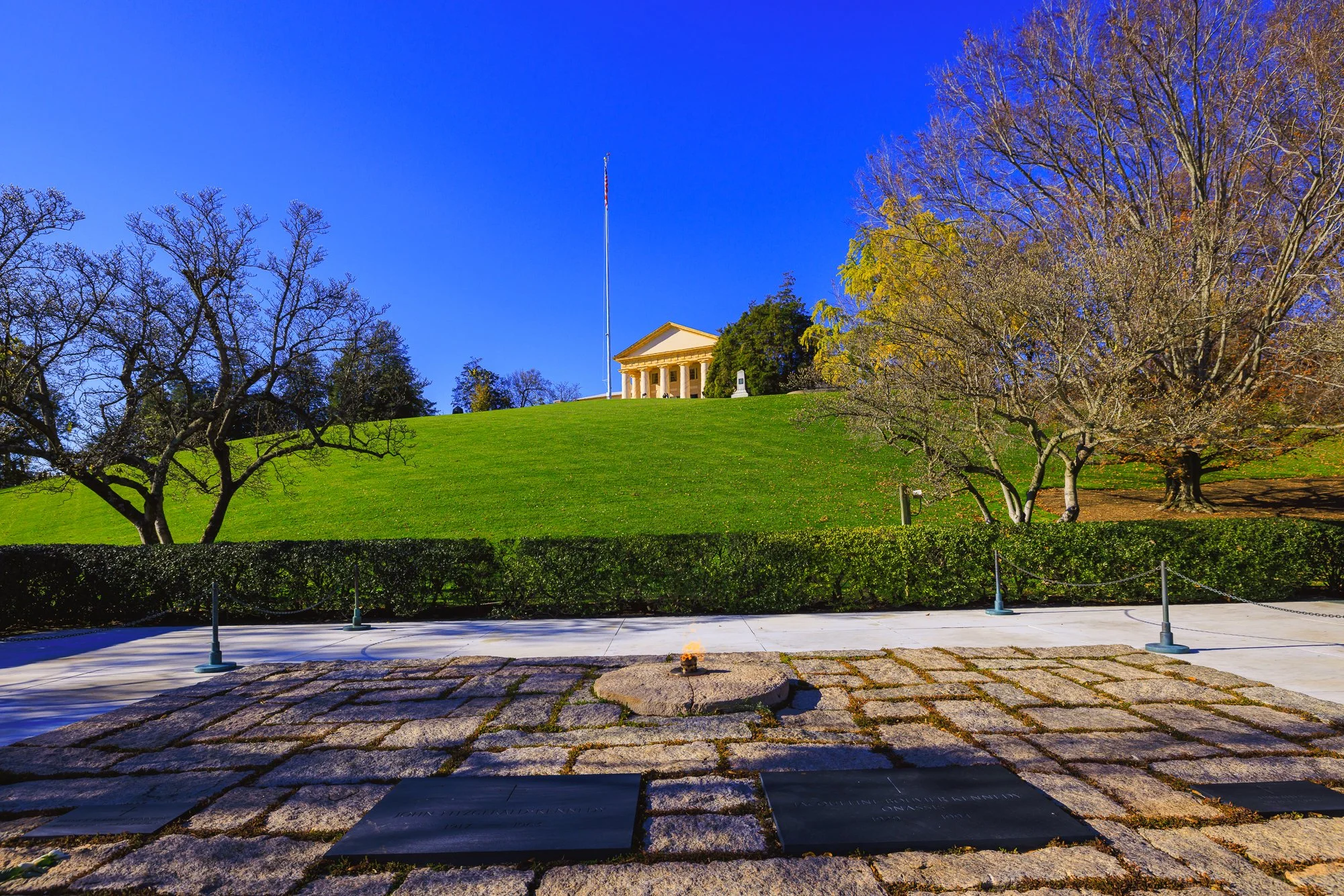
In 1961, U.S. President John F. Kennedy and First Lady Jacqueline Kennedy paid their respects at the Tomb of the Unknown Soldier, accompanied by President Charles de Gaulle. After the 1963 assassination of President Kennedy, Mrs. Kennedy remembered the eternal flame at the Arc de Triomphe and requested that an eternal flame be placed next to her husband’s grave at Arlington National Cemetery in Virginia.
The Panthéon is a monument in the 5th arrondissement of Paris. It stands in the Latin Quarter, atop the Montagne Sainte-Geneviève, in the center of the Place du Panthéon, which was named after it. The edifice was built between 1758 and 1790, from designs by Jacques-Germain Soufflot, at the behest of King Louis XV of France; the king intended it as a church dedicated to Saint Genevieve, Paris’s patron saint, whose relics were to be housed in the church. Neither Soufflot nor Louis XV lived to see the church completed.
By the time the construction was finished, the French Revolution had started; the National Constituent Assembly voted in 1791 to transform the Church of Saint Genevieve into a mausoleum for the remains of distinguished French citizens, modeled on the Pantheon in Rome which had been used in this way since the 17th century. The first panthéonisé was Honoré Gabriel Riqueti, comte de Mirabeau, although his remains were removed from the building a few years later. The Panthéon was twice restored to church usage in the course of the 19th century—although Soufflot’s remains were transferred inside it in 1829—until the French Third Republic finally decreed the building’s exclusive use as a mausoleum in 1881. The placement of Victor Hugo’s remains in the crypt in 1885 was its first entombment in over 50 years.
The successive changes in the Panthéon’s purpose resulted in modifications of the pedimental sculptures and the capping of the dome by a cross or a flag; some of the originally existing windows were blocked up with masonry in order to give the interior a darker and more funereal atmosphere, which compromised somewhat Soufflot’s initial attempt at combining the lightness and brightness of the Gothic cathedral with classical principles. The architecture of the Panthéon is an early example of Neoclassicism, surmounted by a dome that owes some of its character to Bramante’s Tempietto.
In 1851, Léon Foucault conducted a demonstration of diurnal motion at the Panthéon by suspending a pendulum from the ceiling, a copy of which is still visible today and is depicted below in all its glory.
As of December 2021 the remains of 81 people (75 men and six women) had been transferred to the Panthéon. More than half of all the panthéonisations were made under Napoleon’s rule during the First Empire. Several examples demonstrate the great contributions France has made to the world.
Rousseau
Tomb of Jean-Jacques Rousseau
Jean-Jacques Rousseau (1712 – 1778) was philosopher (philosophe), writer, and composer. His political philosophy influenced the progress of the Age of Enlightenment throughout Europe, as well as aspects of the French Revolution and the development of modern political, economic, and educational thought. His Discourse on Inequality and The Social Contract are cornerstones in modern political and social thought.
Rousseau was born in Geneva, which was at the time a city-state and a Protestant associate of the Swiss Confederacy (now a canton of Switzerland). He died in 1778 and was buried on the Île des Peupliers, a tiny wooded island in a lake near Ermenonville in the Kingdom of France. His grave became a place of pilgrimage for his many admirers. In 1794, his remains were moved to the Panthéon, where they were placed near the remains of Voltaire.
Voltaire
François-Marie Arouet (1694 – 1778) was a French Enlightenment writer, philosopher (philosophe) and historian. Known by his nom de plume M. de Voltaire, he was famous for his wit, in addition to his criticism of Christianity—especially of the Roman Catholic Church—and of slavery. Voltaire was an advocate of freedom of speech, freedom of religion and separation of church and state.
Tomb and Statue of Voltaire
Voltaire was a versatile and prolific writer, producing works in almost every literary form, including plays, poems, novels, essays, histories, but also scientific expositions. He wrote more than 20,000 letters and 2,000 books and pamphlets. Voltaire was one of the first authors to become renowned and commercially successful internationally. He was an outspoken advocate of civil liberties and was at constant risk from the strict censorship laws of the Catholic French monarchy. His polemics witheringly satirized intolerance and religious dogma, as well as the French institutions of his day. His best-known work and magnum opus, Candide, is a novella which comments on, criticizes and ridicules many events, thinkers and philosophies of his time.
Because of his well-known criticism of the Church, which he had refused to retract before his death, Voltaire was denied a Christian burial in Paris, but friends and relations managed to bury his body secretly at the Abbey of Scellières in Champagne. His heart and brain were embalmed separately.
On July 11 1791, the National Assembly of France, regarding Voltaire as a forerunner of the French Revolution, had his remains brought back to Paris and enshrined in the Panthéon. An estimated million people attended the procession, which stretched throughout Paris. There was an elaborate ceremony, including music composed for the event by André Grétry.
Louis Braille (1809 – 1852) was a French educator and the inventor of a reading and writing system, named braille after him, intended for use by visually impaired people. His system is used worldwide and remains virtually unchanged to this day. On the centenary of his death, his remains were moved to the Panthéon in Paris. In a symbolic gesture, Braille’s hands were left in Coupvray, reverently buried near his home.
Simone Veil
Simone Veil (née Jacob) (1927 – 2017) was a French magistrate, Holocaust survivor, and politician who served as Health Minister in several governments and was President of the European Parliament from 1979 to 1982, the first woman to hold that office. As health minister, she is best remembered for advancing women’s rights in France, in particular for the 1975 law that legalized abortion, today known as the Loi Veil). From 1998 to 2007, she was a member of the Constitutional Council, France’s highest legal authority.
René Cassin, Jean Monnet, Simone Veil, Antoine Veil
A Holocaust survivor, of both Auschwitz-Birkenau and Bergen-Belsen, she was a firm believer in European integration as a way of guaranteeing peace. She served as president of the Fondation pour la Mémoire de la Shoah, from 2000 to 2007, then subsequently as honorary president. In a ceremony held at the Panthéon in January 2007, former French president Jacques Chirac, and Simone Veil, then president of the Fondation pour la mémoire de la Shoah, honor those who risked their lives to shelter thousands of Jews at Chambon-sur-Lignon, France.
Among many honors, she was made an honorary dame in 1998, was elected to the Académie Française in 2008, and in 2012 received the grand cross of the Légion d’honneur, the highest class of the highest French order of merit.
Simone Veil and her husband were buried at the Panthéon on July 1, 2018. Her eulogy was given by President Emmanuel Macron.
Joséphine Baker
Joséphine Baker (1906-1975), was an American-born French dancer, singer and actress. Her career was centered primarily in Europe, mostly in her adopted France. She was the first black woman to star in a major motion picture, the 1927 silent film Siren of the Tropics, directed by Mario Nalpas and Henri Étiévant.
Baker was born in St. Louis, Missouri but she renounced her U.S. citizenship and became a French national after her marriage to French industrialist Jean Lion in 1937. She raised her children in France.
Baker aided the French Resistance during World War II. After the war, she was awarded the Resistance Medal by the French Committee of National Liberation, the Croix de Guerre by the French military, and was named a Chevalier of the Légion d’honneur by General Charles de Gaulle. Baker sang: “I have two loves, my country and Paris.”
Baker refused to perform for segregated audiences in the United States and is noted for her contributions to the civil rights movement.
On November 30, 2021, she was inducted into the Panthéon in Paris, the first black woman to receive one of the highest honors in France. As her resting place remains in Monaco Cemetery, a cenotaph (a monument to someone buried elsewhere) was installed in vault 13 of the crypt in the Panthéon.
JungleDragon is a social wildlife community for fans of nature. It’s mission is to facilitate the creation of the largest resource of nature imagery on the planet. The site offers an engaging, social and friendly way to find and contribute images and other content.
The site was created by Ferdy Christant, a talented photographer who also publishes trip reports and other interesting content on Medium.
The site is free to use. I am a member and am enjoying it. If you’re interested you can follow me there.
The first time I visited Paris in the mid-1970s, one of my gracious French hosts asked what I wanted to see first. I immediately said the Eiffel Tower. It’s not Paris’s most beautiful monument but nothing speaks Paris more than “la dame de fer”(Iron Lady). Seeing it for the first time sent a shiver down my spine. It’s an icon for a reason.
The Eiffel Tower is a wrought-iron lattice tower on the Champ de Mars in Paris. It is named after the engineer Gustave Eiffel, whose company designed and built the tower. It was constructed from 1887 to 1889 as the centerpiece of the 1889 World’s Fair. Although initially criticized by some of France’s leading artists and intellectuals for its design, it has since become a global cultural icon of France and one of the most recognizable structures in the world.
The tower received almost 6 million visitors in 2022, up by 197 percent from 2021, when numbers dropped due to the COVID virus. It was designated a monument historique in 1964, and was named part of a UNESCO World Heritage Site (“Paris, Banks of the Seine”) in 1991.
The tower is 330 meters (1,083 ft) tall, about the same height as an 81-storey building, and the tallest structure in Paris. Its base is square, measuring 125 meters (410 ft) on each side. During its construction, the Eiffel Tower surpassed the Washington Monument to become the tallest human-made structure in the world, a title it held for 41 years until the Chrysler Building in New York City was finished in 1930. It was the first structure in the world to surpass both the 200-meter and 300-meter mark in height. Due to the addition of a broadcasting aerial at the top of the tower in 1957, it is now taller than the Chrysler Building by 5.2 meters (17 ft).
The tower has three levels for visitors, with restaurants on the first and second levels. The top level’s upper platform is 276 m (906 ft) above the ground – the highest observation deck accessible to the public in the European Union. Tickets can be purchased to ascend by stairs or lift to the first and second levels. The climb from ground level to the first level is over 300 steps, as is the climb from the first level to the second, making the entire ascent a 600 step climb. Although there is a staircase to the top level, it is usually accessible only by lift. On this top, third level is a private apartment built for Gustave Eiffel’s private use. He decorated it with furniture by Jean Lachaise and invited friends such as Thomas Edison.
The Eiffel Tower is repainted about every seven years. This rhythm was recommended by Gustave Eiffel himself. It has changed color over the years, passing from red-brown to yellow-ochre, then to chestnut brown and finally to the bronze of today, slightly shaded off towards the top to ensure that the color is perceived to be the same all the way up as it stands against the Paris sky.
“It seems to me that it had no other rationale than to show that we are not simply the country of entertainers, but also that of engineers and builders called from across the world to build bridges, viaducts, stations and major monuments of modern industry, the Eiffel Tower deserves to be treated with consideration.”
Every evening, the Eiffel Tower is illuminated. It sparkles for 5 minutes every hour on the hour, while its beacon shines over Paris. The projectors that illuminate the Tower are turned on in under 10 minutes. This is activated upon nightfall by sensors.
Upon the German occupation of Paris in 1940, the lift cables were cut by the French. The tower was closed to the public during the occupation and the lifts were not repaired until 1946.
Because of its size, the tower is visible from many parts of the city and a variety of interesting viewpoints. One of the joys of visiting Paris is discovering your own special viewpoints.
The puddle iron (wrought iron) of the Eiffel Tower weighs 7,300 tons, and the addition of lifts, shops and antennae have brought the total weight to approximately 10,100 tons. 2,500,000 rivets were used in its construction.
The Eiffel Tower is one of the most-visited pay-to-enter monuments in the world. Because it’s so busy, it’s a good idea to plan ahead, You can find other useful information here.
The sheer volume of passengers moving through Shibuya Station is remarkable. With its M-shaped roof spanning a 12-meter-wide platform and no columns in sight, the space feels open and fluid. Watching the endless flow of commuters was like seeing something carefully choreographed, yet it unfolded entirely naturally. Modern, clean, and quiet, the station says a great deal about Japanese culture—orderly, considerate, and deeply efficient—in the best possible way.
The Galerie Vivienne is one of the most beautiful of the covered passages of Paris I’ve seen. Registered as a historical monument since July 7, 1974, it measures 176 meters (577 ft) in length and 3 meters (9.8 ft) in width.
The covered passages of Paris (French: Passages couverts de Paris) are an early form of shopping arcade built primarily during the first half of the 19th century. By 1867, there were about 183 of these passages, but their number declined sharply following Haussmann’s renovation of Paris. Today, only a couple dozen remain, all on the Right Bank.
Built in 1823 by Marchoux, President of the Chamber of Notaries, the Galerie Vivienne stands on the former site of the Hôtel Vanel de Serrant and the Petits Pères passage. Designed by architect François Jean Delannoy, it opened in 1826 under the name “Marchoux” but was soon renamed “Vivienne.” Thanks to its central location, it quickly drew crowds with its tailors, cobblers, wine shop, restaurant, Jousseaume bookstore, draper, confectioner, print-seller, and more.
The nearby Galerie Colbert—built later and containing no shops—has long been seen as a competitor. Since 1960, however, Galerie Vivienne has regained its vitality, hosting fashion and home furnishings boutiques, as well as haute couture shows. The arrival of Jean Paul Gaultier and Yuki Torii’s shops in 1986 played a key role in its revival. Today, it is home to a mix of ready-to-wear fashion, decorative arts, and specialty shops.
Both Galerie Colbert and Galerie Vivienne are now owned by the Bibliothèque Nationale. Galerie Colbert houses the Institut National d’Histoire de l’Art.
The Washington Open is the only professional tennis tournament in the nation’s capital. It takes place every summer at the William H.G. FitzGerald Tennis Center in Rock Creek Park, a venue chosen at the urging of Arthur Ashe, an early supporter of the event.
As one of the key lead-up tournaments to the US Open in New York City, the Washington Open holds an important place on the tennis calendar. It is an ATP 500 event on the ATP Tour and a WTA 500 event on the WTA Tour.
The tournament dates back to 1969, when it was called the Washington Star International. It was played on clay courts until 1986, when the surface changed to hard courts. In 2011, the event added its first women’s tournament, held separately in College Park, Maryland. The following year, the men’s and women’s events were consolidated at the Washington venue. In 2023, with the discontinuation of the WTA’s Silicon Valley Classic, the event merged into the Washington Open — creating the first and only joint-500-level event on the ATP and WTA tours.
Notable men’s singles winners include Ken Rosewall, Jimmy Connors, and Andre Agassi. Agassi (1990–91, 1995, 1998–99) holds the records for most titles (five) and most finals (six, including runner-up in 2000). He also shares the record for most consecutive titles (two) with Michael Chang (1996–97), Juan Martín del Potro (2008–09), and Alexander Zverev (2017–18).
On the women’s side, champions have included Sloane Stephens, Jessica Pegula, and Coco Gauff. Magdaléna Rybáriková (2012–13) holds the record for most titles (two) and co-holds the record for most finals (two) with Anastasia Pavlyuchenkova (runner-up in 2012 and 2015).
I began attending in 2016 as my interest in tennis grew. Over the years, I have watched and photographed many outstanding players at the Washington Open. They are all remarkable athletes and a joy to see compete in person.
I’ve had the pleasure of visiting Berlin twice. The first time was in the early 1980s and the second time in 2018. The transformation was dramatic.
Berlin Before the Fall of the Wall
I visited Berlin in the early 1980s. Berlin was then a divided city. I stayed in the Western zone near the Kurfurstendamm, which at the time was the heart of Berlin. I took a one day bus tour to the East. We crossed through Checkpoint Charlie. The bus was thoroughly searched by East German border guards. In contrast, the American military just let us pass freely.
The West was vibrant with shops, restaurants and people everywhere, In contrast, buildings in the East still showed signs of the bombing it received in the war. There were Soviet style memorials throughout East Berlin.
Our East German guide was openly dispirited and seemed to be reciting a script he was told to speak, especially when he spoke of “warm relations” with the then Soviet Union. At the end of the day, I was glad to be back in the West where I felt free and comfortable.
Berlin in 2018
Kurfurstendamm
In 2018, I went back to Berlin to see an undivided, transformed and reinvented Berlin. The German capital was still under construction 73 years after the end of WWII. I stayed near the Kurfurstendamm so I could compare my experience today with the early 1980s. My hotel — Pension Peters — is a small owner-managed hotel, where I felt more like a temporary resident in a nice Berlin neighborhood rather than a tourist.
I saw the transformation of Berlin immediately. The Kurfurstendamm is no longer the center of town. The heart of Berlin today is in the former East, which was a shambles when I was last there. The Kurfurstendamm is now a nice shopping street in lovely Berlin neighborhood called City West but is no longer the heart of the capital.
The Heart of Berlin
In 2018, Checkpoint Charlie was now nothing more than a tourist attraction with actor guards who, for a few Euros, will pose with you for a nice picture. There was even a “Checkpoint Charlie” McDonald’s across the street. It certainly no longer inspires fear.
David Enzel at Former Checkpoint Charlie, Berlin, Germany
The heart of Berlin is dominated by the Brandenburg Gate and government buildings, including the embassies of the four former occupying powers: the United States, Great Britain, France and Russia.
Berlin is no longer occupied but the former occupiers are nearby as if to say: “We are watching.” Each of the four embassies has a rich history.
The Soviet Union was first of the four major occupiers to move into a post-War embassy in Berlin. The Russian Embassy in Berlin was closed in 1941 when the two countries went to war. Its reconstruction was the first project of the post-war years in the East Berlin. The embassy’s official grand opening was held on the national holiday of the former USSR, on November 7, 1951. It’s Europe’s largest embassy which sends a message all by itself. After the fall of the Soviet Union in 1991, it became the Russian Embassy. (See also Rick Steves Berlin (p. 105). Avalon Publishing. Kindle Edition.)
France occupied its new embassy in October 2002. However, France formally opened it on January 23, 2003. That date was chosen as it was the 40th anniversary of the Élysée Treaty between Germany and France, declaring friendship between France and the former West Germany. French President Jacques Chirac presided. Marking the occasion, German Chancellor Gerhard Schröder and President Chirac issued a declaration affirming Franco-German friendship and their joint determination to “re-found Europe”.
The United States was the last of the four major occupiers to move into a post-War embassy in Berlin. The history of the U.S. Embassy in Berlin is especially complicated. During WWII, the U.S. Embassy in Berlin was severely damaged by Allied bombing. After the war, the embassy ended up just barely inside East Berlin in divided Berlin’s Soviet zone, straddling the demarcation between the Soviet and American sectors.
The Berlin Wall made the site of the former U.S. Embassy, still owned by the U.S. government, an inaccessible vacant lot. It was part of the security zone separating east and west Berliners. In 1967, the East German government demolished the ruins of the US Embassy building. However, the site became accessible after the Berlin Wall came down in November 1989. Even so, it remained a vacant lot until the 2004 groundbreaking for construction of a brand new U.S. Embassy. The newly constructed embassy opened on July 4, 2008.
The Brandenburg Gate is nearby. This is the center of Berlin. Since the 18th Century, the Brandenburg Gate has been a site for major historical events and today is an important symbol of the history of Europe and Germany.
Also nearby — and not to be missed — is Germany’s parliament — the Reichstag — which was opened in 1894 and remained in service until 1933, when it was severely damaged after being set on fire. The Reichstag fire occurred one month after Adolf Hitler was sworn in as Chancellor of Germany. After World War II, the building fell into disuse; the parliament of the German Democratic Republic (the Volkskammer) met in the Palast der Republik in East Berlin, while the parliament of the Federal Republic of Germany (the Bundestag) met in the Bundeshaus in Bonn.
The building was not properly restored until after German reunification on October 3, 1990. And what a glorious restoration it was. The German government chose British architect Norman Foster to lead the effort. Foster constructed is a large glass dome atop the Reichstag with a 360 degree view of the surrounding Berlin cityscape. The debating chamber of the Bundestag, the German parliament, can be seen below. A mirrored cone in the center of the dome directs sunlight into the building, and so that visitors can see the working of the chamber. The dome is open to the public and can be reached by climbing two steel, spiraling ramps that are reminiscent of a double helix. The Dome sends a message that the people are above the government, as was not the case during the Nazi era. After its completion in 1999, it once again became the meeting place of the German parliament: the modern Bundestag. The views are impressive. Entry is free but advance registration is required.
Hitler’s Bunker (Führerbunker), where Adolf Hitler committed suicide at the end of the war. It’s now an ordinary parking lot. Germany does not want to create a shrine out the place where Hitler perished.
Topography of Terror (Nazi Forced Labour Documentation Centre) has interesting exhibits documenting Nazi crimes. During the Nazi era, the headquarters of the Secret State Police, the SS and the Reich Security Main Office were located at the site.
Berlin-Hohenschönhausen Memorial, the site of the main political prison of the former East German Communist Ministry of State Security, the Stasi. I found the visit informative and chilling. East Germany went from one form of oppression to another form of oppression. It’s sad, terrifying and once again demonstrates what unchecked power can do.
Memorial to the Murdered Jews of Europe (Holocaust Memorial) has almost 3,000 symbolic pillars next to the U.S. Embassy in the heart of Berlin. It was designed by New York architect Peter Eisenman, who is Jewish. It opened in 2005. Eisenman explains that the “project manifests the instability inherent in what seems to be a system, here a rational grid, and its potential for dissolution in time.” The Memorial brings home the magnitude of the Holocaust.
Germany is creatively and thoughtfully reinventing its capital city. The transformation since the end of WWII is astounding. In the following video, you can see how Berlin looked after the Red Army occupied the German capital.
I thoroughly enjoyed my visit and hope to return to see more of Berlin and how it evolves. If you visit Berlin, these videos are worth watching before your visit.
The French Embassy in Washington is demonstrating France’s long historic ties to the United States and its support for Ukraine. A replica of Statue of Liberty is on the lawn in front of at the French Ambassador’s Residence in Washington.
The bronze statue, dubbed “Lady Liberty’s Little Sister,” was crafted from the original 1878 plaster model that French sculptor Frédéric Auguste Bartholdi used in his designs for the Statue of Liberty in New York. The replica stands at 9 feet and weighs nearly 1,000 pounds. It is one-sixteenth the size of the original.
Following the Russian Federation’s invasion of Ukraine “Lady Liberty’s Little Sister” has been sporting a Ukrainian flag. It’s a bold symbol of support.