Arc de Triomphe du Carrousel, Paris

The Arc de Triomphe du Carrousel (Triumphal Arch of the Carousel) stands in the Place du Carrousel, just west of the Louvre. It was commissioned by Napoleon and built between 1806 and 1808 to commemorate his military victories of 1805 — especially the Battle of Austerlitz — during the War of the Third Coalition.

The arch is 63 feet (19 m) high, 75 feet (23 m) wide, and 24 feet (7.3 m) deep. Its 21-foot (6.4 m) central arch is flanked by two smaller arches, each 14 feet (4.3 m) high and 9 feet (2.7 m) wide. Eight Corinthian columns of marble line its exterior, each topped by a soldier of the Empire.

The far better-known Arc de Triomphe de l’Étoile, at the western end of the Champs-Élysées, was designed in the same year but is about twice the size. It was not completed until 1836.

The monument was designed by Charles Percier and Pierre-François-Léonard Fontaine. Its proportions were based on the Arch of Septimius Severus in Rome, while some decorative elements echo the Arch of Constantine. It originally served as the gateway to the Tuileries Palace, Napoleon’s Imperial residence. When the Tuileries were destroyed during the Paris Commune in 1871, the site opened onto a long westward view toward the Arc de Triomphe.

The frontispiece on the west façade (facing the Tuileries site) reads:

“À la voix du vainqueur d’Austerlitz
L’empire d’Allemagne tombe
La confédération du Rhin commence
Les royaumes de Bavière et de Wurtemberg sont créés
Venise est réunie à la couronne de fer
L’Italie entière se range sous les lois de son libérateur”

This proclaims the sweeping changes Napoleon made in Europe after his 1805 victory: the dissolution of the Holy Roman Empire, the formation of the Confederation of the Rhine, the creation of new kingdoms in Bavaria and Württemberg, the annexation of Venice, and the consolidation of nearly all Italy under French rule. From Austerlitz in 1805 to Waterloo in 1815, Napoleon’s peak political dominance lasted about a decade — his entire reign as Emperor was just 11 years — yet this monument remains a proud reminder of that era.

Before visiting Paris for the first time, I saw a film called A Little Romance, starring a young Diane Lane as a sharp-witted 13-year-old American girl living in Paris. There’s a charming scene in the film (starting at 21:14) that takes place at the Arc de Triomphe du Carrousel. Although I first saw the film more than 40 years ago, that moment made me want to visit Paris — and it’s stayed with me ever since. In person, the monument and its surroundings surpass what I saw in the film. I make a point to visit every time I’m in Paris.

Sources: Wikipedia | French Moments | Fondation Napoléon

Guided Tour of the U.S. Ambassador’s Residence, Paris

The residence of the United States Ambassador to Paris is at 41 rue du Faubourg Saint-Honoré in the 8th arrondissement. It is known as the Hôtel de Pontalba. It was built by Louis Visconti for the New Orleans–born Baroness Micaela Almonester de Pontalba between 1842 and 1855. Edmond James de Rothschild acquired the building in 1876.

During the German occupation of France, the mansion, then owned by Baron Maurice de Rothschild, was requisitioned as an officers’ club for the Luftwaffe. After the war, it was rented out to the British Royal Air Force Club, and then to the United States.

In 1948, the American government purchased the building, primarily for the United States Information Service. These offices were moved to the Hôtel Talleyrand as restoration was completed in 1971 during the tenure of Ambassador Arthur K. Watson. The building then became the official residence of the ambassador. This magnificent structure has only been the Ambassador’s residence for a little more than fifty years.

Read more

Audiobook: ‘The Liberation of Paris’

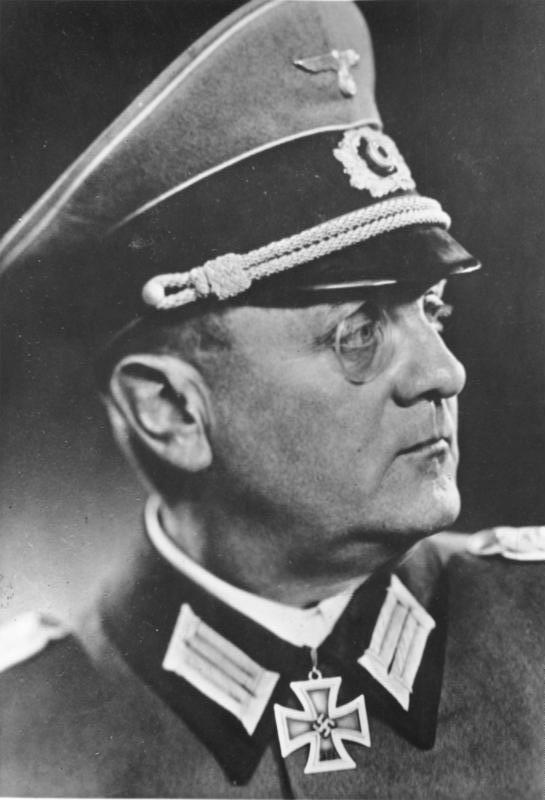
The Liberation of Paris is a gripping book that is packed full of interesting details about Nazi-occupied Paris and its last commander Dietrich von Choltitz.

At the end of WWII, Adolf Hitler ordered Choltitz to hold Paris, but if that wasn’t possible, to destroy it. Although General Choltitz had been very loyal to Hitler, he could not bring himself to obliterate the City of Light. He ultimately surrendered Paris to French forces on August 25, 1944. He’s been called the “Saviour of Paris” for preventing its destruction.

After his surrender, Choltitz was held for the remainder of the war in London and the United States and was ultimately released from captivity in 1947. He died in Baden-Baden in 1966.

The author of this exceptional book was the distinguished political scientist and biographer Jean Edward Smith. Smith’s work includes highly regarded biographies of Ulysses S. Grant and Dwight D. Eisenhower. He died on September 1, 2019 at the age of 86.

The audiobook is ably narrated by Fred Sanders, who has narrated many fine audiobooks including Elon Musk by Ashlee Vance.

One of the Most Famous Paintings Ever Created, on View at the National Gallery of Art

Impression, Sunrise,” which usually lives in Paris at the Musée Marmottan Monet, is in the United States for the first time. It’s the star item in “Paris 1874: The Impressionist Moment,” at the National Gallery of Art in Washington, DC.

“Paris 1874: The Impressionist Moment,” is an important presentation of 130 works including a rare reunion of many of the paintings first featured in that now-legendary Société Anonyme exhibition 150 years ago, which is recognized as the event that gave birth to French Impressionism. On April 15, 1874, the first impressionist exhibition opened in Paris. Hungry for independence, Monet, Renoir, Degas, Morisot, Pissarro, Sisley and Cézanne decided to free themselves from the rules by holding their own exhibition, outside official channels: impressionism was born.

You can see paintings by Paul CézanneClaude MonetBerthe Morisot, and Camille Pissarro and meet their lesser-known contemporaries. See the art norms they were rebelling against and learn what political and social shifts sparked their new approach to art.

The show is on view until January 19, 2025 at the National Gallery of Art. This exhibition is not ticketed. You may need to join a line on busier days. Weekends tend to be most crowded.


Sources: National Gallery of Art | Musée d’Orsay | Wikipedia | The Washington Post | The Wall Street Journal

Bibliothèque Mazarine, Paris

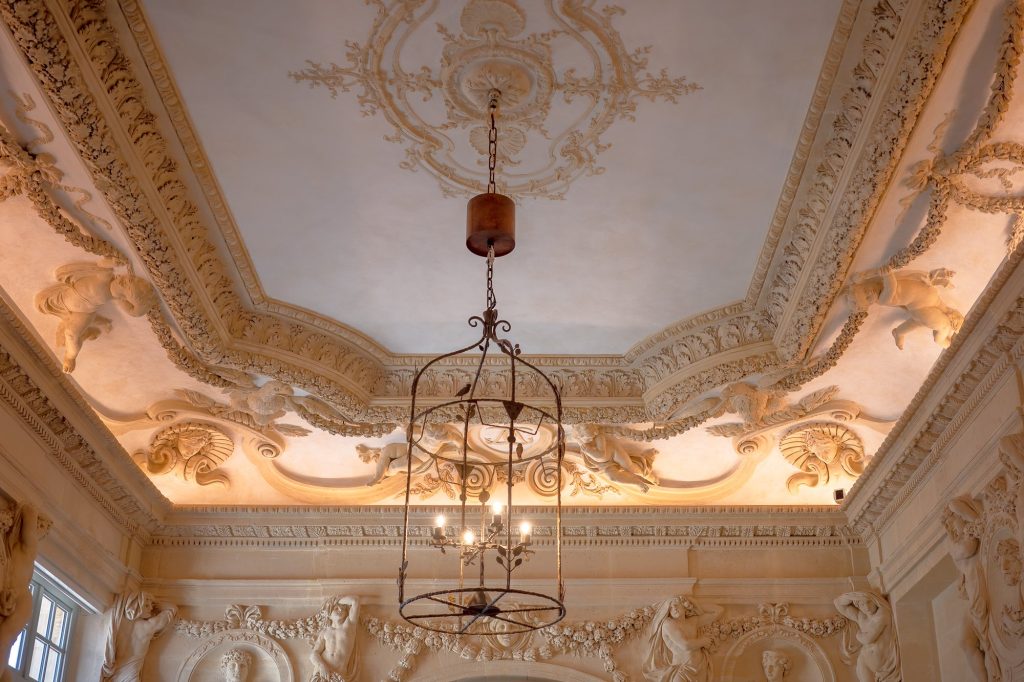
The Bibliothèque Mazarine, or Mazarin Library, is located within the Palais de l’institut de France, or the Palace of the Institute of France (previously the Collège des Quatre-Nations of the University of Paris), at 23 quai de Conti in the 6th arrondissement, on the Left Bank of the Seine facing the Pont des Arts and the Louvre. Originally created by Cardinal Mazarin (1602–1661) as his personal library in the 17th century, it today has one of the richest collections of rare books and manuscripts in France, and is the oldest public library in the country.

The library today contains about 600,000 volumes. The oldest part of the collection, brought together by Mazarin, contains about 200,000 volumes on all subjects. The more modern collections specialize in French history, particularly religious and literary history of the Middle Ages (12th–15th centuries) and the 16th and 17th centuries. Other specialities are the history of the book and the local and regional history of France.


Sources: Official Site | Wikipedia


The Bourse de Commerce – Pinault Collection in Paris

The Bourse de Commerce in Paris began as a circular wheat exchange built between 1763 and 1767. Its open-air court was capped with a wooden dome, later replaced in 1811 by a copper dome supported by an iron framework—an early example of modern engineering. A major reconstruction in 1888–89 preserved the layout but added glass and a mounted canvas to the dome, giving the building much of its present form.

The $170 million redevelopment was led by Pritzker Prize–winning Japanese architect Tadao Ando, who had previously collaborated with Pinault in Venice at the Palazzo Grassi. Ando inserted a striking 108-foot-diameter concrete cylinder into the rotunda, creating a central exhibition space while preserving the original dome and framework.

Since 2021, the Bourse de Commerce has been the Paris home of the Pinault Collection, offering exhibitions and events that reflect Pinault’s fifty years as a collector and patron of the arts. The immense dome—listed as a historic monument—is breathtaking in itself, and the contemporary art on display is modern, challenging, and original.


Sources: Wikipedia | Pinault Collection | The New York Times | Le Monde

La Galerie Dior: Fashion as Art in Paris

La Galerie Dior opened in spring 2022, celebrating the legacy of Christian Dior (1905–1957) and his six successors. Designed by American architect Peter Marino (b. 1949), the gallery sits beside Dior’s flagship at 30 Avenue Montaigne.

Spread across thirteen thematic spaces, the collection includes 130 haute couture outfits, 33 toiles, and 150–200 accessories. The gallery is open daily from 11 am to 7 pm (closed Tuesdays). Admission: €12.

Visitors ascend by elevator to the third floor and descend through a spectacular spiral staircase. Even for those who aren’t devotees of haute couture, the exhibitions are breathtaking.

Next door at 30 Avenue Montaigne is Dior’s largest boutique—arguably the most beautiful store I’ve ever visited. It features a restaurant and a pastry café in a soaring atrium filled with tropical trees and fresh flowers. Worth a stop even if you don’t plan on buying anything.


Sources: A Visit to La Galerie Dior | WWD | Peter Marino Architect


Théâtre du Châtelet, Paris

The Théâtre du Châtelet is a theater and opera house, located in the place du Châtelet in the 1st arrondissement of Paris.

One of two theaters (the other being the Théâtre de la Ville) built on the site of a châtelet, a small castle or fortress, it was designed by Gabriel Davioud (1824-1881) at the request of Baron Haussmann between 1860 and 1862. Originally named the Théâtre Impérial du Châtelet, it has undergone remodeling and name changes over the years. Currently it seats 2,500 people. The theater was registered as a historic monument on November 14, 1979.

Since 1979, the theatre has been operated by the City of Paris, and, after undergoing a major restoration, re-opened in 1980 under the name Théâtre Musical de Paris. It was acoustically re-modeled again in 1989 and reverted to the Théâtre du Châtelet name.

From 2017 to 2019, the theatre was closed for a $34.7 million renovation. While the main purpose of the renovation was to renew electrical circuits, fire safety and security, the Grand Salle was returned to its appearance of 1862 and the Grand Foyer to its Napoleon III style. Outside of the theatre, allegorical statues symbolizing dance, music, comedy and drama which were removed at the end of the 19th century were restored.


Sources: Wikipedia | Official Site | Paris Tourism | The New York Times | Le Monde | Juliette Gréco, Grande Dame of Chanson Française, Dies at 93 – The New York Times | A Look At Juliette Greco (1966) – YouTube


CDG Terminal 1: ‘The Camembert’

Paris-Charles de Gaulle airport (CDG) opened on March 13, 1974. It has three terminals. Terminal 1 (shown above) is the oldest terminal. It was inaugurated on March 8, 1974 by French Prime Minister Pierre Messmer (1916-2007), after eight years of construction.

Designed by the young architect Paul Andreu (1938-2018), this first terminal featured an innovative design of brutalist architecture. It has a central circular building linked to seven satellites. Designed to facilitate the distribution of passenger flows, this singular structure earned the terminal its nickname, which is still used today, the Camembert.

The first Air France flight from Paris-Charles de Gaulle took off on April 30, 1974. The Caravelle F-BHRA, the first aircraft of its type delivered to Air France, took off for Belgrade and Sofia, with a crew led by flight captain Henri Cibert.

Paris-Charles de Gaulle is the busiest airport within the European Union. In 2022, it handled 57,474,033 passengers and 34,657 aircraft movements, thus making it the world’s ninth busiest airport and Europe’s third busiest airport (after Istanbul and Heathrow) in terms of passenger numbers.


Sources: Air France | Wikipedia


Paris: Musée Picasso

The Musée Picasso is an art gallery located in the Hôtel Salé in rue de Thorigny, in the Marais district of Paris, dedicated to the work of the Spanish artist Pablo Picasso (1881–1973). The hôtel Salé is probably, as Bruno Foucart wrote in 1985, “the grandest, most extraordinary, if not the most extravagant, of the grand Parisian houses of the 17th century”.

The museum collection includes more than 5,000 works of art (paintings, sculptures, drawings, ceramics, prints, engravings and notebooks) and tens of thousands of archived pieces from Picasso’s personal repository, including the artist’s photographic archive, personal papers, correspondence, and author manuscripts. A large portion of items were donated by Picasso’s family after his death, in accord with the wishes of the artist, who lived in France from 1905 to 1973.

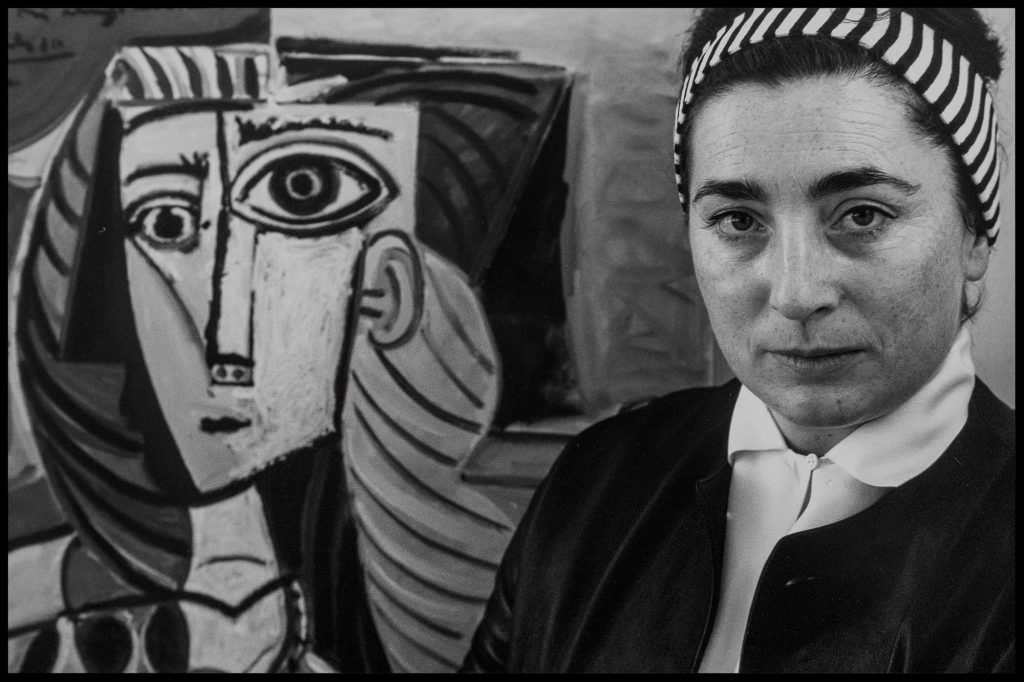
Jacqueline Roque (1927–1986) (shown above) was best known as the muse and second wife of Pablo Picasso. Their marriage lasted 11 years until his death, during which time he created over 400 portraits of her, more than any of Picasso’s other loves. Here, she poses with her striking portrait created in California. The photograph was made by David Douglas Duncan (1916-2018), an American photojournalist, known for his combat photographs and for his extensive domestic photography of Pablo Picasso and his wife Jacqueline.