Born around 1028, William rose from Duke of Normandy to become a formidable force in European history. His decisive victory at the Battle of Hastings in 1066 brought England under Norman rule, setting in motion sweeping changes to the kingdom’s language, law, and social order. He was the first Norman King of England, and his reign reshaped the destiny of a nation.
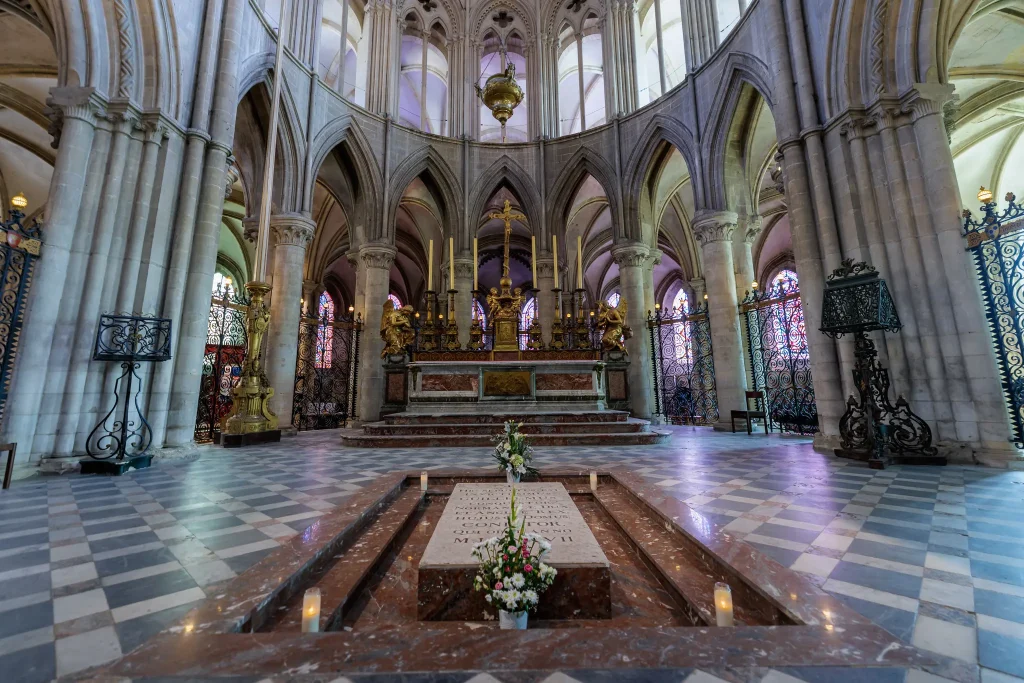
William founded the abbey as an act of penance, after marrying his cousin Matilda of Flanders against Church law. When he died in 1087, his body was brought here to rest within the walls of the church he had endowed. Yet his remains would not know peace. Over the centuries, his tomb was desecrated multiple times—most violently during the French Revolution. Today, only a single bone, believed to be a femur, is thought to remain.
The tomb we see now, adorned with flowers and lit by candles, is at once modest and monumental. It speaks to the paradox of William’s legacy: a man who conquered kingdoms and changed history, yet whose earthly remains were reduced almost to nothing. The stone slab is a reminder of ambition’s reach and mortality’s certainty—a place of quiet reflection on how even the most powerful lives can end in fragility.
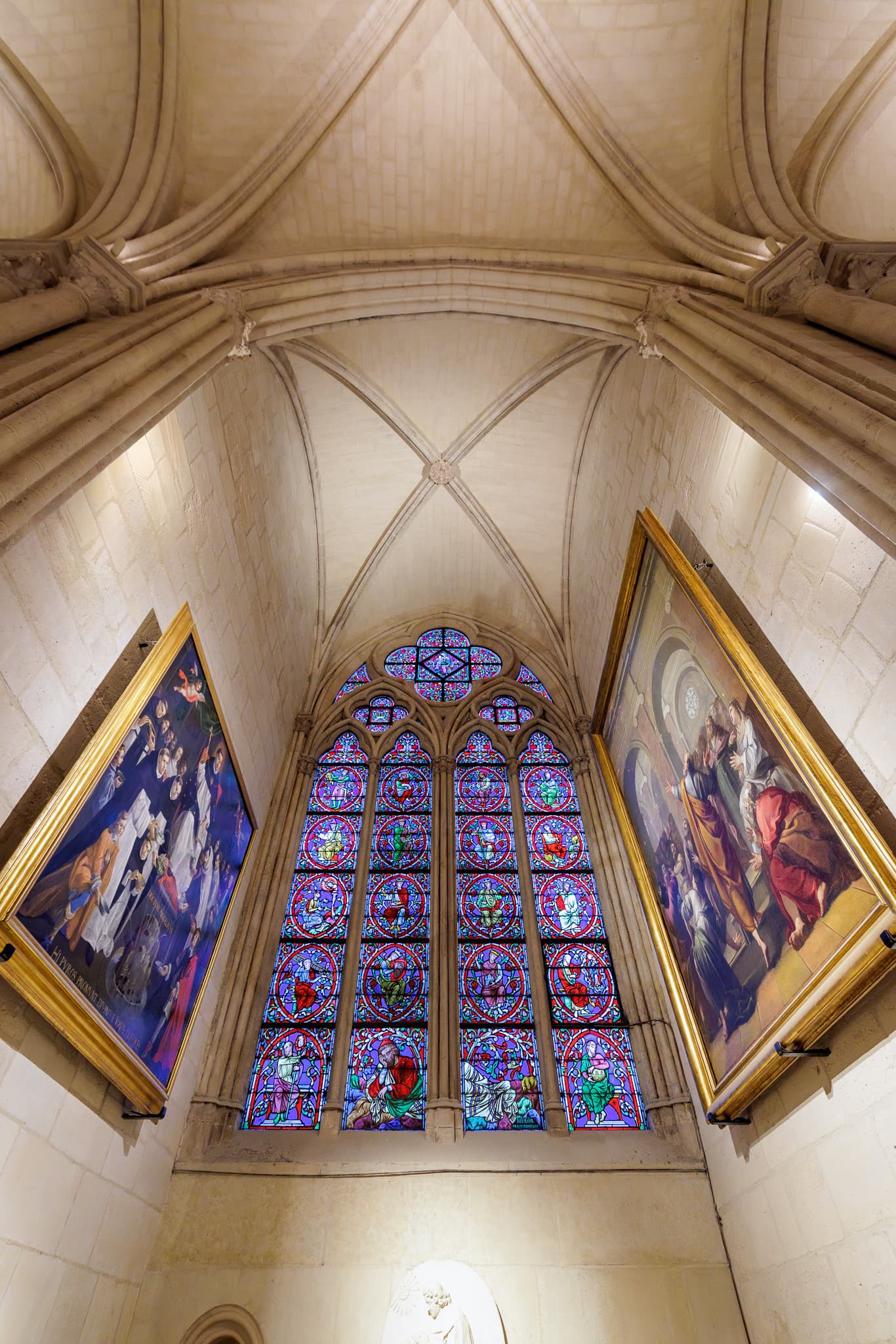
The restored nave of Notre-Dame, luminous and whole, five years after the fire.
When I stepped inside the restored Notre-Dame de Paris on my recent trip, my jaw dropped. I had braced myself to see scars from the 2019 fire — blackened stone, lingering smoke, a cathedral permanently marked by disaster. Instead, I found a space so clean and luminous it felt renewed. The air was clear, the stone brighter than I remembered, and nothing betrayed the night when flames nearly brought this monument down.
That fire broke out on April 15, 2019. It destroyed the spire and much of the roof, and left the world watching in disbelief as one of the most recognizable buildings in Europe seemed on the verge of collapse. In the days that followed, President Emmanuel Macron promised the French people that Notre-Dame would be rebuilt “within five years.” At the time, it sounded impossibly ambitious.
And yet, in December 2024 — just over five years later — the cathedral reopened to the public. The restoration was a massive undertaking. Carpenters and stonemasons worked with traditional tools and materials, rebuilding the roof frame in oak and covering it again in lead. Specialists cleaned centuries of soot from the interior stone, leaving the walls brighter than I ever remember seeing them. The cost was staggering, estimated at around €700 million, but more than €840 million was pledged, much of it from private donors, corporations, and foundations, with the French state overseeing the effort.
Investigators never determined a single definitive cause for the blaze. Arson was ruled out. The most likely explanations point to either faulty electrical wiring or a cigarette left smoldering on the scaffolding that surrounded the roof. Whatever the origin, the fire became a national trauma — and the restoration a matter of pride.
One of the most striking aspects of the restoration is what cannot be seen: the measures put in place to protect the cathedral from another disaster. Notre-Dame is now equipped with advanced fire detection sensors, a sprinkler system designed to protect the attic timbers, and strict new safety protocols for any construction or maintenance work. Dedicated fire safety teams are trained specifically for the building, and regular inspections are built into its ongoing care. The new oak roof frame may look medieval, but it is now guarded by twenty-first century vigilance.
Now, walking through the nave and looking up at the soaring vaults, you would not guess at the near loss of this building. The absence of smoke stains, the brightness of the walls, even the feeling of clarity inside the space all speak to what was achieved. Notre-Dame does not look like a survivor so much as a rebirth — a reminder of how cultural treasures can be both fragile and resilient.
For me, the experience was moving not only because of what I saw, but because of what I didn’t. I saw no evidence of catastrophe. Instead, I saw continuity — a cathedral that, having nearly perished, now feels more present and alive than ever.
You can get a sense of the magnitude of the destruction and the effort involved in the reconstruction in this video:
In the heart of the Marais in Paris lies the Maison Européenne de la Photographie (MEP). It isn’t a grand, imposing museum like the Louvre or the Musée d’Orsay. Instead, it feels intimate, almost hidden — a place where you can stand quietly before a single photograph, letting it work on you without distraction.
Encountering Marie-Laure de Decker
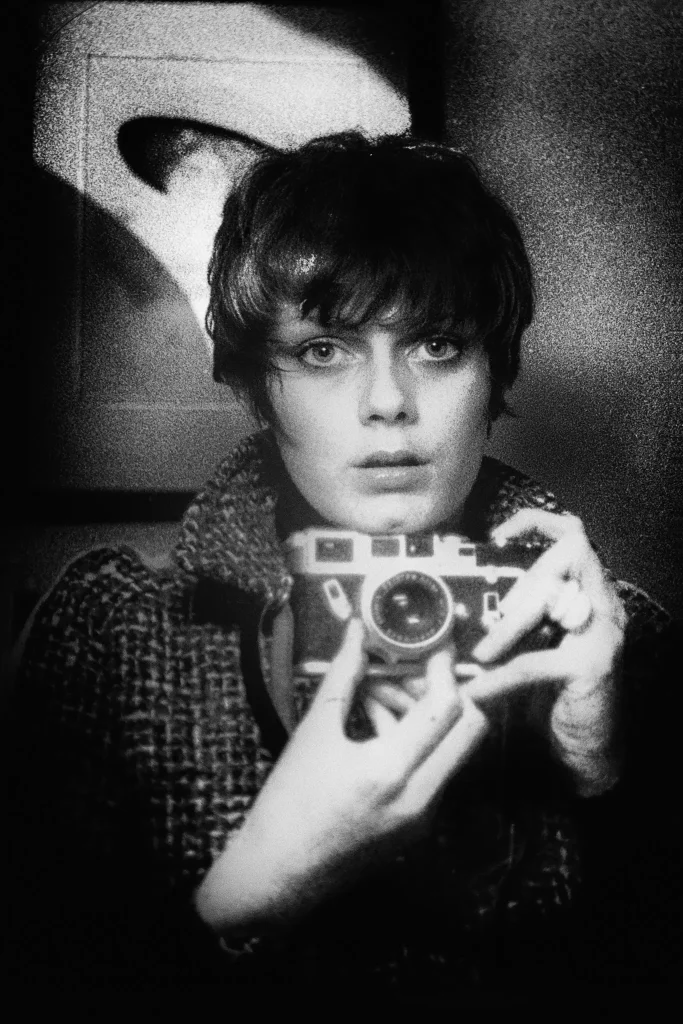
The exhibition that stopped me in my tracks was devoted to Marie-Laure de Decker. Before this visit, I knew nothing about her. Yet her black-and-white images held me still: the grain of film, the intensity of her subjects’ eyes, the strange balance of fragility and strength.
Her story is as remarkable as her photographs. De Decker began as a striking fashion model in Paris. She saved enough money to buy her first Leica and soon turned the camera on the world’s conflicts. Her photographs from Vietnam and Chad carry a rare humanity — not just war and suffering, but dignity, presence, and survival.
Two of her cameras, a well-worn Leica M3 and M4, are on display at the MEP. Ordinary tools, scratched and aged, yet heavy with history and courage.
More Than a Museum
The MEP is not just a gallery of images. It feels like a home for photography itself, where established masters share the stage with emerging voices. Its bookstore is a temptation all its own — shelves lined with rare catalogues, monographs, and books that open like personal invitations into other lives.
And when you step back outside, you’re in the Marais: narrow old streets, bustling cafés, a Paris scaled to human rhythm.
Marie-Laure de Decker – on display at the MEP
What Matters
Standing in front of de Decker’s work, I felt something I sometimes forget: the latest gear matters very little. What endures is the eye, the courage to see, and the willingness to be present.
The MEP reminded me why I fell in love with photography in the first place. It is not only about images. It is about memory, refuge, and meeting the world through another’s gaze.
If You Go
If Paris is in your plans, make time for the Maison Européenne de la Photographie. You may arrive expecting to see photographs. But if you linger, you might leave changed — carrying the weight of another person’s vision, and perhaps, a little more courage to see the world for yourself.
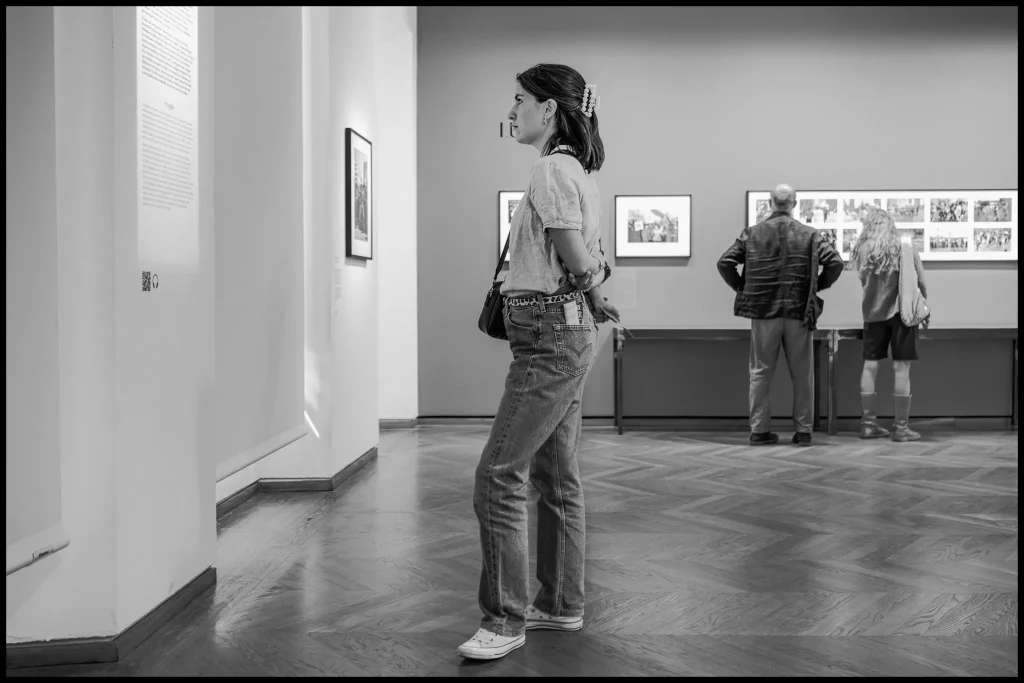
A visitor contemplates the work of Marie-Laure de Decker at the MEP
Robert Clary, a French-born survivor of Nazi concentration camps who later played a feisty prisoner of war in the unlikely 1960s sitcom Hogan’s Heroes, died on November 16, 2022, at his home in Beverly Hills, California. He was 96.
Clary was the last surviving original cast member of the series, which also starred Bob Crane, Richard Dawson, Larry Hovis, and Ivan Dixon as the Allied prisoners. Their captors were portrayed by Werner Klemperer and John Banner, both European Jews who had fled Nazi persecution before the war.
For decades, Clary said nothing publicly about his wartime experience. That changed in 1980, when he decided to speak out after seeing Holocaust deniers attempt to diminish or erase the truth of Nazi crimes. His silence broke with painful clarity: twelve members of his immediate family — his parents and ten siblings — had been murdered. Clary himself was deported to Buchenwald, where he was liberated on April 11, 1945. He was the only member of his family to survive.
Beyond his acting career, Clary committed himself to Holocaust remembrance. Beginning in 1980, he spoke at high schools and community groups, participated in survivor gatherings in Jerusalem, volunteered with the Museum of Tolerance, and became deeply involved with the USC Shoah Foundation. He was among the first 100 survivors interviewed for their archive and later conducted 75 interviews himself, ensuring that others’ stories would be preserved.
Hogan’s Heroes aired on CBS from 1965 to 1971, running for six seasons and 168 episodes. It remains the longest-running American sitcom set against the backdrop of World War II.
Unrealistic as it was, I loved the show. It made me laugh then, and it still makes me laugh today. The series is available on Amazon Prime.
The Bureau (Le Bureau des Légendes) is a gripping French spy series created by Éric Rochant for Canal+. It follows the daily life and missions of agents in the DGSE—France’s equivalent of the CIA—headquartered in Paris’s 20th arrondissement. Remarkably, the series was produced with the cooperation of the DGSE itself, which even endorsed its portrayal of intelligence work. Critics agreed: The Bureau won Best TV Series from the French Syndicate of Cinema Critics.
The story begins with Guillaume “Malotru” Debailly (Mathieu Kassovitz), a French intelligence officer returning to Paris after six years undercover in Syria. Struggling to adjust to his old life, he discovers that his former lover Nadia (Zineb Triki) is now in Paris. Against all rules, he contacts her under his Damascus alias, Paul Lefebvre—setting in motion a double life that threatens both him and the DGSE.
The supporting cast is equally compelling. Jean-Pierre Darroussin plays Henri Duflot, the likable but self-conscious head of the clandestine service, whose garish neckties make him seem almost ordinary. Léa Drucker portrays a DGSE psychiatrist with top-secret clearance, while Sara Giraudeau shines as Marina Loiseau, a young and determined operative navigating the perilous world of undercover work.
The acting throughout is superb, and the espionage feels refreshingly authentic—far more grounded than most spy thrillers. Over five masterful seasons, The Bureau became one of the most riveting and realistic espionage dramas I’ve ever seen, on television or film.
If you’re planning a trip to France—or simply want to deepen your understanding of French history and culture—the Join Us in France podcast is a superb resource.
Launched in 2014, the podcast was originally co-hosted by Elyse and Annie, two women who know France inside and out. Annie was born in France but has also lived in the United States, while Elyse grew up in New York yet speaks the language fluently and has an encyclopedic grasp of French culture and history. Ironically, Elyse, the American, often seems “more French” than Annie, who was born there. Due to time constraints, Elyse no longer appears regularly but still joins when she can.
The podcast shines in the way it makes France approachable for American listeners. I especially enjoyed episodes on driving in France, French cheese, and Le Marais in Paris. Another episode on modern and contemporary art in France introduced me to 18 museums across the country, many of which I hadn’t known before.
Each episode comes with detailed show notes—an invaluable aid for trip planning. Unlike the many resources that focus mainly on hotels and restaurants, this podcast helps you understand the soul of France.
For additional perspective, Annie and Elyse were also featured in Amateur Traveler episode 428 about Paris. Amateur Traveler is a podcast I listen to often, and it covers destinations around the world. But if your focus is France, Join Us in France is the podcast to follow.
As a lover of France and its language, walking into the Comédie-Française feels like stepping into the heart of French culture. Founded in 1680 by decree of Louis XIV, it is the world’s oldest active theater company and the only state theater in France with its own permanent troupe of actors.
Its main stage, the Salle Richelieu, stands within the Palais-Royal complex in the 1st arrondissement. The setting is both grand and intimate — a space steeped in history yet alive with contemporary energy.
Often called La Maison de Molière, the theater honors the playwright most closely tied to its legacy. Though Molière died before the company was formally created, the Comédiens-Français still perform his plays and pay tribute to him each January 15.
The Comédie-Française is often associated with the classical repertoire, but creation has always been central to its mission. In 2023, I saw a modern staging of Médée d’après Euripide that showed just how vital and daring the troupe remains.
If you speak French, it’s worth buying a ticket. Sitting in that gilded hall, you’re not just a spectator — you’re part of a living tradition more than three centuries old.
Singer Helen Reddy, born in Melbourne, Australia in 1941, died in Los Angeles on September 29, 2020, at the age of 78.
Her first hit came in 1971 with a cover of “I Don’t Know How to Love Him” from Jesus Christ Superstar. It remains my absolute favorite of her songs — tender, emotional, and beautifully sung. A year later, she released what would become her signature anthem: “I Am Woman.” It reached number one on the Billboard Hot 100 in December 1972. Reddy was the first Australian-born artist to top that chart — and the first to win a Grammy.
I’ve always loved Helen Reddy’s music. Her voice was strong and expressive, and her songs made an impression that lasted. “I Am Woman” was more than a hit — it was a declaration of presence and power, especially at a time when those words carried weight.
Reddy’s life wasn’t easy. She had a kidney removed at 17 and lived with Addison’s disease. Still, she built a career that was both groundbreaking and lasting, and her music continues to resonate.
Robert De Niro plays a healthy but lonely 70-year-old retired widower named Ben Whittaker. Ben worked as an accomplished executive who ran a company selling telephone books. Ben wants to connect and be useful to other people. He starts by going to Starbucks each day but that doesn’t get him the human interaction he craves. One day, Ben sees an ad from an online women’s clothing vendor seeking to hire “senior interns.” The firm is loosely based on Google. Ben applies by uploading a video and gets the job. He’s assigned to work directly for the CEO Jules Ostin played by Anne Hathaway. The interaction between the two characters is charming.
The film was written and directed by Nancy Meyers, who also wrote and directed Something’s Gotta Give, a 2003 film starring Jack Nicholson and Diane Keaton. That film is about a man (Jack Nicholson) approaching senior citizen status who has a taste for younger women. I also enjoyed that film so I guess I have a taste for Meyers’s work.
Manolhla Dargis, writing for The New York Times explains in magnificent prose that:
The director Nancy Meyers doesn’t just make movies, she makes the kind of lifestyle fantasies you sink into like eiderdown. Her movies are frothy, playful, homogeneous, routinely maddening and generally pretty irresistible even when they’re not all that good. Her most notable visual signature is the immaculate, luxuriously appointed interiors she’s known to fuss over personally – they inevitably feature throw pillows that look as if they’ve been arranged with a measuring tape. These interiors are fetishized by moviegoers and Architectural Digest alike, ready-made for Pinterest and comment threads peppered with questions like, “Where do I get that hat?”
Although I wish I could write the way Ms. Dargis writes, I think the film has something meaningful to say about the way older and younger people can relate to one another in the workplace and elsewhere.
It seems that the film was a hit in South Korea for just this reason (WSJ). South Korean viewers appreciated the healthy and positive energy emanating from Ben, the character ably played by Robert DeNiro.
I did too. And besides, what’s wrong with some eiderdown in one’s life?
Anna, a young woman training to be a nun in 1960s Poland is on the verge of taking her vows when she meets her only living relative for the first time and learns that she is Jewish and that her real name is Ida Lebenstein. Together they discover what happened to Anna/Ida’s family.
This jewel is only 82 minutes long and every moment makes good use of the viewer’s time. The story is one example of the decimation of Poland’s Jews during World War II. But in the end, this is not a film about Poland or the Holocaust – but about life.
The film, which came out in 2013, is in black and white. The places photographed are ordinary yet the cinematography is stunning. Each scene looks like a black and white photograph made by a Magnum photographer using a Leica camera. Łukasz Żal is a superb, young cinemaphotographer born in Koszalin, Poland.
Ida is played by Agata Trzebuchowska. Her character is sweet, innocent and beautiful. Her aunt Wanda – Agata Kulesza – is also a fine actress.
Pawel Pawlikowski directed the film. He was born in Warsaw in 1957. At the age of 14, Pawlikowski left Poland to live in Germany and Italy, before settling in Britain. In 2004, he directed My Summer of Love with Emily Blunt and Natalie Press.
This film touched me deeply and left me thinking for a long time about what’s important and what’s not. It is among the best films I have seen.