Notre-Dame Reborn

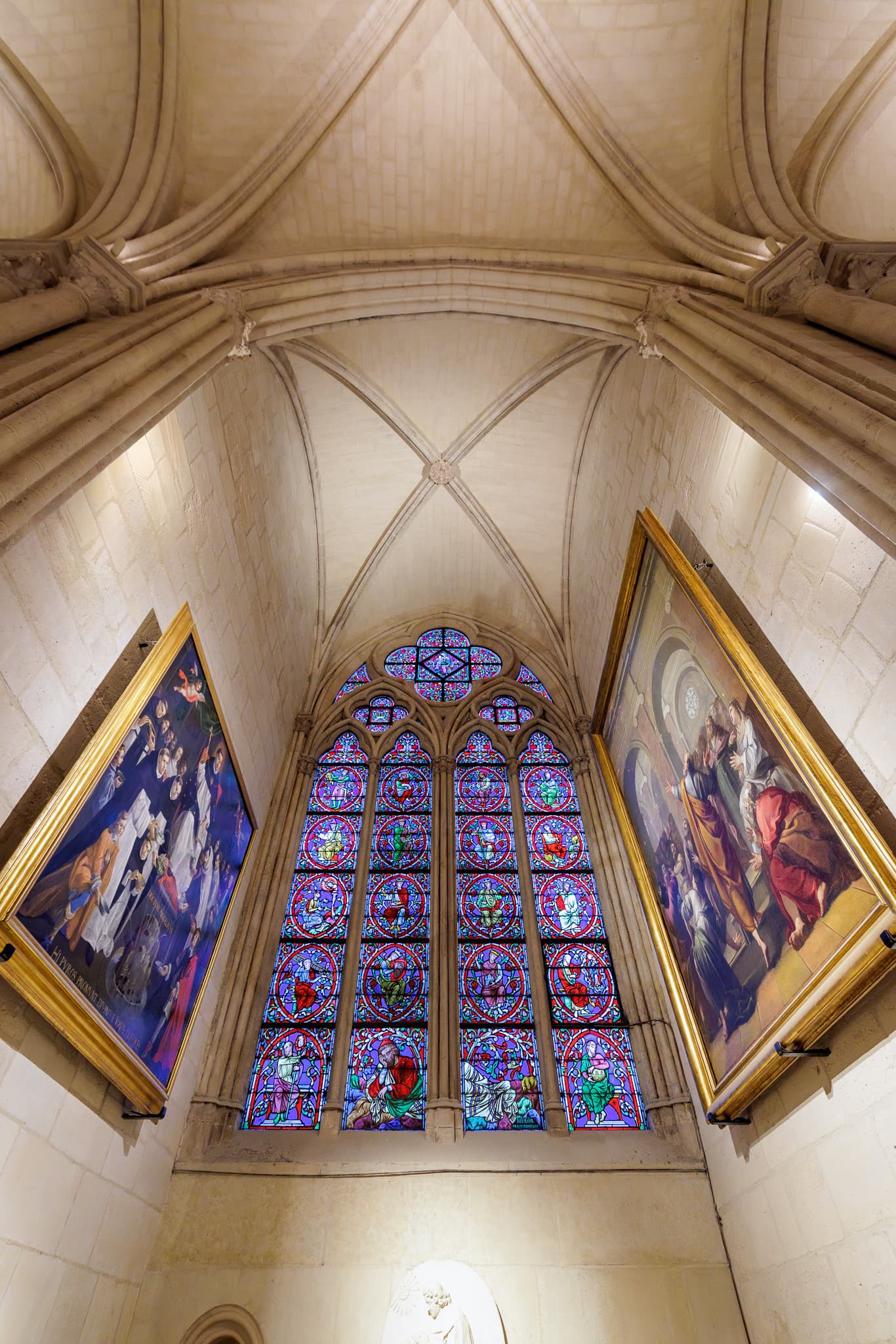
When I stepped inside the restored Notre-Dame de Paris on my recent trip, my jaw dropped. I had braced myself to see scars from the 2019 fire — blackened stone, lingering smoke, a cathedral permanently marked by disaster. Instead, I found a space so clean and luminous it felt renewed. The air was clear, the stone brighter than I remembered, and nothing betrayed the night when flames nearly brought this monument down.

That fire broke out on April 15, 2019. It destroyed the spire and much of the roof, and left the world watching in disbelief as one of the most recognizable buildings in Europe seemed on the verge of collapse. In the days that followed, President Emmanuel Macron promised the French people that Notre-Dame would be rebuilt “within five years.” At the time, it sounded impossibly ambitious.

And yet, in December 2024 — just over five years later — the cathedral reopened to the public. The restoration was a massive undertaking. Carpenters and stonemasons worked with traditional tools and materials, rebuilding the roof frame in oak and covering it again in lead. Specialists cleaned centuries of soot from the interior stone, leaving the walls brighter than I ever remember seeing them. The cost was staggering, estimated at around €700 million, but more than €840 million was pledged, much of it from private donors, corporations, and foundations, with the French state overseeing the effort.

Investigators never determined a single definitive cause for the blaze. Arson was ruled out. The most likely explanations point to either faulty electrical wiring or a cigarette left smoldering on the scaffolding that surrounded the roof. Whatever the origin, the fire became a national trauma — and the restoration a matter of pride.

One of the most striking aspects of the restoration is what cannot be seen: the measures put in place to protect the cathedral from another disaster. Notre-Dame is now equipped with advanced fire detection sensors, a sprinkler system designed to protect the attic timbers, and strict new safety protocols for any construction or maintenance work. Dedicated fire safety teams are trained specifically for the building, and regular inspections are built into its ongoing care. The new oak roof frame may look medieval, but it is now guarded by twenty-first century vigilance.

Now, walking through the nave and looking up at the soaring vaults, you would not guess at the near loss of this building. The absence of smoke stains, the brightness of the walls, even the feeling of clarity inside the space all speak to what was achieved. Notre-Dame does not look like a survivor so much as a rebirth — a reminder of how cultural treasures can be both fragile and resilient.

For me, the experience was moving not only because of what I saw, but because of what I didn’t. I saw no evidence of catastrophe. Instead, I saw continuity — a cathedral that, having nearly perished, now feels more present and alive than ever.


You can get a sense of the magnitude of the destruction and the effort involved in the reconstruction in this video:


Swiss Economic Ties to Nazi Germany

During World War II, Switzerland maintained extensive and highly profitable economic ties with Nazi Germany, a relationship that has been a subject of significant historical scrutiny.

The Bergier Commission: The Swiss government’s own independent inquiry, the Bergier Commission, conducted the most comprehensive study of Swiss relations with Nazi Germany, documenting extensive economic ties across banking, industry, transport, and insurance. Final Report – synthesis PDF.

Banking and gold: The Swiss National Bank (SNB) and commercial banks purchased large quantities of gold from the German Reichsbank, much of it looted from occupied Europe and victims of Nazi persecution — a pattern detailed in the official U.S. government Eizenstat report and in the SNB’s own historical study. State Dept. summary; SNB report PDF.

Industry and exports: Swiss firms supplied Germany with machinery, precision instruments, and war-relevant goods. Official research shows Swiss exports of war-relevant goods rose from 47 million CHF in 1937 to 425 million CHF in 1943. Bergier economic chapter – PDF. Additional Bergier studies found that munitions exports overwhelmingly favored the Axis. Swissinfo summary.

Prefabricated barracks and espionage. Declassified U.S. intelligence records detail the activities of SS officer Hans Wilhelm Eggen, a close associate of Heinrich Himmler. These documents show that Eggen both arranged multi-million-franc purchases of prefabricated huts from Swiss suppliers and used these transactions as cover for building an SS intelligence network and managing clandestine finances in Switzerland. CIA Reading Room – doc 1; CIA Reading Room – doc 2

Whatever one calls Switzerland’s political stance, the historical record shows that Swiss institutions and companies actively engaged in — and profited from — economic relationships with Nazi Germany across finance and industry. Bergier Commission portal.

Robert Clary: From Hogan’s Heroes to Holocaust Witness (1926-2022)

Robert Clary, a French-born survivor of Nazi concentration camps who later played a feisty prisoner of war in the unlikely 1960s sitcom Hogan’s Heroes, died on November 16, 2022, at his home in Beverly Hills, California. He was 96.

Clary was the last surviving original cast member of the series, which also starred Bob Crane, Richard Dawson, Larry Hovis, and Ivan Dixon as the Allied prisoners. Their captors were portrayed by Werner Klemperer and John Banner, both European Jews who had fled Nazi persecution before the war.

For decades, Clary said nothing publicly about his wartime experience. That changed in 1980, when he decided to speak out after seeing Holocaust deniers attempt to diminish or erase the truth of Nazi crimes. His silence broke with painful clarity: twelve members of his immediate family — his parents and ten siblings — had been murdered. Clary himself was deported to Buchenwald, where he was liberated on April 11, 1945. He was the only member of his family to survive.

Beyond his acting career, Clary committed himself to Holocaust remembrance. Beginning in 1980, he spoke at high schools and community groups, participated in survivor gatherings in Jerusalem, volunteered with the Museum of Tolerance, and became deeply involved with the USC Shoah Foundation. He was among the first 100 survivors interviewed for their archive and later conducted 75 interviews himself, ensuring that others’ stories would be preserved.

Hogan’s Heroes aired on CBS from 1965 to 1971, running for six seasons and 168 episodes. It remains the longest-running American sitcom set against the backdrop of World War II.

Unrealistic as it was, I loved the show. It made me laugh then, and it still makes me laugh today. The series is available on Amazon Prime.

La Grande Arche de la Défense: A Modern Monument to Humanity

La Grande Arche de la Défense (“The Great Arch of the Defense”), originally called La Grande Arche de la Fraternité, is a monumental building in the business district of La Défense, in the commune of Puteaux, west of Paris. Usually referred to simply as La Grande Arche, the 110-meter-high (360 ft) cube is part of the historic axis that runs from the Louvre to the Arc de Triomphe. The distance between the two arches is about 4 km (2.5 miles). Built as one of President François Mitterrand’s Grands Projets, it stands as a symbol of modern France.

In 1982, a national design competition was launched at Mitterrand’s initiative. The winning entry, by Danish architect Johan Otto von Spreckelsen (1929–1987) and engineer Erik Reitzel (1941–2012), reimagined the Arc de Triomphe for the late 20th century. Instead of commemorating military victories, their design celebrated humanity and humanitarian ideals.

Construction began in 1985, led by French civil engineering company Bouygues. In 1986, Spreckelsen resigned and transferred his responsibilities to his associate, French architect Paul Andreu, best known for his work on Charles de Gaulle Airport. Reitzel remained involved until the monument was completed in 1989.

The structure takes the approximate form of a perfect cube, with a width, height, and depth of 110 meters. Some have suggested it resembles a hypercube—or tesseract—projected into three dimensions. Built with a prestressed concrete frame clad in glass and covered in white granite from Bèthel, Italy, the Arche has a striking, minimalist presence.

La Grande Arche was inaugurated in July 1989 during celebrations marking the bicentennial of the French Revolution, including a grand military parade that passed beneath its soaring frame.


Sources: Wikipedia | French moments


111 Posts and Counting

With this entry, my blog has reached 111 published posts. What began as a simple outlet for notes and photographs has become an archive of travels, reflections, and personal history.

Revisiting and revising older posts reminded me why I write: to capture impressions, preserve memory, and shape a space that feels my own. I also hope that something here may be of help or interest to others who wander through.

Thank you for reading — it means a great deal. With the archive refreshed, I’m looking forward to adding new stories.

Here’s to the next chapter.

From Synagogue to Frauenkirche: Nuremberg’s Church of Our Lady

The Frauenkirche (“Church of Our Lady”) stands on the eastern side of the main market in Nuremberg, Germany. An example of brick Gothic architecture, it was built between 1352 and 1362 on the initiative of Charles IV (1316–1378), Holy Roman Emperor.

The church’s origins are bound up with tragedy. In 1349, during the Black Death, a violent pogrom led to the expulsion of Nuremberg’s Jewish community. Charles IV ordered the city’s synagogue demolished, and the Frauenkirche was built on its ruins as part of the newly created Hauptmarkt.

Yet within a few years, the city authorities, short of money, sought to attract Jews back. In 1351, Charles IV allowed their return under specific conditions, and by 1382 the Jewish community numbered more than 500, concentrated in the Judengasse (today’s Judenstrasse). More background can be found at the Jewish Virtual Library.

Centuries later, between the two world wars, Nuremberg became a stronghold of the Nazi Party. Julius Streicher (1885–1946) founded one of the first local branches there in 1922 and published the antisemitic weekly Der Stürmer. The city also hosted massive Nazi rallies, and its Jews lived under daily harassment and threat.

The Frauenkirche itself was nearly destroyed during the bombing of Nuremberg (see photo above) in World War II, leaving only its nave walls and façade. Restoration was completed in 1953, and today the church once again dominates the Hauptmarkt as both a historic monument and a reminder of the city’s layered past.

The Institut de France: Guardian of Knowledge and the Arts

The Institut de France is a French learned society that brings together five académies, including the prestigious Académie Française, guardian of the French language. Founded in 1795 at the direction of the National Convention, it is housed on the Quai de Conti in the 6th arrondissement of Paris.

Today, the Institut oversees nearly 1,000 foundations, along with museums and châteaux open to visitors. It also distributes prizes and grants—amounting to more than €27 million annually in 2017—most of them awarded on the recommendation of the académies.

Faithful to the mission set for it in 1795, the Institut and its five académies continue “to contribute, on a non-profit basis, to the progress and influence of letters, sciences, and the arts; to honor useful inventions and discoveries; to recognize distinguished artistic achievements; and to reward noble deeds and the steadfast practice of civic and social virtues.”

The Pegnitz River and Nuremberg’s Place in History

The Pegnitz is a river in Franconia, in the German state of Bavaria. Its source is in the town of Pegnitz (population ~15,000), about 27 km south of Bayreuth. The river runs for about 113 km (70 mi) before meeting the Rednitz in Fürth to form the Regnitz. Along its course, it flows through Nuremberg (population ~545,000), the largest city in Franconia, the second-largest in Bavaria, and the 14th-largest in Germany.

Nuremberg is famous for its castle and extensive city walls, with their many towers—among the most impressive fortifications in Europe.


Nuremberg in the Nazi Era

From 1933 to 1945, Nuremberg held special significance for the Nazi regime. The city was chosen as the site of massive Nazi Party rallies, staged in 1927, 1929, and annually from 1933 to 1938. These events were designed as propaganda spectacles.

  • The 1934 rally was filmed by Leni Riefenstahl, resulting in the propaganda film Triumph des Willens (Triumph of the Will).
  • At the 1935 rally, Hitler convened the Reichstag in Nuremberg to pass the Nuremberg Laws, which stripped Jews and other so-called “non-Aryans” of German citizenship.

After the collapse of Nazi Germany, Nuremberg again became a focal point of world history. Between 1945 and 1946, the surviving top Nazi leaders were tried for war crimes and crimes against humanity at the International Military Tribunal. The proceedings took place in Courtroom 600 of the Nuremberg Palace of Justice. (The cross visible today in the courtroom was added later by the postwar German government and was not present during the trials.)

Honduras: Resilience and Natural Beauty Amid Challenges

Ponant’s Dumont-d’Urville is a beautiful way to travel in French style. We spent much of our cruise exploring Honduras and the rest in Belize.

Honduras is bordered to the west by Guatemala, to the southwest by El Salvador, to the southeast by Nicaragua, to the south by the Pacific Ocean at the Gulf of Fonseca, and to the north by the Gulf of Honduras, a large inlet of the Caribbean Sea. Its capital and largest city is Tegucigalpa, home to about 1.6 million of the country’s 9.5 million people. Slightly larger than Tennessee, Honduras is unique in Central America for having two major urban centers: Tegucigalpa and San Pedro Sula.

Honduras is one of the poorest countries in Latin America and has one of the world’s highest murder rates. More than half the population lives in poverty, with rural and indigenous communities particularly affected. Per capita GDP was about $5,600 (2021 est.), and nearly half the population lives below the poverty line. Honduras is also a major transshipment point for cocaine bound for the United States.

Although primary school enrollment is near 100%, the quality of education is low, with high dropout and grade repetition rates and weak accountability.

Honduras gained independence from Spain in 1821 and has held regular elections since 1838. During the 1980s, the United States established a strong military presence in the country to support operations in neighboring El Salvador and Nicaragua, while developing strategic infrastructure.

The country was devastated by Hurricane Mitch in 1998, which killed about 5,600 people and caused approximately $2 billion in damage. While the economy has slowly rebounded, setbacks from COVID-19 and severe storms in 2020–21 remain.

Despite these hardships, Honduras offers extraordinary natural beauty.

Guanaja, one of the Bay Islands of Honduras, lies about 70 km off the north coast and 12 km from Roatán. Most of its 10,000 residents live on a nearby cay called Bonacca, often referred to as the Venice of Honduras for its waterways.

The Cuero y Salado Wildlife Refuge, on the Atlantic coast, is a protected area home to manatees, monkeys, and countless bird species. Its mangrove canals, fed by the Cuero and Salado rivers, create a rich brackish habitat where freshwater meets the sea.

The Cayos Cochinos (or Cochinos Cays) consist of two small islands and 13 coral cays northeast of La Ceiba. Although small in population (108 residents as of 2001), the islands form part of the Mesoamerican Barrier Reef System, the world’s second-largest barrier reef. With no roads, cars, or bikes, Cayos Cochinos remains a pristine marine reserve managed by the Honduras Coral Reef Foundation.

You can see more photos of Honduras here.


Sources: CIA World Factbook | Wikipedia | Honduras Official Tourism Site | Audley Travel


Decatur House: A Historic Home Near the White House


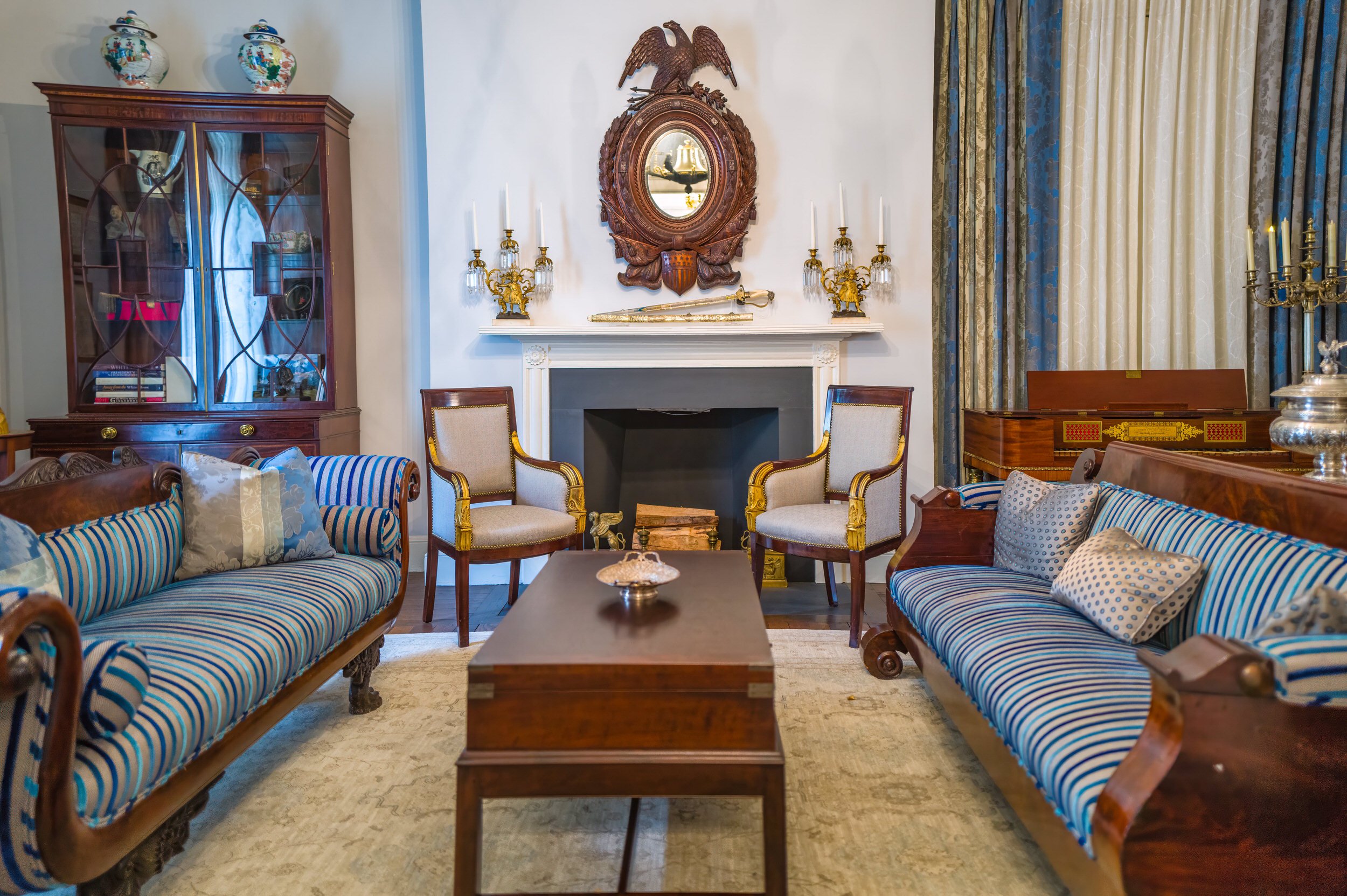
Decatur House is one of Washington’s most historic homes, standing just steps from the White House at the corner of Lafayette Square. Built in 1818 by the great neoclassical architect Benjamin Henry Latrobe, it is one of only three of his houses still standing in the United States.

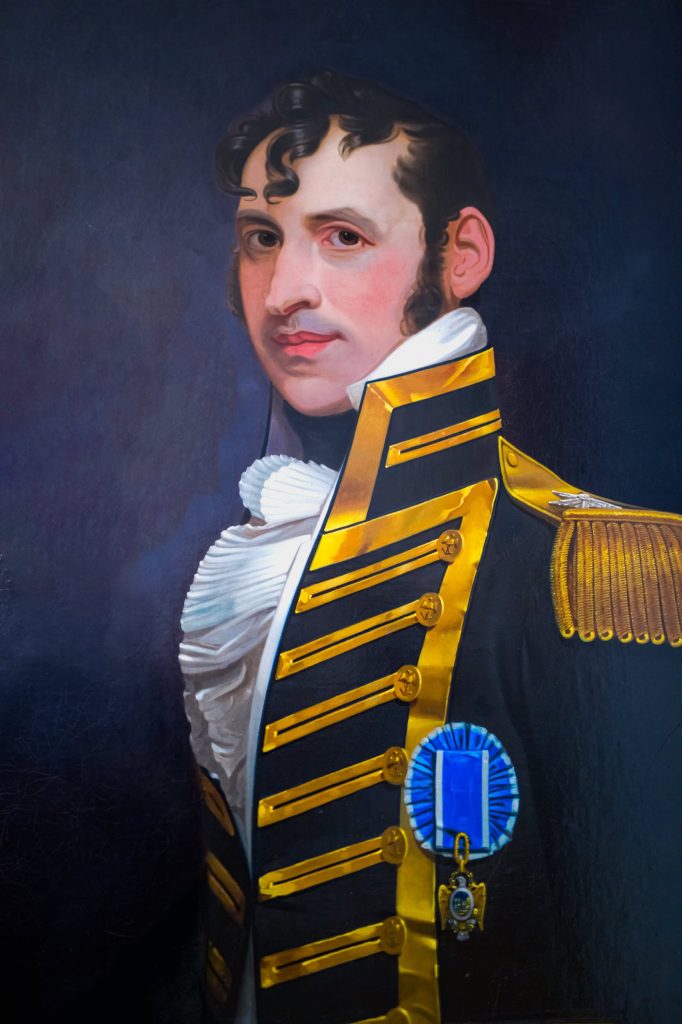
Portrait of Stephen Decatur Jr. in Decatur House

The home was commissioned by Stephen Decatur Jr., a celebrated naval officer who became the nation’s first post–Revolutionary War hero. Decatur supervised the construction of U.S. naval vessels, commanded them in battle, and won fame for his victories against pirates and foreign adversaries. His promising career ended abruptly in 1820, when he was killed in a duel with fellow officer James Barron. Decatur’s death at just 41 shocked the young republic.

In 1836, later owners added an outbuilding behind the house, which included slave quarters — a reminder that the grandeur of Lafayette Square coexisted with the realities of enslavement.

Today, Decatur House is both a museum and the home of the National Center for White House History, operated by the White House Historical Association, the nonprofit founded by First Lady Jacqueline Kennedy in 1961 to preserve and share the history of America’s Executive Mansion. The association offers free public tours of Decatur House every Monday (excluding federal holidays and the Monday after Thanksgiving). The house and courtyard can also be rented for private events, including weddings. A small shop offers books, gifts, and keepsakes that make excellent mementos of a visit to the nation’s capital.

Standing in its elegant rooms, it’s easy to sense the layers of history — from Decatur’s tragic end to the continuing work of preserving White House history. Decatur House remains both a monument to a naval hero and a reminder of the complexities of America’s past.


Sources: The White House Historical Association | National Trust for Historic Preservation | National Park Service | Wikipedia