La Grande Arche de la Défense: A Modern Monument to Humanity

La Grande Arche de la Défense (“The Great Arch of the Defense”), originally called La Grande Arche de la Fraternité, is a monumental building in the business district of La Défense, in the commune of Puteaux, west of Paris. Usually referred to simply as La Grande Arche, the 110-meter-high (360 ft) cube is part of the historic axis that runs from the Louvre to the Arc de Triomphe. The distance between the two arches is about 4 km (2.5 miles). Built as one of President François Mitterrand’s Grands Projets, it stands as a symbol of modern France.

In 1982, a national design competition was launched at Mitterrand’s initiative. The winning entry, by Danish architect Johan Otto von Spreckelsen (1929–1987) and engineer Erik Reitzel (1941–2012), reimagined the Arc de Triomphe for the late 20th century. Instead of commemorating military victories, their design celebrated humanity and humanitarian ideals.

Construction began in 1985, led by French civil engineering company Bouygues. In 1986, Spreckelsen resigned and transferred his responsibilities to his associate, French architect Paul Andreu, best known for his work on Charles de Gaulle Airport. Reitzel remained involved until the monument was completed in 1989.

The structure takes the approximate form of a perfect cube, with a width, height, and depth of 110 meters. Some have suggested it resembles a hypercube—or tesseract—projected into three dimensions. Built with a prestressed concrete frame clad in glass and covered in white granite from Bèthel, Italy, the Arche has a striking, minimalist presence.

La Grande Arche was inaugurated in July 1989 during celebrations marking the bicentennial of the French Revolution, including a grand military parade that passed beneath its soaring frame.


Sources: Wikipedia | French moments


The Bureau: France’s Riveting Spy Drama

The Bureau (Le Bureau des Légendes) is a gripping French spy series created by Éric Rochant for Canal+. It follows the daily life and missions of agents in the DGSE—France’s equivalent of the CIA—headquartered in Paris’s 20th arrondissement. Remarkably, the series was produced with the cooperation of the DGSE itself, which even endorsed its portrayal of intelligence work. Critics agreed: The Bureau won Best TV Series from the French Syndicate of Cinema Critics.

The story begins with Guillaume “Malotru” Debailly (Mathieu Kassovitz), a French intelligence officer returning to Paris after six years undercover in Syria. Struggling to adjust to his old life, he discovers that his former lover Nadia (Zineb Triki) is now in Paris. Against all rules, he contacts her under his Damascus alias, Paul Lefebvre—setting in motion a double life that threatens both him and the DGSE.

The supporting cast is equally compelling. Jean-Pierre Darroussin plays Henri Duflot, the likable but self-conscious head of the clandestine service, whose garish neckties make him seem almost ordinary. Léa Drucker portrays a DGSE psychiatrist with top-secret clearance, while Sara Giraudeau shines as Marina Loiseau, a young and determined operative navigating the perilous world of undercover work.

The acting throughout is superb, and the espionage feels refreshingly authentic—far more grounded than most spy thrillers. Over five masterful seasons, The Bureau became one of the most riveting and realistic espionage dramas I’ve ever seen, on television or film.

The series concluded after five seasons and is available in the U.S. on Sundance Now, including through the Sundance Now channel on Amazon.

Planning a Trip to France? Start with the ‘Join Us in France’ Podcast

If you’re planning a trip to France—or simply want to deepen your understanding of French history and culture—the Join Us in France podcast is a superb resource.

Launched in 2014, the podcast was originally co-hosted by Elyse and Annie, two women who know France inside and out. Annie was born in France but has also lived in the United States, while Elyse grew up in New York yet speaks the language fluently and has an encyclopedic grasp of French culture and history. Ironically, Elyse, the American, often seems “more French” than Annie, who was born there. Due to time constraints, Elyse no longer appears regularly but still joins when she can.

The podcast shines in the way it makes France approachable for American listeners. I especially enjoyed episodes on driving in France, French cheese, and Le Marais in Paris. Another episode on modern and contemporary art in France introduced me to 18 museums across the country, many of which I hadn’t known before.

Each episode comes with detailed show notes—an invaluable aid for trip planning. Unlike the many resources that focus mainly on hotels and restaurants, this podcast helps you understand the soul of France.

For additional perspective, Annie and Elyse were also featured in Amateur Traveler episode 428 about Paris. Amateur Traveler is a podcast I listen to often, and it covers destinations around the world. But if your focus is France, Join Us in France is the podcast to follow.

The Institut de France: Guardian of Knowledge and the Arts

The Institut de France is a French learned society that brings together five académies, including the prestigious Académie Française, guardian of the French language. Founded in 1795 at the direction of the National Convention, it is housed on the Quai de Conti in the 6th arrondissement of Paris.

Today, the Institut oversees nearly 1,000 foundations, along with museums and châteaux open to visitors. It also distributes prizes and grants—amounting to more than €27 million annually in 2017—most of them awarded on the recommendation of the académies.

Faithful to the mission set for it in 1795, the Institut and its five académies continue “to contribute, on a non-profit basis, to the progress and influence of letters, sciences, and the arts; to honor useful inventions and discoveries; to recognize distinguished artistic achievements; and to reward noble deeds and the steadfast practice of civic and social virtues.”

Dancing in the Heart of Paris: Place Colette

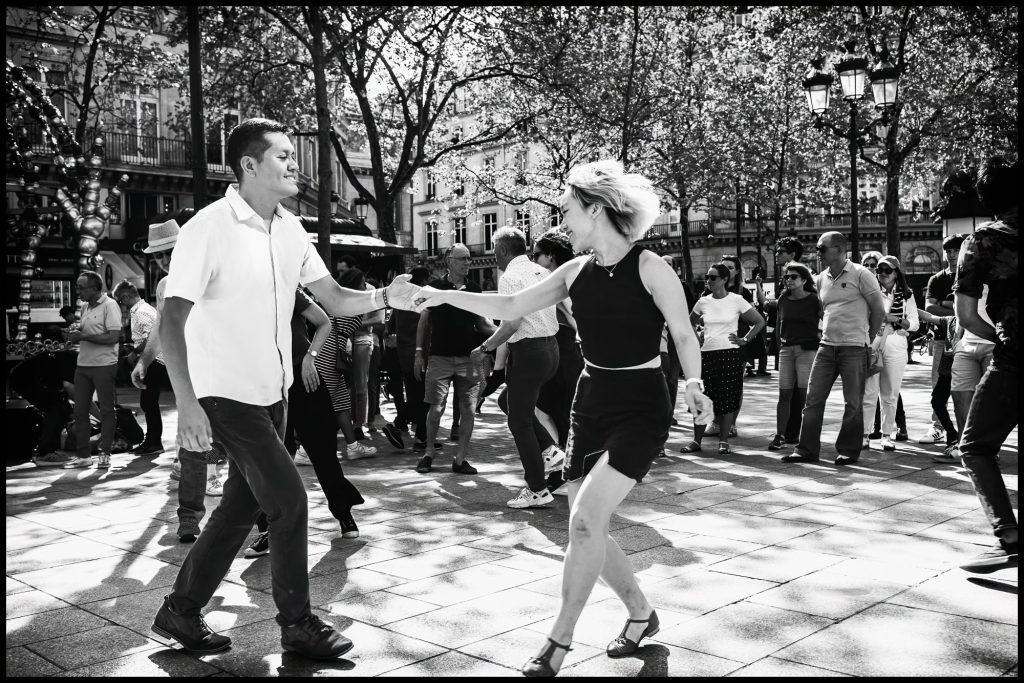
Tucked beside the Comédie-Française, Place Colette is more than just a Parisian square—it’s a stage where the city itself performs. Named in 1966 after the writer Colette (1873–1954), following a request by her daughter to then–Minister of Culture André Malraux, the square has since become a beloved gathering spot. On warm evenings, people often come here to dance in public, filling the air with music and movement. It’s a joy to witness, and a reminder of Paris’s enduring spirit of playfulness.

Suggestion: If you’re nearby, try this walking route that includes Place Colette, the Palais-Royal, and surrounding streets. It’s a beautiful way to experience Parisian history and atmosphere at a relaxed pace.

La Maison de Molière: A Living Tradition in Paris

As a lover of France and its language, walking into the Comédie-Française feels like stepping into the heart of French culture. Founded in 1680 by decree of Louis XIV, it is the world’s oldest active theater company and the only state theater in France with its own permanent troupe of actors.

Its main stage, the Salle Richelieu, stands within the Palais-Royal complex in the 1st arrondissement. The setting is both grand and intimate — a space steeped in history yet alive with contemporary energy.

Often called La Maison de Molière, the theater honors the playwright most closely tied to its legacy. Though Molière died before the company was formally created, the Comédiens-Français still perform his plays and pay tribute to him each January 15.

The Comédie-Française is often associated with the classical repertoire, but creation has always been central to its mission. In 2023, I saw a modern staging of Médée d’après Euripide that showed just how vital and daring the troupe remains.

If you speak French, it’s worth buying a ticket. Sitting in that gilded hall, you’re not just a spectator — you’re part of a living tradition more than three centuries old.

Salle Richelieu, Comédie-Française, Paris © David H. Enzel, 2023

Where Paris High-Rises Become Art

The 13th arrondissement of Paris is dominated by modern high-rise buildings, a sharp contrast to the historic architecture of the city center. Many now feature large-scale murals by French and international urban artists. There are more than fifty in total. This thoughtful initiative—not just decoration, but deliberate place-making—aims to bring warmth to otherwise stark facades.

This inventive urban renewal effort brings color and character to the neighborhood, offering a different experience from the artistic treasures of central Paris.

Read more

A Parisian Museum, a Family’s Tragedy, and the Lessons of History

The Musée Nissim de Camondo is a historic house museum of French decorative arts, located in the Hôtel Camondo at 63 rue de Monceau, on the edge of Parc Monceau in Paris’s 8th arrondissement.

The home was built in 1911 by Ottoman-born Jewish banker and art collector Count Moïse de Camondo, inspired by the Petit Trianon at Versailles. It was designed to house his remarkable collection of decorative arts and fine furniture.

Tragedy shaped its fate. In 1917, the Count’s only son, Nissim, was killed in World War I. Shattered by the loss, the Count withdrew from society and dedicated himself entirely to perfecting his collection. When he died in 1935, he left the house and all it contained to the Musée des Arts Décoratifs, stipulating that it become a museum in Nissim’s memory.

Just nine years later, the Count’s last surviving heir, his daughter Béatrice, was deported to Auschwitz along with her family during the Nazi occupation of France. None survived. The Camondo family line ended, leaving the house as its sole surviving legacy.

Read more

Les Invalides: Paris’s Golden Landmark

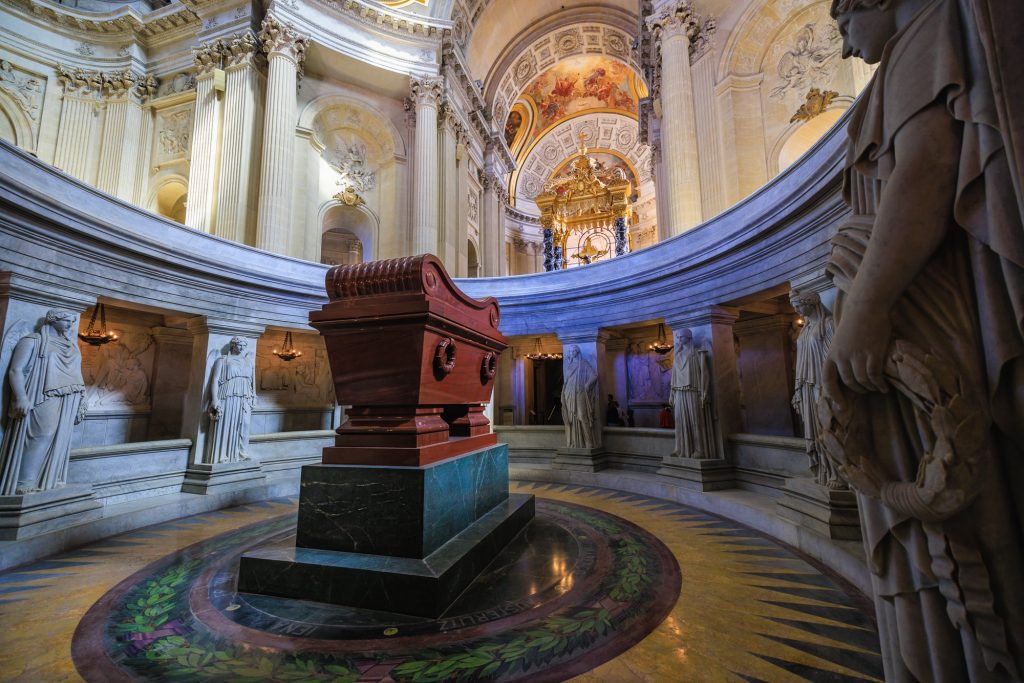
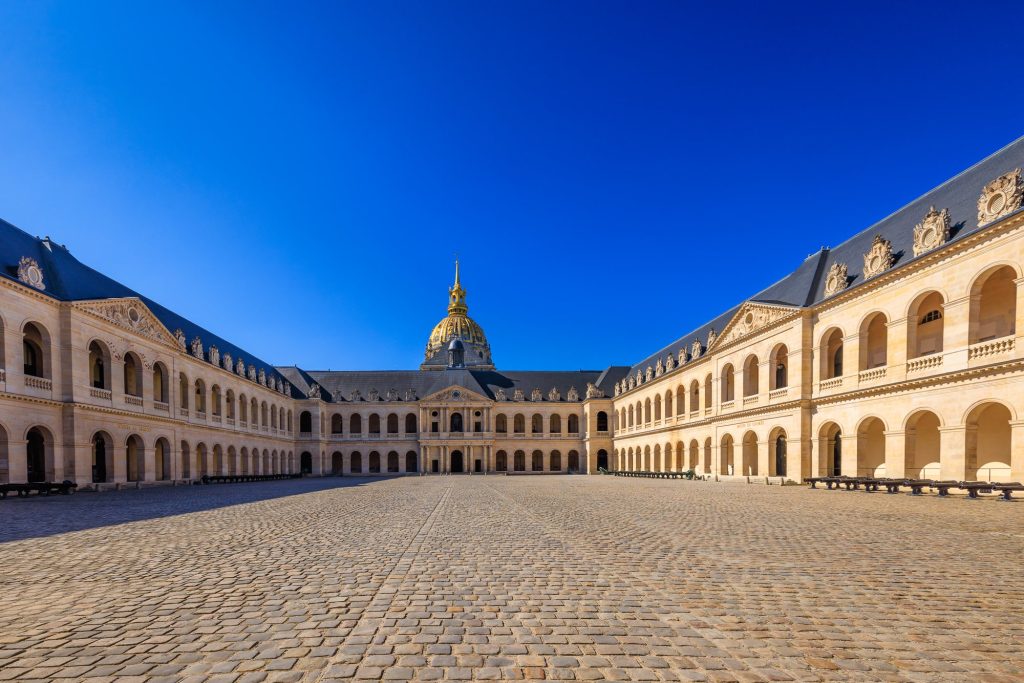
Built in the late 17th century under King Louis XIV, Les Invalides was originally designed as a home and hospital for war veterans. Today, it stands as one of Paris’s most iconic sites—part military museum, part monument, and the final resting place of Napoleon Bonaparte.

Located in the 7th arrondissement, Les Invalides houses the Musée de l’Armée (Army Museum), which showcases centuries of French military history, from medieval armor to World War II artifacts. The golden dome of the Dôme des Invalides is visible from across Paris, glinting in the sunlight and dominating the skyline.

The site has played a role in pivotal moments of French history. It was stormed during the French Revolution in 1789, when rioters seized weapons stored inside. In 1840, Napoleon’s remains were brought here from Saint Helena and interred beneath the grand dome—a solemn resting place fit for an emperor. In 1906, the courtyard of Les Invalides was the setting for the formal rehabilitation ceremony of Alfred Dreyfus, marking the end of one of France’s most infamous miscarriages of justice.

Read more

Polka Dots on the Pont Neuf

This towering sculpture of Japanese contemporary artist Yayoi Kusama stands on rue du Pont Neuf, between the Louis Vuitton headquarters and the Samaritaine. Bold, whimsical, and impossible to overlook, it stopped me in my tracks and turned an ordinary walk into a moment I’ll remember.

That stretch of the Pont Neuf was alive with the hum of Paris—buses rumbling past, the scent of fresh pastries drifting from a nearby café, and above it all, Kusama’s unmistakable polka dots adding a splash of surreal joy to the scene.

Yayoi Kusama—often called the princess of polka dots—is one of the world’s most distinctive living artists, known for her playful patterns and immersive installations.