Robert Clary: From Hogan’s Heroes to Holocaust Witness (1926-2022)

Robert Clary, a French-born survivor of Nazi concentration camps who later played a feisty prisoner of war in the unlikely 1960s sitcom Hogan’s Heroes, died on November 16, 2022, at his home in Beverly Hills, California. He was 96.

Clary was the last surviving original cast member of the series, which also starred Bob Crane, Richard Dawson, Larry Hovis, and Ivan Dixon as the Allied prisoners. Their captors were portrayed by Werner Klemperer and John Banner, both European Jews who had fled Nazi persecution before the war.

For decades, Clary said nothing publicly about his wartime experience. That changed in 1980, when he decided to speak out after seeing Holocaust deniers attempt to diminish or erase the truth of Nazi crimes. His silence broke with painful clarity: twelve members of his immediate family — his parents and ten siblings — had been murdered. Clary himself was deported to Buchenwald, where he was liberated on April 11, 1945. He was the only member of his family to survive.

Beyond his acting career, Clary committed himself to Holocaust remembrance. Beginning in 1980, he spoke at high schools and community groups, participated in survivor gatherings in Jerusalem, volunteered with the Museum of Tolerance, and became deeply involved with the USC Shoah Foundation. He was among the first 100 survivors interviewed for their archive and later conducted 75 interviews himself, ensuring that others’ stories would be preserved.

Hogan’s Heroes aired on CBS from 1965 to 1971, running for six seasons and 168 episodes. It remains the longest-running American sitcom set against the backdrop of World War II.

Unrealistic as it was, I loved the show. It made me laugh then, and it still makes me laugh today. The series is available on Amazon Prime.

La Grande Arche de la Défense: A Modern Monument to Humanity

La Grande Arche de la Défense (“The Great Arch of the Defense”), originally called La Grande Arche de la Fraternité, is a monumental building in the business district of La Défense, in the commune of Puteaux, west of Paris. Usually referred to simply as La Grande Arche, the 110-meter-high (360 ft) cube is part of the historic axis that runs from the Louvre to the Arc de Triomphe. The distance between the two arches is about 4 km (2.5 miles). Built as one of President François Mitterrand’s Grands Projets, it stands as a symbol of modern France.

In 1982, a national design competition was launched at Mitterrand’s initiative. The winning entry, by Danish architect Johan Otto von Spreckelsen (1929–1987) and engineer Erik Reitzel (1941–2012), reimagined the Arc de Triomphe for the late 20th century. Instead of commemorating military victories, their design celebrated humanity and humanitarian ideals.

Construction began in 1985, led by French civil engineering company Bouygues. In 1986, Spreckelsen resigned and transferred his responsibilities to his associate, French architect Paul Andreu, best known for his work on Charles de Gaulle Airport. Reitzel remained involved until the monument was completed in 1989.

The structure takes the approximate form of a perfect cube, with a width, height, and depth of 110 meters. Some have suggested it resembles a hypercube—or tesseract—projected into three dimensions. Built with a prestressed concrete frame clad in glass and covered in white granite from Bèthel, Italy, the Arche has a striking, minimalist presence.

La Grande Arche was inaugurated in July 1989 during celebrations marking the bicentennial of the French Revolution, including a grand military parade that passed beneath its soaring frame.


Sources: Wikipedia | French moments


The Bureau: France’s Riveting Spy Drama

The Bureau (Le Bureau des Légendes) is a gripping French spy series created by Éric Rochant for Canal+. It follows the daily life and missions of agents in the DGSE—France’s equivalent of the CIA—headquartered in Paris’s 20th arrondissement. Remarkably, the series was produced with the cooperation of the DGSE itself, which even endorsed its portrayal of intelligence work. Critics agreed: The Bureau won Best TV Series from the French Syndicate of Cinema Critics.

The story begins with Guillaume “Malotru” Debailly (Mathieu Kassovitz), a French intelligence officer returning to Paris after six years undercover in Syria. Struggling to adjust to his old life, he discovers that his former lover Nadia (Zineb Triki) is now in Paris. Against all rules, he contacts her under his Damascus alias, Paul Lefebvre—setting in motion a double life that threatens both him and the DGSE.

The supporting cast is equally compelling. Jean-Pierre Darroussin plays Henri Duflot, the likable but self-conscious head of the clandestine service, whose garish neckties make him seem almost ordinary. Léa Drucker portrays a DGSE psychiatrist with top-secret clearance, while Sara Giraudeau shines as Marina Loiseau, a young and determined operative navigating the perilous world of undercover work.

The acting throughout is superb, and the espionage feels refreshingly authentic—far more grounded than most spy thrillers. Over five masterful seasons, The Bureau became one of the most riveting and realistic espionage dramas I’ve ever seen, on television or film.

The series concluded after five seasons and is available in the U.S. on Sundance Now, including through the Sundance Now channel on Amazon.

Father Pitt: A Public-Domain Photo Treasure of Pittsburgh

If you’re interested in Pittsburgh, the blog Father Pitt offers a wide-ranging collection of photographs of my hometown.

The author remains anonymous, but the site is maintained with care and updated regularly. Each photo is accompanied by thoughtful descriptions, and the entire collection is released to the public domain under a CC0 dedication—making it both a visual resource and a gift to the community.

Planning a Trip to France? Start with the ‘Join Us in France’ Podcast

If you’re planning a trip to France—or simply want to deepen your understanding of French history and culture—the Join Us in France podcast is a superb resource.

Launched in 2014, the podcast was originally co-hosted by Elyse and Annie, two women who know France inside and out. Annie was born in France but has also lived in the United States, while Elyse grew up in New York yet speaks the language fluently and has an encyclopedic grasp of French culture and history. Ironically, Elyse, the American, often seems “more French” than Annie, who was born there. Due to time constraints, Elyse no longer appears regularly but still joins when she can.

The podcast shines in the way it makes France approachable for American listeners. I especially enjoyed episodes on driving in France, French cheese, and Le Marais in Paris. Another episode on modern and contemporary art in France introduced me to 18 museums across the country, many of which I hadn’t known before.

Each episode comes with detailed show notes—an invaluable aid for trip planning. Unlike the many resources that focus mainly on hotels and restaurants, this podcast helps you understand the soul of France.

For additional perspective, Annie and Elyse were also featured in Amateur Traveler episode 428 about Paris. Amateur Traveler is a podcast I listen to often, and it covers destinations around the world. But if your focus is France, Join Us in France is the podcast to follow.

111 Posts and Counting

With this entry, my blog has reached 111 published posts. What began as a simple outlet for notes and photographs has become an archive of travels, reflections, and personal history.

Revisiting and revising older posts reminded me why I write: to capture impressions, preserve memory, and shape a space that feels my own. I also hope that something here may be of help or interest to others who wander through.

Thank you for reading — it means a great deal. With the archive refreshed, I’m looking forward to adding new stories.

Here’s to the next chapter.

From Synagogue to Frauenkirche: Nuremberg’s Church of Our Lady

The Frauenkirche (“Church of Our Lady”) stands on the eastern side of the main market in Nuremberg, Germany. An example of brick Gothic architecture, it was built between 1352 and 1362 on the initiative of Charles IV (1316–1378), Holy Roman Emperor.

The church’s origins are bound up with tragedy. In 1349, during the Black Death, a violent pogrom led to the expulsion of Nuremberg’s Jewish community. Charles IV ordered the city’s synagogue demolished, and the Frauenkirche was built on its ruins as part of the newly created Hauptmarkt.

Yet within a few years, the city authorities, short of money, sought to attract Jews back. In 1351, Charles IV allowed their return under specific conditions, and by 1382 the Jewish community numbered more than 500, concentrated in the Judengasse (today’s Judenstrasse). More background can be found at the Jewish Virtual Library.

Centuries later, between the two world wars, Nuremberg became a stronghold of the Nazi Party. Julius Streicher (1885–1946) founded one of the first local branches there in 1922 and published the antisemitic weekly Der Stürmer. The city also hosted massive Nazi rallies, and its Jews lived under daily harassment and threat.

The Frauenkirche itself was nearly destroyed during the bombing of Nuremberg (see photo above) in World War II, leaving only its nave walls and façade. Restoration was completed in 1953, and today the church once again dominates the Hauptmarkt as both a historic monument and a reminder of the city’s layered past.

The Institut de France: Guardian of Knowledge and the Arts

The Institut de France is a French learned society that brings together five académies, including the prestigious Académie Française, guardian of the French language. Founded in 1795 at the direction of the National Convention, it is housed on the Quai de Conti in the 6th arrondissement of Paris.

Today, the Institut oversees nearly 1,000 foundations, along with museums and châteaux open to visitors. It also distributes prizes and grants—amounting to more than €27 million annually in 2017—most of them awarded on the recommendation of the académies.

Faithful to the mission set for it in 1795, the Institut and its five académies continue “to contribute, on a non-profit basis, to the progress and influence of letters, sciences, and the arts; to honor useful inventions and discoveries; to recognize distinguished artistic achievements; and to reward noble deeds and the steadfast practice of civic and social virtues.”

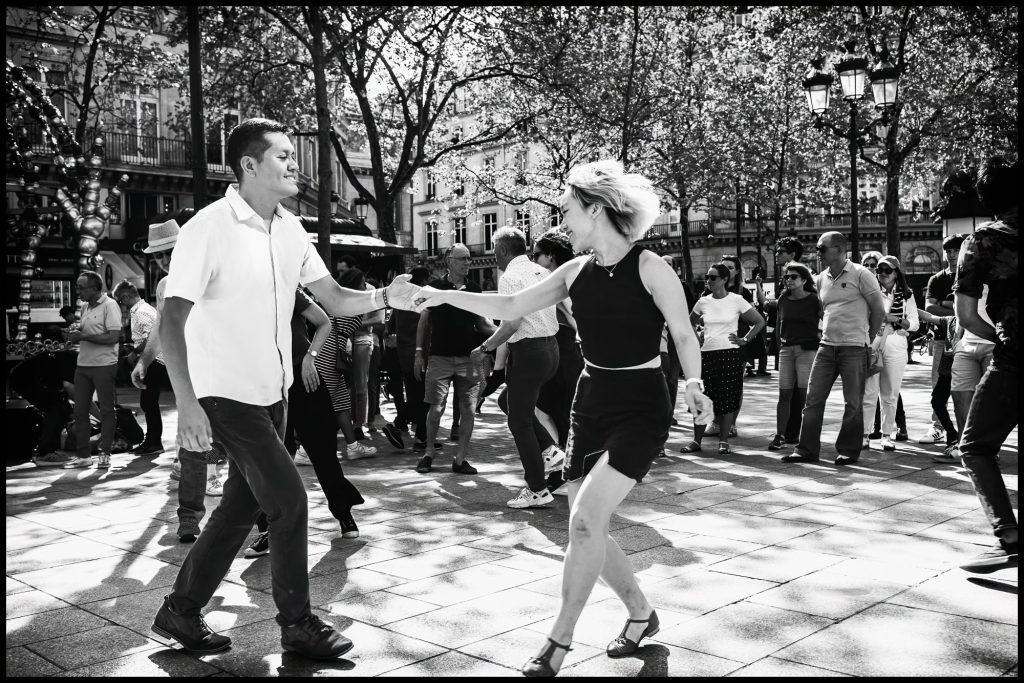
Dancing in the Heart of Paris: Place Colette

Tucked beside the Comédie-Française, Place Colette is more than just a Parisian square—it’s a stage where the city itself performs. Named in 1966 after the writer Colette (1873–1954), following a request by her daughter to then–Minister of Culture André Malraux, the square has since become a beloved gathering spot. On warm evenings, people often come here to dance in public, filling the air with music and movement. It’s a joy to witness, and a reminder of Paris’s enduring spirit of playfulness.

Suggestion: If you’re nearby, try this walking route that includes Place Colette, the Palais-Royal, and surrounding streets. It’s a beautiful way to experience Parisian history and atmosphere at a relaxed pace.

The Pegnitz River and Nuremberg’s Place in History

The Pegnitz is a river in Franconia, in the German state of Bavaria. Its source is in the town of Pegnitz (population ~15,000), about 27 km south of Bayreuth. The river runs for about 113 km (70 mi) before meeting the Rednitz in Fürth to form the Regnitz. Along its course, it flows through Nuremberg (population ~545,000), the largest city in Franconia, the second-largest in Bavaria, and the 14th-largest in Germany.

Nuremberg is famous for its castle and extensive city walls, with their many towers—among the most impressive fortifications in Europe.


Nuremberg in the Nazi Era

From 1933 to 1945, Nuremberg held special significance for the Nazi regime. The city was chosen as the site of massive Nazi Party rallies, staged in 1927, 1929, and annually from 1933 to 1938. These events were designed as propaganda spectacles.

  • The 1934 rally was filmed by Leni Riefenstahl, resulting in the propaganda film Triumph des Willens (Triumph of the Will).
  • At the 1935 rally, Hitler convened the Reichstag in Nuremberg to pass the Nuremberg Laws, which stripped Jews and other so-called “non-Aryans” of German citizenship.

After the collapse of Nazi Germany, Nuremberg again became a focal point of world history. Between 1945 and 1946, the surviving top Nazi leaders were tried for war crimes and crimes against humanity at the International Military Tribunal. The proceedings took place in Courtroom 600 of the Nuremberg Palace of Justice. (The cross visible today in the courtroom was added later by the postwar German government and was not present during the trials.)