The Wiener Holocaust Library in London is celebrating its 90th birthday. It is the oldest continuously functioning archive documenting Nazi crimes.
The Library has its origins in the work of Dr. Alfred Wiener (1885-1964). Dr. Wiener was a German Jew from Berlin who campaigned against Nazism during the 1920s and 30s and gathered evidence about antisemitism and the persecution of Jews in Germany.
Dr. Wiener and his family fled Germany in 1933 and settled in Amsterdam. Later that year he set up the Jewish Central Information Office (JCIO) at the request of the Board of Deputies of British Jews and the Anglo-Jewish Association. This archive collected information about the Nazis, which formed the basis of campaigns to undermine their activities.
Following Kristallnacht (the November Pogrom of 1938), Wiener prepared to bring his collection to the UK. It arrived the following summer and is believed to have opened on the day the Nazis invaded Poland.
During the war, staff gathered evidence to document and publicize reports of Nazi efforts to annihilate European Jewry, including an eyewitness account of Kristallnacht.
Throughout the war, the JCIO served the British Government as it fought the Nazi regime. Increasingly the collection was referred to as ‘Dr Wiener’s Library’ and eventually this led to its renaming.
Wiener’s recognition of the danger posed by the Nazis didn’t begin after Hitler came to power in 1933. Instead, he can justly lay claim to having been one of the first intellectuals to raise the alarm about the rise of antisemitism after World War I.
Horrified by the surge in anti-Jewish right-wing nationalism that he encountered when he returned from the trenches to his homeland, in 1919 Wiener published a tract, “Prelude to Pogroms?”, in which he warned: “A mighty antisemitic storm has broken over us.” If left unchecked, Wiener predicted, this antisemitism would lead to “bestial murders and violence” and the “blood of citizens running on the pavements.”
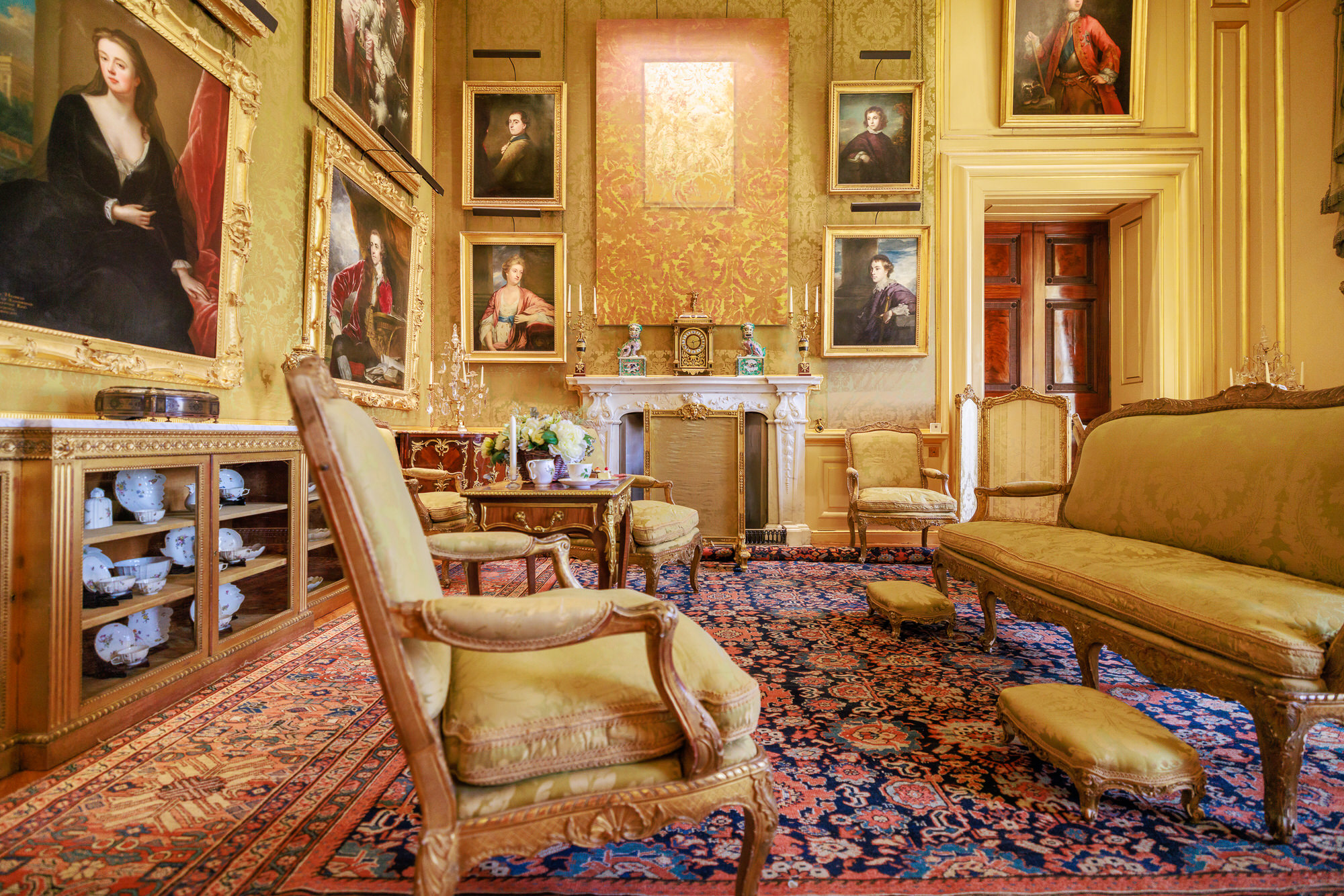
Blenheim Palace is a country house in Woodstock, Oxfordshire, England. It is the seat of the Dukes of Marlborough. Originally called Blenheim Castle, it has been known as Blenheim Palace since the 19th century. It was built between 1705 and 1722, and designated a UNESCO World Heritage Site in 1987. It is among England’s largest houses. The palace is notable as the birthplace and ancestral home of Sir Winston Churchill (1874-1965).
Blenheim Palace was designed by John Vanbrugh (1664-1726). The English nation presented the site to John Churchill, first Duke of Marlborough, in recognition of his victory in 1704 over French and Bavarian troops (the Battle of Blenheim), a victory which decided the future of the Empire and, in doing so, made him a figure of international importance.
Blenheim Palace sits within a large walled landscape park, the structure by Vanbrugh overlaid by the designs of Lancelot “Capability” Brown (1716-1783), an English gardener and landscape architect, who remains the most famous figure in the history of the English landscape garden style.The Park is considered “a naturalistic Versailles”.
The original landscape set out by Vanbrugh, who regulated the course of the River Glyme, was later modified by Lancelot “Capability” Brown who created two lakes, seen as one of the greatest examples of naturalistic landscape design.
Following the palace’s completion, it became the home of the Churchill (later Spencer-Churchill) family for the next 300 years, and various members of the family have changed the interiors, park and gardens. At the end of the 19th century, the palace was saved from ruin by funds gained from the 9th Duke of Marlborough’s marriage to American railroad heiress Consuelo Vanderbilt.
Blenheim Palace sits on an estate that covers about 2,000 acres (approximately 810 hectares) and has 187 rooms. When I visited earlier this year I could not help but think of Blenheim as a “mini-Versailles”. In contrast, the Palace of Versailles has 2,300 rooms and is located on a 2,000-acre estate, about the same size as Blenheim. Versailles is older. Construction started in 1661, compared with the early 18th century for Blenheim.
Comparisons aside, a visit to Blenheim is a great way to spend a day.
I’ve had the pleasure of visiting Berlin twice. The first time was in the early 1980s and the second time in 2018. The transformation was dramatic.
Berlin Before the Fall of the Wall
I visited Berlin in the early 1980s. Berlin was then a divided city. I stayed in the Western zone near the Kurfurstendamm, which at the time was the heart of Berlin. I took a one day bus tour to the East. We crossed through Checkpoint Charlie. The bus was thoroughly searched by East German border guards. In contrast, the American military just let us pass freely.
The West was vibrant with shops, restaurants and people everywhere, In contrast, buildings in the East still showed signs of the bombing it received in the war. There were Soviet style memorials throughout East Berlin.
Our East German guide was openly dispirited and seemed to be reciting a script he was told to speak, especially when he spoke of “warm relations” with the then Soviet Union. At the end of the day, I was glad to be back in the West where I felt free and comfortable.
Berlin in 2018
Kurfurstendamm
In 2018, I went back to Berlin to see an undivided, transformed and reinvented Berlin. The German capital was still under construction 73 years after the end of WWII. I stayed near the Kurfurstendamm so I could compare my experience today with the early 1980s. My hotel — Pension Peters — is a small owner-managed hotel, where I felt more like a temporary resident in a nice Berlin neighborhood rather than a tourist.
I saw the transformation of Berlin immediately. The Kurfurstendamm is no longer the center of town. The heart of Berlin today is in the former East, which was a shambles when I was last there. The Kurfurstendamm is now a nice shopping street in lovely Berlin neighborhood called City West but is no longer the heart of the capital.
The Heart of Berlin
In 2018, Checkpoint Charlie was now nothing more than a tourist attraction with actor guards who, for a few Euros, will pose with you for a nice picture. There was even a “Checkpoint Charlie” McDonald’s across the street. It certainly no longer inspires fear.
David Enzel at Former Checkpoint Charlie, Berlin, Germany
The heart of Berlin is dominated by the Brandenburg Gate and government buildings, including the embassies of the four former occupying powers: the United States, Great Britain, France and Russia.
Berlin is no longer occupied but the former occupiers are nearby as if to say: “We are watching.” Each of the four embassies has a rich history.
The Soviet Union was first of the four major occupiers to move into a post-War embassy in Berlin. The Russian Embassy in Berlin was closed in 1941 when the two countries went to war. Its reconstruction was the first project of the post-war years in the East Berlin. The embassy’s official grand opening was held on the national holiday of the former USSR, on November 7, 1951. It’s Europe’s largest embassy which sends a message all by itself. After the fall of the Soviet Union in 1991, it became the Russian Embassy. (See also Rick Steves Berlin (p. 105). Avalon Publishing. Kindle Edition.)
France occupied its new embassy in October 2002. However, France formally opened it on January 23, 2003. That date was chosen as it was the 40th anniversary of the Élysée Treaty between Germany and France, declaring friendship between France and the former West Germany. French President Jacques Chirac presided. Marking the occasion, German Chancellor Gerhard Schröder and President Chirac issued a declaration affirming Franco-German friendship and their joint determination to “re-found Europe”.
The United States was the last of the four major occupiers to move into a post-War embassy in Berlin. The history of the U.S. Embassy in Berlin is especially complicated. During WWII, the U.S. Embassy in Berlin was severely damaged by Allied bombing. After the war, the embassy ended up just barely inside East Berlin in divided Berlin’s Soviet zone, straddling the demarcation between the Soviet and American sectors.
The Berlin Wall made the site of the former U.S. Embassy, still owned by the U.S. government, an inaccessible vacant lot. It was part of the security zone separating east and west Berliners. In 1967, the East German government demolished the ruins of the US Embassy building. However, the site became accessible after the Berlin Wall came down in November 1989. Even so, it remained a vacant lot until the 2004 groundbreaking for construction of a brand new U.S. Embassy. The newly constructed embassy opened on July 4, 2008.
The Brandenburg Gate is nearby. This is the center of Berlin. Since the 18th Century, the Brandenburg Gate has been a site for major historical events and today is an important symbol of the history of Europe and Germany.
Also nearby — and not to be missed — is Germany’s parliament — the Reichstag — which was opened in 1894 and remained in service until 1933, when it was severely damaged after being set on fire. The Reichstag fire occurred one month after Adolf Hitler was sworn in as Chancellor of Germany. After World War II, the building fell into disuse; the parliament of the German Democratic Republic (the Volkskammer) met in the Palast der Republik in East Berlin, while the parliament of the Federal Republic of Germany (the Bundestag) met in the Bundeshaus in Bonn.
The building was not properly restored until after German reunification on October 3, 1990. And what a glorious restoration it was. The German government chose British architect Norman Foster to lead the effort. Foster constructed is a large glass dome atop the Reichstag with a 360 degree view of the surrounding Berlin cityscape. The debating chamber of the Bundestag, the German parliament, can be seen below. A mirrored cone in the center of the dome directs sunlight into the building, and so that visitors can see the working of the chamber. The dome is open to the public and can be reached by climbing two steel, spiraling ramps that are reminiscent of a double helix. The Dome sends a message that the people are above the government, as was not the case during the Nazi era. After its completion in 1999, it once again became the meeting place of the German parliament: the modern Bundestag. The views are impressive. Entry is free but advance registration is required.
Hitler’s Bunker (Führerbunker), where Adolf Hitler committed suicide at the end of the war. It’s now an ordinary parking lot. Germany does not want to create a shrine out the place where Hitler perished.
Topography of Terror (Nazi Forced Labour Documentation Centre) has interesting exhibits documenting Nazi crimes. During the Nazi era, the headquarters of the Secret State Police, the SS and the Reich Security Main Office were located at the site.
Berlin-Hohenschönhausen Memorial, the site of the main political prison of the former East German Communist Ministry of State Security, the Stasi. I found the visit informative and chilling. East Germany went from one form of oppression to another form of oppression. It’s sad, terrifying and once again demonstrates what unchecked power can do.
Memorial to the Murdered Jews of Europe (Holocaust Memorial) has almost 3,000 symbolic pillars next to the U.S. Embassy in the heart of Berlin. It was designed by New York architect Peter Eisenman, who is Jewish. It opened in 2005. Eisenman explains that the “project manifests the instability inherent in what seems to be a system, here a rational grid, and its potential for dissolution in time.” The Memorial brings home the magnitude of the Holocaust.
Germany is creatively and thoughtfully reinventing its capital city. The transformation since the end of WWII is astounding. In the following video, you can see how Berlin looked after the Red Army occupied the German capital.
I thoroughly enjoyed my visit and hope to return to see more of Berlin and how it evolves. If you visit Berlin, these videos are worth watching before your visit.
‘The Honourable Woman’ is a 2014 British political spy thriller miniseries in eight parts. It was directed and written by Hugo Blick for the BBC and SundanceTV.
Maggie Gyllenhaal is the beautiful, immaculately dressed star of the series. She portrays Nessa Stein, a London heiress whose father was a big-time arms manufacturer and Zionist. Gyllenhaal, an American, does a convincing job of portraying an English woman.
Most of Nessa’s family perished in the Holocaust. She and her older brother, Ephra (Andrew Buchan), are dual citizens of Israel and Britain. On top of this, their mother died in childbirth and their father was murdered in front of their eyes in Jerusalem when they were young children.
The story includes the Holocaust, the Arab-Israeli conflict, kidnapping, rape, chronic trauma and high stakes philanthropy and investment.
The New York Times called the series a “smart, moodily complex thriller” and a “lavish homage to John le Carré.”